
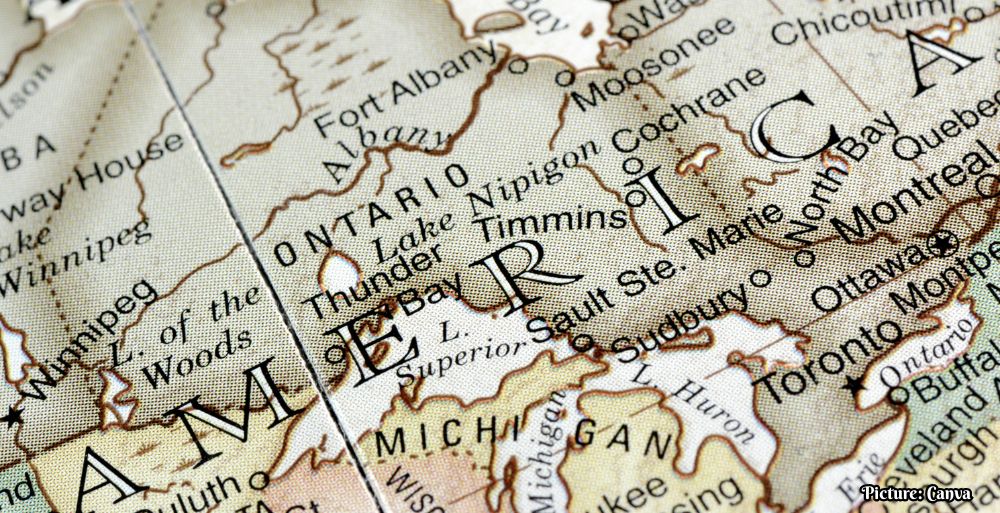
MapQuest has opted to retain the name Lake Ontario, diverging from Apple and Google, which have renamed the lake to Lake America, resulting in a surge of interest in the mapping service.
In a notable divergence from its competitors, MapQuest has chosen to maintain the name Lake Ontario, even as Apple Maps and Google Maps have adopted the new designation of “Lake America” for users in the United States. This decision has sparked significant online attention and a surge in downloads for the long-standing mapping service.
The change in nomenclature follows an executive order signed by former President Donald Trump on August 27, which directed the Interior Department to update the name of the lake in the U.S. Geographic Names Information System and other federal databases. The order posited that renaming the lake would better reflect its importance to the U.S. economy and historical context.
As a result of this executive order, Apple Maps users in the U.S. will now see “Lake America” when searching for the Great Lake through the app or website. Canadian users, however, will continue to see the traditional name, Lake Ontario, while users accessing Apple Maps from other countries will encounter both names.
Google had already implemented the name change prior to Apple’s decision, stating that its maps typically reflect geographic names found in official government sources, including the U.S. Geological Survey’s Geographic Names Information System. Apple has now aligned itself with this approach.
In contrast, MapQuest has taken a different stance. The mapping service continues to refer to the body of water as Lake Ontario, rejecting the “Lake America” designation. This decision mirrors its earlier choice to retain the name Gulf of Mexico instead of adopting “Gulf of America,” despite a similar order from Trump last year.
MapQuest’s refusal to conform to the naming changes has unexpectedly turned the service into a focal point of discussion online. Following this decision, downloads of the MapQuest app surged in the U.S., propelling it to the top of Apple’s App Store navigation rankings. By September 1, the app had even surpassed ChatGPT in the overall U.S. App Store charts.
Additionally, MapQuest climbed to the sixth position overall on Google Play when considering both apps and games. The company appears to be embracing the newfound attention rather than shying away from it. In a playful nod to its competitors, MapQuest shared a GIF featuring an apple alongside the phrase “Them Too,” seemingly taking a jab at Apple’s decision to adopt the new name.
In another celebratory post regarding its rise in the App Store rankings, MapQuest proclaimed, “The people have spoken. We are working.” This statement reflects the company’s acknowledgment of the public’s response to its choice to retain the familiar name.
As it stands, Apple and Google have aligned themselves with the U.S. government’s naming change, while MapQuest continues to use the name that resonates with users on both sides of the U.S.-Canada border. This divergence has transformed what could have been a routine update into an unexpected boost for one of the internet’s oldest mapping services.
According to The American Bazaar, the ongoing debate surrounding the naming of Lake Ontario underscores the complexities of geographic identity and the influence of technology companies in shaping public perception.