
Through The Sapling Press, Bay Area children are empowered to transform their imaginative ideas into published works, fostering confidence and self-expression in the process.
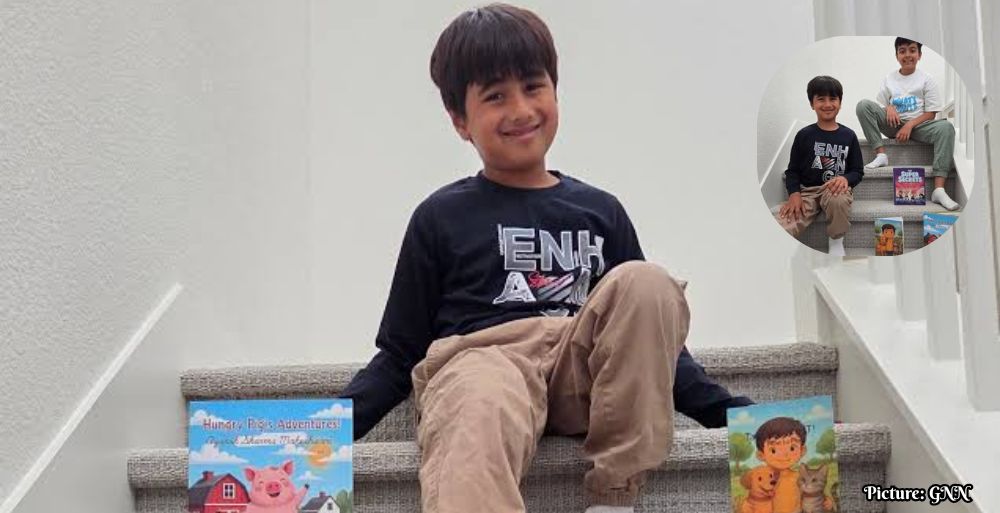
When six-year-old Ayansh Sharma was asked where he got the idea for his book, his response was refreshingly straightforward: “My brain.” His book, titled “Hungry Pig’s Adventures,” chronicles a pig’s journey from America to Africa in search of food. This candid answer elicited laughter during a group interview with Rooted Unmuted, but it also underscored a vital point that Prachi Sharma, the founder of The Sapling Press, wishes more adults would recognize: children possess stories within them that simply need to be acknowledged and nurtured.
The Sapling Press is a Bay Area initiative dedicated to helping children as young as five transform their ideas into professionally illustrated books, complete with printed copies and their names on the cover. This initiative not only empowers young writers but also fosters a sense of ownership and pride in their creative endeavors.
Sharma’s passion for storytelling stems from her own family background. Her mother, Manju Sharma, authored a book that inspired Prachi and, in turn, encouraged the children around her to see themselves as writers. The Sapling Press serves as a conduit for passing this encouragement to the next generation.
For Sharma, the significance of publishing extends beyond the final product. It lies in the self-assurance children gain when they see their imaginative ideas materialize into tangible books. When children hold their completed works, Sharma observes a profound transformation in their sense of identity.
“Anything and everything you do, even Legos, comes with instruction manuals,” she remarked. “But writing a book is completely your own.”
Sharma believes that the confidence gained through this creative process is invaluable. “You cannot hand it over to a child. It has to be developed,” she stated.
Ayansh’s experience with his first book exemplified this transformative journey. When he held the finished copy in his hands, Sharma noticed a significant shift; he was no longer just a child who read stories—he had become an author.
The impact of The Sapling Press continues to grow, as young authors like Ayansh, Aarna, and Miraya recently showcased their original works at a reading event at Dublin Library. “Everyone has a story inside them buried somewhere,” Sharma noted. “It’s just that we need that confidence that yes, whatever I have can be put into words or put on paper.”
While many adults often focus on the end product, Sharma emphasizes the importance of the creative process itself. As children develop their ideas, create characters, and witness their imaginations come to life through writing, they begin to trust their own voices.
This sense of ownership can be transformative for many children. Sharma has observed remarkable changes in her young authors. For instance, Reyansh, who she described as introverted, became more willing to engage with others. Aarna, upon receiving her finished book, was inspired to organize a public reading as an author.
When asked what he would say to a child who believes they are “not a writer,” Ayansh’s encouraging response was simple: “Cheer them up and make them write a book.”
Sharma believes that creativity provides a vital outlet for young people, especially in a world where they are often judged by their achievements rather than their imaginations. With the pressures of school, extracurricular activities, and constant comparisons, many children rarely find the space to create simply because they have something to express.
Through storytelling, children are granted permission to imagine freely. Reyansh Shandilya, another young author, created “The Super Secrets,” a four-chapter story featuring superheroes of his own invention. Although these tales are fictional, they reflect a very real aspect of childhood: the ability to dream without limits.
“For them, whatever they want can happen,” Sharma said, expressing her hope that more families will encourage such imaginative exploration.
Within the South Asian community, success is often equated with academic performance and accolades. While Sharma acknowledges the importance of these achievements, she advocates for equal support of creativity. “Everything we honor right now is external,” she explained. “Writing gives children an inner strength.”
This perspective positions The Sapling Press as a narrative of youth empowerment rather than merely a publishing venture. While books are significant, they are not the ultimate goal. The true aim is to help children recognize the value of their thoughts, the importance of their creativity, and the worth of their voices.
Sharma’s advice for parents looking to nurture creativity in their children is straightforward: “Just tell them that what they have to say matters. Whatever you are thinking, whatever you have in your mind, whatever you want to say or write, it matters.”
This message extends beyond young children; it resonates with anyone who has an idea but feels hesitant to share it. “Being nervous is good because being nervous means that what you want to say, or what you have, matters to you,” Sharma said.
In today’s world, where young people face numerous challenges, this message may be more crucial than ever. Before a child can become a leader, innovator, or changemaker, they must first believe that their voice deserves to be heard. Sometimes, that journey begins with a story.
For more insights, watch the full conversation on Rooted Unmuted.
According to India Currents, The Sapling Press is making a significant impact on the lives of young writers in the Bay Area.