
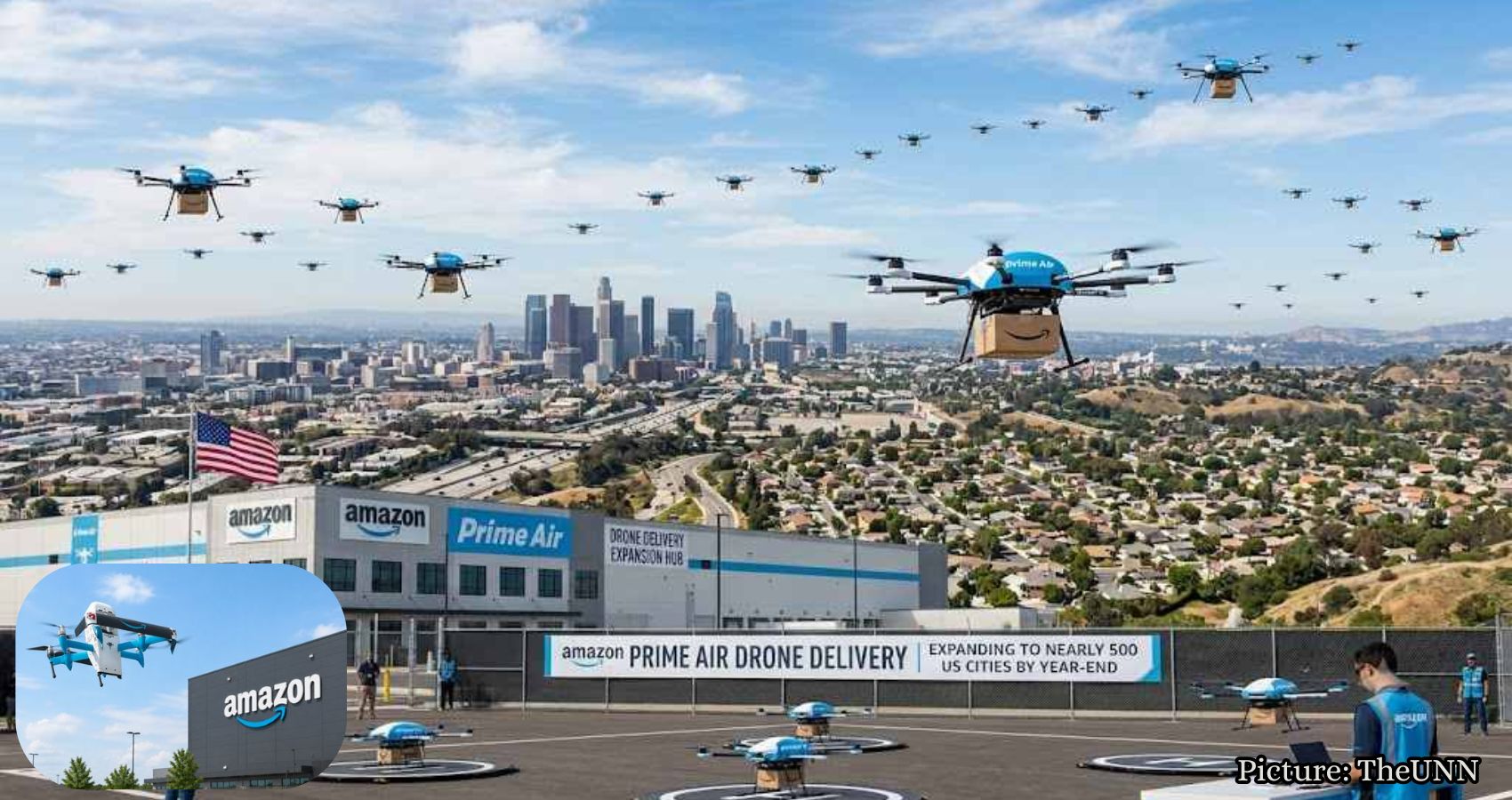
Amazon’s Prime Air drone delivery service plans to expand to nearly 500 U.S. cities by the end of 2026, offering fast delivery options for eligible customers.
Amazon is set to revolutionize package delivery with its Prime Air drone service, aiming to reach nearly 500 cities and towns across the United States by the end of 2026. This ambitious expansion could allow some customers to receive eligible Amazon orders in as little as 30 minutes, a significant improvement from the current service that operates from just 11 locations in 10 metropolitan areas.
As of now, Amazon has successfully delivered hundreds of thousands of packages through Prime Air this year alone. However, it is important to note that the 500-city figure refers to communities served rather than individual drone hubs. Each Prime Air site can cover approximately 175 square miles, meaning one launch location can service multiple nearby towns.
For those wondering if a drone delivery could soon be on its way to their neighborhood, Prime Air is currently available in the Phoenix, Tampa, Kansas City, Baton Rouge, Detroit, Omaha, Houston, Dallas, San Antonio, and Waco metro areas. Amazon has plans to expand to cities such as Chicago, Syracuse, Cleveland, Atlanta, and Boise later this year.
Even if you reside in one of these metropolitan areas, it does not guarantee that drone delivery will be an option for your address. Amazon indicates that coverage can vary by ZIP code and specific location. When your home qualifies, the drone delivery option will appear during the shopping process or at checkout, eliminating the need for a separate app or special Amazon account.
While Amazon advertises delivery times as fast as 30 minutes, most drone orders currently arrive within about 60 minutes after checkout. This timeframe could still be a game-changer for customers needing items quickly, such as a phone charger or medicine, making the wait feel significantly shorter than traditional delivery methods.
The Prime Air drones can carry packages weighing up to 5 pounds, roughly the size of a large shoebox. This capacity includes over 60% of the most commonly purchased items on Amazon, such as smartphones, earbuds, groceries, and household products. However, the exact selection available for drone delivery may vary based on your location and safety considerations.
The cost of drone delivery depends on whether customers are Amazon Prime members and the total order amount. Prime members can enjoy free drone delivery on eligible orders of $50 or more, while smaller orders incur a fee of $2.99. Non-Prime customers will pay $4.99 for drone delivery.
When Prime Air is available at your address, the delivery option will appear at checkout. For your first order, you will need to select a delivery spot on your property, which can be reused for future orders or changed as needed. Upon arrival, the drone will assess the area for obstacles such as people, pets, and vehicles before releasing the package.
It is essential to consider that your yard may impact the feasibility of drone delivery. Features like trees, landscaping, or pools could hinder the drone’s ability to find a safe drop-off location. As Prime Air expands into more neighborhoods, Amazon will need to ensure that each delivery spot provides adequate space for safe operations.
Amazon holds FAA Part 135 certification for Prime Air, which governs commercial drone package delivery. This certification allows operators to carry others’ property for compensation beyond visual line of sight. The drones are equipped with a Detect-and-Avoid system, enabling them to continuously scan their surroundings and make real-time decisions to avoid obstacles during flight.
Privacy concerns have also been raised regarding drone operations. Amazon assures that the drones utilize onboard cameras and sensors solely for navigation purposes and do not track individuals or record movements. No live camera feeds are monitored by personnel, as the drone processes data onboard for navigation.
Noise levels may be a more immediate concern for residents. Amazon claims that the drones produce less noise during drop-off than an idling delivery truck and are comparable to a low window fan at cruising altitude. However, community feedback regarding drone noise has been a factor in previous delivery programs, and local reactions may influence the smooth integration of Prime Air into certain neighborhoods.
Amazon first introduced the concept of 30-minute drone delivery over a decade ago, and since then, the company has made significant advancements in drone technology while navigating regulatory challenges and local concerns. Amazon CEO Andy Jassy stated that Prime Air aims to reach communities with approximately 30 million customers by the end of this year, with a goal of delivering half a billion packages by the decade’s close. Despite this ambitious outlook, drones are expected to handle only a small fraction of Amazon’s overall deliveries for the time being, as they can only carry one lightweight package at a time, unlike delivery vans and trucks that can transport larger loads.
Amazon faces competition from other companies, including Walmart and Alphabet-owned Wing, which plan to expand drone delivery to over 270 Walmart stores by 2027. Additionally, DoorDash has received FAA Part 135 certification for its own drone operations. The industry is evolving beyond merely proving that drones can deliver packages; companies must now demonstrate that consumers will regularly utilize these services and that communities will accept increased air traffic.
For many potential customers, the first indication that Prime Air has arrived in their area will be the appearance of a drone delivery option at checkout. For those in need of quick access to items, this service could prove invaluable. However, customers should remain aware of the limitations, including size and weight restrictions, the necessity for a safe drop-off location, and potential weather-related delays. As drone deliveries become more commonplace, individuals may need to weigh the value of speed against the implications of increased drone traffic overhead.
Amazon has been pursuing the goal of 30-minute drone delivery since Jeff Bezos first introduced the idea in 2013. The scale of this new plan signals a significant shift in the conversation surrounding drone delivery. While it is unlikely that delivery vans will become obsolete, the ability to receive small items quickly could become a valuable service for many. As expectations evolve, what once seemed like a rapid delivery option may soon be viewed as standard.
Would you welcome Amazon drones in your neighborhood if they could deliver an order in under an hour, or would you prefer to keep deliveries on the ground? Share your thoughts with us at Cyberguy.com.
According to Fox News.