
Onam, Kerala’s vibrant harvest festival, is a rich tapestry of tradition, community, and culinary delights, celebrated with music, dance, and the iconic Sadya served on banana leaves.
Every August, my childhood home in Palakkad transformed into a vibrant celebration filled with the scent of jasmine and wet earth. New clothes were laid out, and flower petals adorned our courtyard, often accompanied by the excited chatter of neighbors discussing the Onam Bumper Lottery before the food was even prepared.
Three decades after moving from Kerala to the Bay Area, I’ve observed a common misconception: many people know Onam primarily as “that incredible 30-dish feast on a banana leaf.” However, this festival is a full 10-day extravaganza that encompasses music, dance, family gatherings, and a deep sense of cultural identity.
Onam is Kerala’s most cherished harvest festival, celebrated during Chingam, the first month of the Malayalam calendar. It signifies both the harvest season and the conclusion of the southwest monsoon. Throughout Kerala, homes burst into life with flowers, music, traditional dances, boat races, games, and, of course, the grand Onam Sadya, all embodying themes of abundance, gratitude, and community.
Like millions of Malayalees, I grew up believing in the annual return of King Mahabali, not merely as a myth but as a poignant reminder that true prosperity is found in sharing. For me, mythology framed Onam, while memory infused it with meaning.
Onam also marks the first significant school holiday (10 days) after the academic year begins in June. By the time the festival arrives, we have completed our quarterly exams, and despite the intermittent rains of the monsoon season, cricket fever runs high during the Onam break, with local league matches in full swing.
The excitement surrounding Kerala’s famous Onam Bumper Lottery captivates millions each year with its record-breaking prize money, making it an integral part of the Onam season. My parents, like many middle-class families in Kerala, participated with hopes of winning big. I vividly remember my father carefully tucking lottery tickets into his wallet, filled with optimism.
During the Onam vacation, streets in Kerala are lined with hoardings advertising discount sales. Even school uniforms are available at reduced prices, along with household appliances. My father insisted we buy new clothes only during Onam, as it was the best time to stretch our family budget.
Despite the excitement of cricket and shopping, traditional customs remained paramount. Wearing new clothes (Onakkodi) and gifting them to loved ones is an essential aspect of welcoming King Mahabali. I fondly recall receiving new outfits from my parents and cousins.
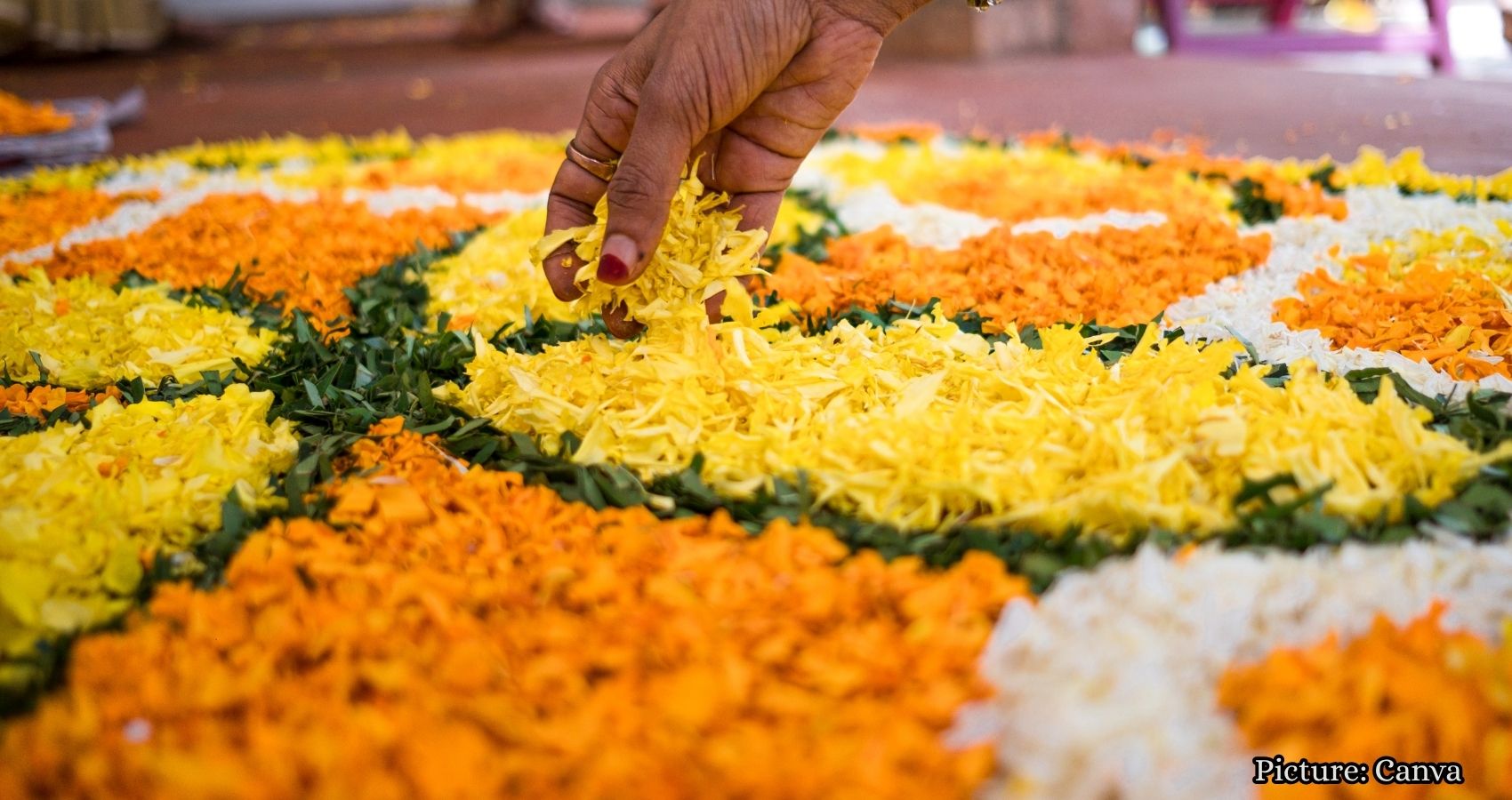
Throughout my childhood, the entrance to our home was adorned with intricate flower arrangements (Pookkalam) during the 10-day festival. I remember my mother preparing a cow dung paste as a base for these ornate floral displays, ensuring the flowers remained firmly in place against the winds.
A Pookalam, a traditional floral art from Kerala, was showcased at the Onam celebrations held at Bishop Elementary School in Sunnyvale, California, on September 9, 2023. This event was hosted by the Nair Service Society of California.
My mother also crafted clay figurines known as Thrikkakarappan (locally referred to as Mathori), symbolizing King Mahabali and Lord Vamana. I would eagerly join her in making these figures, rushing to protect them from the rain at the first sign of inclement weather.
Onam celebrations are enriched by various cultural expressions from different communities, who perform at local temples and community halls across Kerala. Among the most iconic performances is Thiruvathirakali, a graceful dance around a traditional lamp, symbolizing harmony, devotion, and feminine grace.
Kerala’s diverse regions contribute unique flavors to the festivities. In Thrissur, performers paint themselves as tigers and dance to rhythmic beats in the vibrant Pulikali (Tiger Dance), while Onathallu (“Onam fighting”) showcases a traditional martial art form from my village in Palakkad.
Traditional village games such as Vadamvali (tug-of-war), Uriyadi, Talappanthukali, and archery competitions foster a spirit of camaraderie, celebration, and shared joy that lies at the heart of Onam.
The grand finale of Onam is undoubtedly the Onam Sadya, a spectacular traditional feast served on a banana leaf, featuring a delightful array of flavors and aromas that encapsulate the essence of the 10-day celebration. A traditional Sadya can include anywhere from 20 to 30 elaborate dishes.
Growing up in Kerala, I was perhaps the odd one out in a family of rice enthusiasts. While most Keralites relished their mountain of rice accompanied by various dishes, I preferred a humble roti. My mother, determined to ensure I did not miss out on the Sadya experience, had a secret weapon: a special serving of fried potatoes on the side. That little bribe worked every time, ensuring I sat patiently through the grand banana-leaf arrangement of dishes.
Then came the moment I eagerly anticipated—the payasam. Multiple varieties of this beloved Kerala dessert flowed generously at the end of each meal; even a roti-loving rebel like me could never resist payasam!
However, one timeless Onam experience that has remained elusive for me is Vallam Kali, the magnificent snake boat races of Kerala. This centuries-old spectacle, held across Kerala’s backwaters during the Onam season, combines tradition, teamwork, and competitive spirit. Unfortunately, I have only been able to watch this excitement unfold on television during my Onams in Kerala.
Distance has taught me something I never fully understood while growing up in Kerala: festivals endure not solely because of rituals, but because people choose to celebrate them together. Each Onam in California reminds me that home is not merely a place; it is a community that carries its traditions wherever it goes.
Dining at a restaurant for an Onam Sadya in the Bay Area resembles enjoying Thanksgiving dinner at a commercial buffet. While the food is delightful, it lacks the heart of the celebration. This year, I encourage you to skip the restaurant booking and join a local community celebration. Onam is not just about what is placed on the banana leaf; it is about who gathers around it.
Happy Onam! May your banana leaf be full, your payasam never run out, and your conversations last longer than the queue for the Sadya!
This year, Thiruvonam falls on August 26, 2026, according to India Currents.