
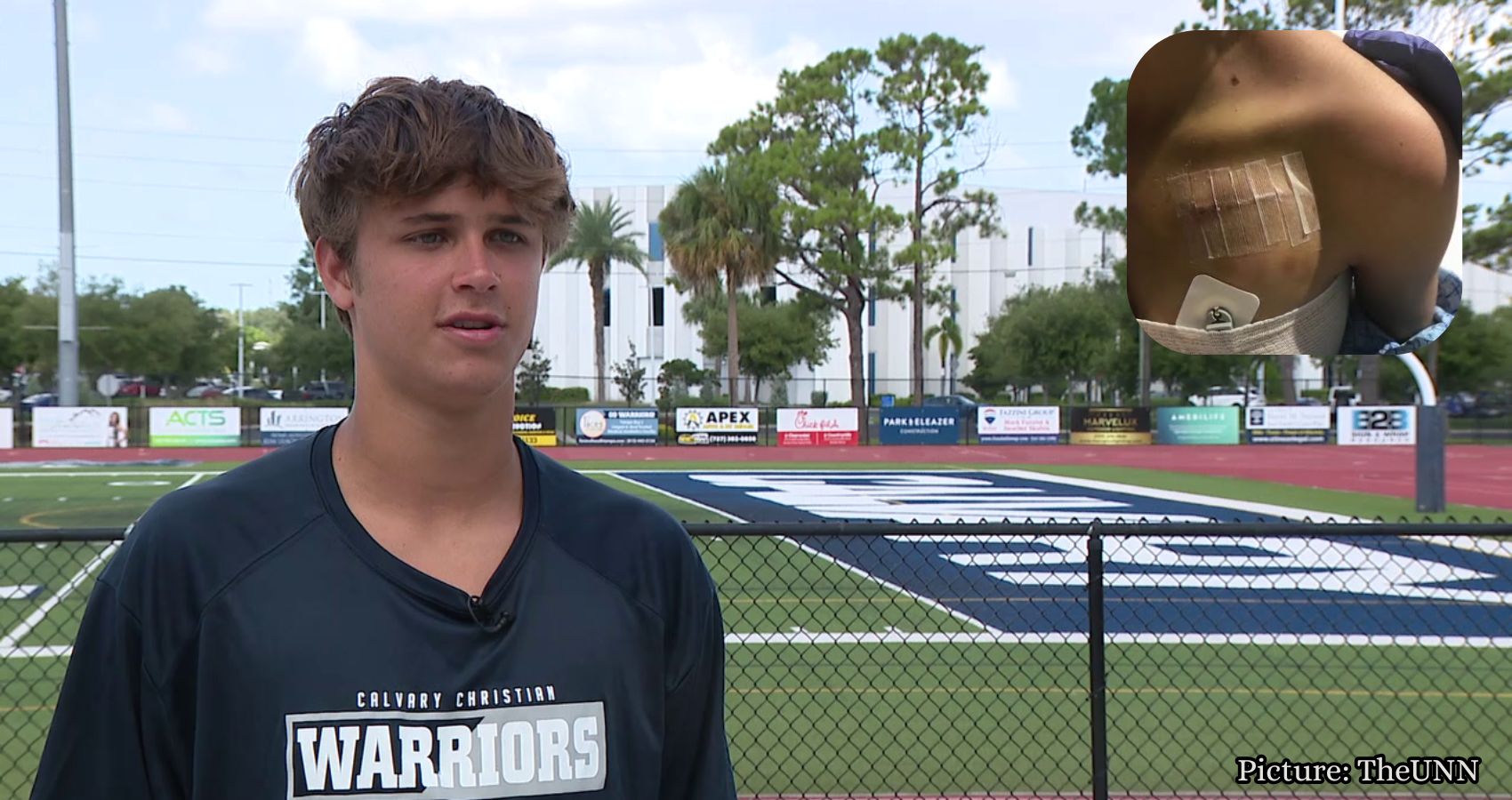
A high school athlete discovered a life-threatening heart defect during a mandatory ECG screening, highlighting the importance of such screenings for young athletes.
Cameron Crider, a high school student-athlete from Clearwater, Florida, was shocked to learn he had a potentially life-threatening heart defect despite showing no symptoms. His diagnosis came through a mandatory electrocardiogram (ECG) screening, a requirement under Florida’s Second Chance Act, which took effect on July 1, 2023. This law mandates that students in grades 9 through 12 undergo at least one ECG screening before participating in interscholastic athletics, with certain exceptions.
The ECG, also known as an EKG, is a simple, noninvasive test that measures the heart’s electrical signals. It can identify irregular rhythms and other indicators of heart problems. For Crider, a sophomore who plays football and basketball at Calvary Christian High School, the screening revealed an atrial septal defect (ASD). This congenital heart defect involves an opening in the wall between the heart’s two upper chambers, which can lead to serious complications if left untreated.
“I’ve been playing sports my whole life and didn’t notice anything, so I was surprised because I haven’t felt anything,” Crider said. His mother, Laura Crider, expressed her disbelief, stating, “Cameron was going to a three-hour football practice and then a two-hour basketball practice back-to-back and never had fatigue or shortness of breath, or anything that you would think would be a warning sign. So, we were completely shocked.”
Cameron is scheduled for surgery in October to correct the ASD and is expected to return to sports next season. Laura Crider described the mandatory ECG as “a gift from God,” emphasizing the importance of early detection. “We were able to find this out in a doctor’s office with an explanation and a clear plan that says we can help you,” she said. “So many other parents who are advocating for these screenings had to find out through a tragedy.”
Dr. Jonathan Drezner, director of the University of Washington Medicine Center for Sports Cardiology, noted that up to 80% of young athletes who experience sudden cardiac arrest (SCA)—the leading cause of death during exercise—show no warning symptoms beforehand. Intense physical activity can exacerbate undetected heart conditions, making screenings crucial for athlete safety.
The American Heart Association (AHA) has also highlighted the risks associated with undiagnosed heart conditions. “Sudden cardiac arrest is not the only concern,” the AHA stated. “These conditions can also lead to other serious heart-related complications and may require monitoring, treatment, or restrictions on athletic participation to keep students safe.” However, the AHA does not advocate for mandatory ECG screenings for all student-athletes.
Instead, the AHA recommends a comprehensive heart assessment that includes a review of personal and family medical history, along with a physical examination. If concerns arise, healthcare professionals can then order appropriate follow-up tests, including ECGs, echocardiograms, or other advanced imaging techniques.
Dr. Drezner emphasized the value of ECG screenings, stating that when interpreted correctly, they are among the best tools available for detecting conditions that could lead to SCA in young individuals. “An ECG greatly increases our ability to detect conditions associated with SCA in the young,” he explained. “A standard sports physical by history and physical alone will miss 80-90% of kids with at-risk heart conditions. An ECG can suggest or detect about 80% of the conditions that put young persons at risk. It is not perfect, but it is far better than the standard sports physical.”
Despite the effectiveness of ECG screenings, Dr. Drezner cautioned that healthy athletes can still have serious heart conditions without any noticeable symptoms. He advised parents to be vigilant, noting that symptoms such as chest pain, fainting, and a racing heart should never be ignored. “Make sure your child feels well when they exercise,” he said. “If you have a family history of genetic heart conditions or SCA, you should bring this up with your child’s doctor and consider getting a proper heart screening with an ECG.”
The case of Cameron Crider serves as a poignant reminder of the importance of heart screenings for young athletes, potentially saving lives through early detection and intervention. According to FOX 13 Tampa Bay, the implementation of the Second Chance Act could help prevent tragic outcomes for many young athletes in Florida.