
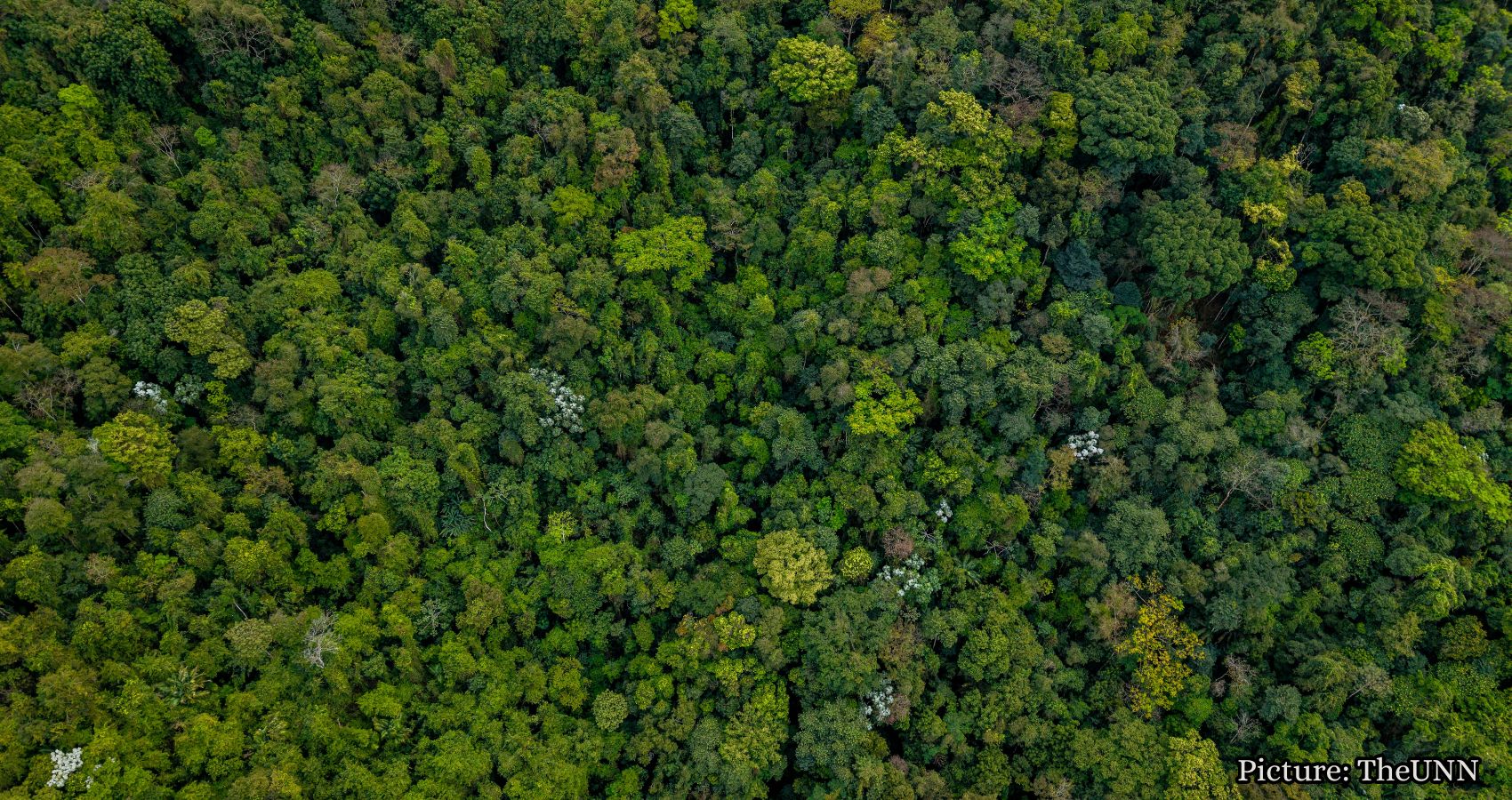
The discussion on preserving the Amazon rainforest emphasizes the importance of blending ancient wisdom with modern science to combat environmental threats and empower indigenous communities.
What if the greatest threats to some of the world’s most fragile ecosystems stem not only from mining and deforestation but also from the quieter loss of knowledge passed down through generations?
This question framed the discussion titled “Ancient Wisdom, Modern Science,” organized by American Community Media on July 31. The session delved into themes of scientific innovations, economic and political pressures, and indigenous knowledge, all of which play a crucial role in determining the fate of the Amazon rainforest and the communities that inhabit it.
Dr. Rosa Vásquez Espinoza, a Peruvian chemical biologist, author, and conservation leader, connected these complex themes. Her work integrates scientific rigor with ancestral wisdom to advance environmental solutions.
As the founder and executive director of Amazon Research Internacional, Vásquez leads a scientific institution and community organization focused on regenerating Amazonian biodiversity, empowering local communities, and building climate resilience.
Her passion for preserving the Amazon basin and finding solutions rooted in ancient knowledge developed over time, with its origins tracing back to her childhood. Growing up in Lima, Peru’s capital, Vásquez and her siblings had access to modern education. However, a different kind of learning was also taking shape at home, connecting her to her roots.
“My grandmother never had a chance to attend school or learn how to read or write,” Vásquez shared. She explained that her grandmother’s wisdom was hands-on, shaped by learning from medicinal elders in the community until she became one herself.
“She ensured to keep a natural pharmacy in the backyard of our house. It was small, but enough for me to have a close relationship with the natural world ever since I was a child. She would tell me the cultural stories associated with the medicinal plants and how to care for soil, leaves, and flowers. I learned by seeing the way she was with nature, the way she acted and talked about it, with the sense that nature is alive.”
Alongside these stories, Vásquez witnessed her grandmother using her medicinal knowledge in everyday life to heal herself and the family. Living in the capital city, modern medicine was also easily accessible. “I think collectively we came to appreciate the power that comes from accessing both,” she noted.
A transformational experience occurred years later when Vásquez worked at a traditional Chinese medicine hospital in Beijing during her undergraduate studies. Reflecting on that experience, she said, “I walked into one of the largest hospitals in the country, which received over 10,000 patients every day. I saw that the hospital had a wing dedicated to traditional medicine and a pharmacy with hundreds of drawers of dried plants, leaves, and roots. Patients left with two prescriptions: one for Western medicine and one for traditional medicine, whether to improve the immune system or prevent disease or do a combination of both.”
Interactions with nursing staff and medical practitioners reinforced her belief that modern medicine and local traditions can be complementary practices.
In the Peruvian Amazon, Vásquez observed the continued importance of indigenous knowledge, particularly during the global health crisis of COVID-19. Several indigenous communities relied on honey produced by stingless bees for its medicinal properties in treating symptoms of infection. Curious about the science behind this remedy, Vásquez and her team conducted the first chemical testing of the honey. An opportunity from National Geographic soon expanded the project’s scope, shifting focus from medicinal honey to the stingless bees themselves.
Vásquez noted that stingless bees are among the oldest bee species on the planet, dating back 65 million years. Native to tropical regions worldwide, they have co-evolved with the planet and its natural flora. “This means they are the most efficient pollinators of many plants, including high-value crops like coffee, cacao, avocados, and blueberries,” she explained.
Vásquez emphasized that stingless bees are much more than mere pollinators; they are deeply embedded in indigenous social systems, culture, and education. “We observed that the stingless bees could be one of the most important species in the Amazon forest for helping bring it back and ensuring it remains alive and green. We needed an innovative approach to save our forests while also sustaining livelihoods.”
What followed was years of advocacy, awareness building, fundraising, and sustained effort. Vásquez and her team documented the bees’ movements, habitats, and decline, implemented capacity-building programs for indigenous communities, and pursued legal and policy support. In 2025, two legal announcements brought hope: first, stingless bees were recognized as native to Peru, mandating their protection under Peruvian law; second, the species were granted legal rights in two municipalities, setting a precedent for other regions and supporting healthier bee populations.
The push for legal rights for stingless bees has inspired similar efforts in California, Poland, the UK, Ecuador, Colombia, and Bolivia. Rosa views this momentum as part of the broader Rights of Nature movement, which argues that ecosystems—including trees, oceans, animals, and mountains—have rights akin to those of human beings. Vásquez explained that existing environmental frameworks are predominantly reactive, designed after calamities occur. In contrast, the Rights of Nature movement advocates for a shift from disaster management to disaster prevention, promoting regeneration, preservation, and protection efforts that draw heavily on local practices and traditional wisdom.
“Across my interactions with indigenous cultures—not just Andean Quechua and Amazonian cultures but also Inuit and the Aboriginals in Australia—I saw a shared cosmovision: nature is alive,” she said.
In this context, the Rights of Nature movement becomes a natural extension of indigenous perspectives seeking legal recognition. Vásquez also stressed the need for the scientific community to evolve to include indigenous knowledge. This sentiment is reflected in culture and entertainment, with Quechua musicians gaining global recognition and Indian Grammy Award-winning musician Ricky Kej using music to raise awareness about environmental issues and the Indian worldview on international stages.
However, the shared commitment to the environment is not new in India. Indian civilization has nurtured and preserved indigenous wisdom as a lived reality for thousands of years. Today, like many communities worldwide, India faces the gradual loss of traditional knowledge, values, and ethos. Nonetheless, the shared cosmovision of respecting and revering nature remains alive in homes and forests.
Vásquez noted the similarities between Indian and South American traditions, particularly the deep connection with elders. “Be it through intimate moments with family elders or feminine rituals of hair care and healing, and storytelling, I have seen the emphasis on transmitting knowledge from the elders in the family to the younger generation in Indian cultures.”
Through her organization and individual efforts, Vásquez has also been involved in knowledge-sharing initiatives for the preservation of stingless bees and water conservation movements in India and beyond.
This journey has not been without challenges. Despite the legal victories for stingless bees, many hurdles remain. Deforestation, mining, climate change, and habitat loss continue to threaten the Amazon rainforest, compounded by political pressures and harsh agricultural practices across Latin America.
Policy and legal barriers limiting access to traditional medicines and knowledge pose another challenge, as Vásquez pointed out. “In places like Peru, community members have told me that nurse practitioners entering their area prohibit access to traditional medicines,” she noted, contrasting this with her experiences in China. “Natural sciences should be for people and the planet.”
An equally severe challenge is the loss of knowledge transmission to younger generations. Vásquez highlighted that rising internet access and the consumption of Western cultural trends contribute to the rejection of traditional language, dress, and knowledge. “I think we cannot ignore the role of communication here. We need to make traditional knowledge cool to keep it alive,” she stated. The lack of documentation exacerbates this gradual erosion of wisdom, which has been safeguarded and passed down orally for centuries. Rosa’s ongoing project aims to build the first intercultural encyclopedia in indigenous languages to address this challenge.
While leadership by a few to preserve ecological heritage is vital, every individual can learn by connecting to their roots. “Not just family, but also nature,” said Vásquez, quoting a message from her book, *The Spirit of the Rainforest*. “Step outside, look at the sky, learn from the tree offering its bounty. The future is ancestral too.”
According to India Currents, the integration of ancient wisdom with modern science is essential for the preservation of the Amazon rainforest and the empowerment of indigenous communities.