
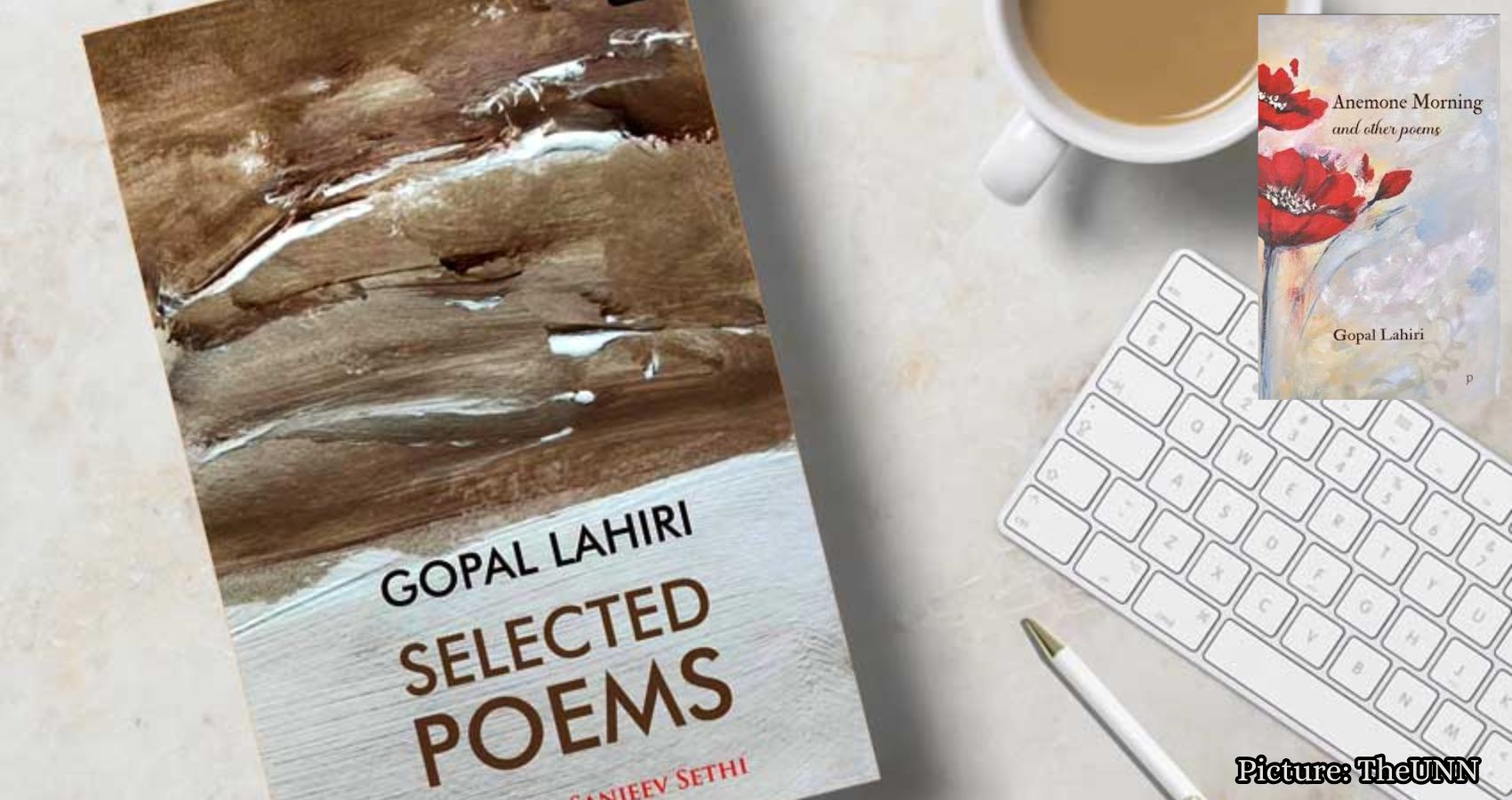
Gopal Lahiri’s upcoming collection, *Selected Poems*, showcases his profound connection with nature and human experience through a diverse array of poetic styles and themes.
Gopal Lahiri’s forthcoming collection, *Selected Poems*, curated by Sanjeev Sethi and published by Classix, an imprint of Hawakal, is set to be released in August 2025. This anthology serves as an excellent introduction to the work of Lahiri, a prolific contemporary bilingual poet with over 18 published collections. His poetry has been widely translated and anthologized, reflecting a rich tapestry of themes and styles that define his oeuvre. The collection offers a glimpse into Lahiri’s poetic journey over the past fifteen years, drawing from eight of his earlier works.
One of the central themes in this collection is Lahiri’s intimate observation of nature. The opening poem, “Crossing the Shoreline,” illustrates the geological undulations of the shoreline, mirroring the poet persona’s own breath. This establishes a unique communion with nature that resonates throughout the subsequent poems.
In “Anemone Morning,” the poet persona walks along a wet shore “near the yellow floral sea,” where the proximity to nature induces a meditative state. The dawn moment evokes a shift in consciousness, captured in the lines: “rising sun/ splitting me like flakes of mica schist.” Lahiri’s work is rich with imagery of geological formations, creating a sense of nature’s timelessness. Interwoven with these depictions is an awareness of solitude, which fosters introspection and highlights the fragility of nature’s gifts.
“Red Hibiscus” celebrates the flower’s blooming, employing precise botanical language to describe stamens, pollen, and capsules. However, it concludes with a prayer directed to the sun, asking for strength for the hibiscus. This moment encapsulates the awareness that beauty in nature is both fragile and impermanent, particularly in an era marked by climate change, where shorelines, water bodies, and flora are rapidly transforming.
In Lahiri’s poetry, nature often serves as a backdrop for exploring human relationships. Some poems reveal the sharp intrusion of human passions and traumatic experiences. “Lilith In You” boldly invokes the myth of Lilith, reflecting on the memories of a potentially destructive relationship that continues to haunt the speaker.
Memory is not always portrayed as a destructive force; in some instances, it becomes a vessel for recalling the lost presence of a bygone world. “Grandpa’s Wheelchair” is rooted in the description of a familiar object yet evokes the high emotions of youth and its inevitable transience. Similarly, “Grandma’s Piano” recalls the long-ago movements of a grandmother’s fingers on piano keys, stirring an intense longing for a time and person that can never be reclaimed.
Several poems in the collection reflect Lahiri’s travels across various sites in India and the United States. “Memory of Sky” pays homage to Banaras (Varanasi) and Jayanta Mahapatra’s poem “Dawn,” while also functioning as an ekphrastic piece that translates the colors of Banaras as painted by artist Manu Parekh. The poem’s concluding lines blend the sensations of Banaras’s landscape with the hues of the painting:
there is memory of sky in this dark chamber,
of the sun going down, how the earth smells,
paint, brush, hands, and everything.
The prose poem “Savannah Ghost” transports readers to the American South, referencing Forsyth Park in Savannah, the tram car, and the distinctive Spanish moss. Other poems like “Lodhi Garden,” “Manipur Vignettes,” and “Arthur Lake” present luminous images tied to Lahiri’s travel memories.
Some of the most poignant poems evoke the gritty urban landscape of Kolkata, Lahiri’s home and source of poetic inspiration. In “Traverse,” the poet addresses urban poverty, intertwining memories of historical trauma from wars and migration, which linger in “Grief, wounds, the previous life.” The theme of urban poverty recurs in poems such as “The Wall of Silence.”
“Hungry Walk” powerfully depicts the migrant labor crisis exacerbated by the stringent lockdowns during the COVID-19 pandemic in India. The lines “somewhere the curling script of history hangs over/ the old crossword book of migration” fuse the recent memory of COVID migrants with the historical waves of migration that Kolkata has witnessed through various partitions and movements driven by violence or hunger.
Lahiri’s experimentation with poetic forms is evident throughout the collection. Many poems explore different variations of the couplet form, while the concluding section features a series of haikus, a Japanese form characterized by strict syllabic structure. These haikus capture a range of emotions, from changes in the natural landscape to the tumult of human experiences, including political disappointment.
In the realm of Indian Writing in English, prose genres have often overshadowed poetry, leading to a relative neglect of the latter. Poetry, however, allows for greater imaginative risks, unbound by the constraints of elite publishing houses that dominate the market. In an age of diminishing readership, poetry offers a perfect avenue to reconnect with the lost art of reading.
This collection can be enjoyed in small doses, allowing readers to savor each poem without the need for continuous engagement. As readers immerse themselves in Lahiri’s work, they are likely to encounter verses that ignite their imagination and illuminate familiar objects in a new and radiant light, dispelling previous notions of poetry’s complexity.
Source: India Currents