
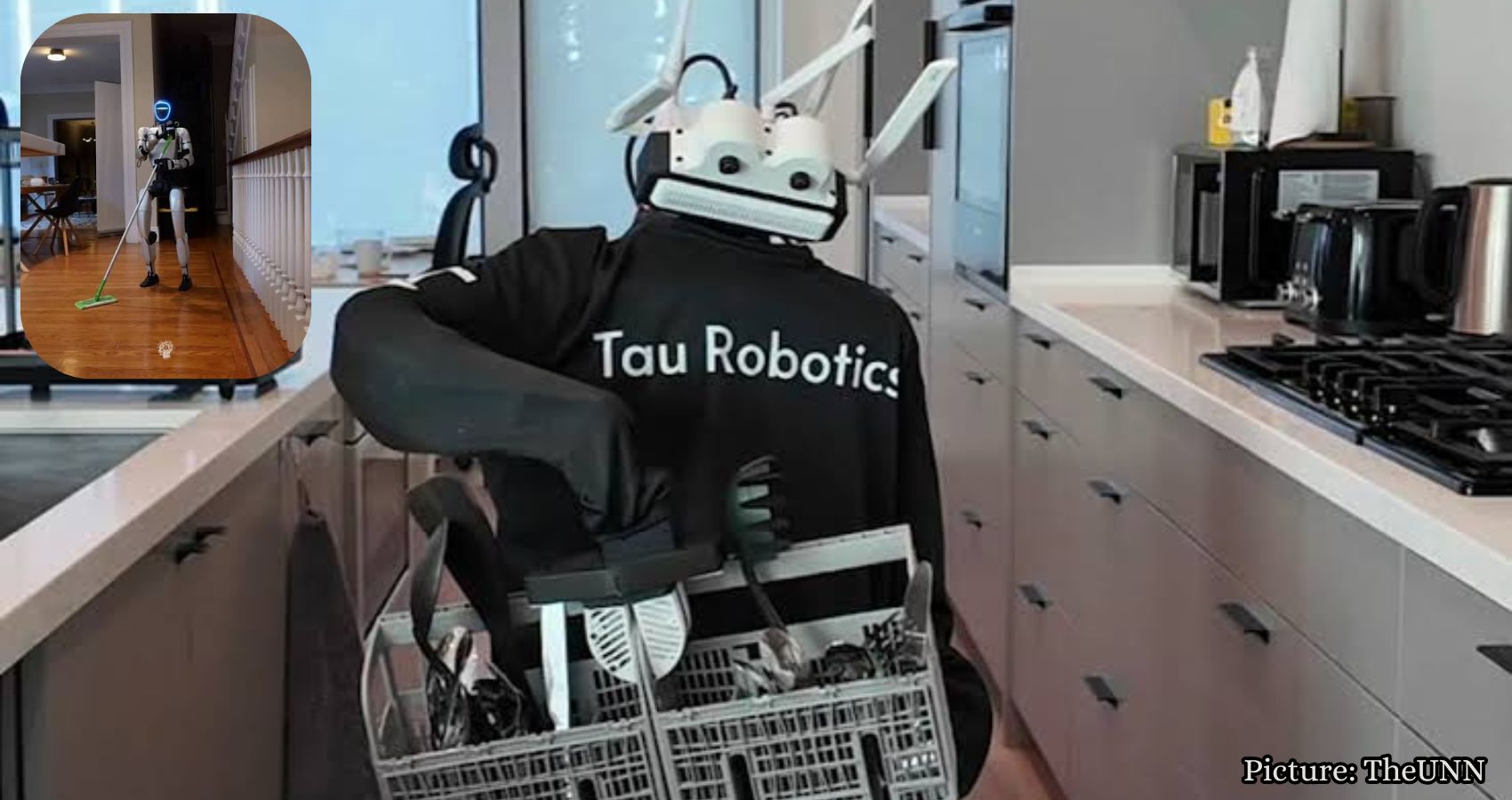
Humanoid robot startup Tau Robotics has launched a $30-an-hour cleaning service in San Francisco, testing the potential of machines to handle routine household chores.
A San Francisco-based startup, Tau Robotics, is pioneering the use of humanoid robots for cleaning homes and offices, offering the service at a rate of $30 per hour. This initiative aims to explore whether robots can effectively manage routine household tasks.
The company has begun accepting applications from select customers in San Francisco, deploying its humanoid robots for cleaning duties under the supervision of remote human operators. According to CEO Hans Koch, current artificial intelligence technology is not yet advanced enough for a humanoid robot to clean an entire home independently. Instead, each robot is controlled by a human operator from a centralized location, with AI providing assistance in navigation and task execution.
Videos released by Tau Robotics showcase the robots performing various cleaning tasks, such as vacuuming and wiping surfaces. One particular clip highlights a robot exiting a minivan and entering a customer’s property to commence its cleaning duties.
Koch emphasized that the goal extends beyond merely developing the technology; it also includes making home cleaning more affordable and accessible over time. He acknowledged the limitations of the robots but asserted that they are already capable of managing certain everyday chores.
Customers are required to be present during the cleaning sessions, as remote operators control the robots and adapt to the specific layout of each home or office. The system does not depend on pre-programmed routines, allowing operators and AI to respond dynamically to varying environments in real time.
However, the service has attracted scrutiny from robotics experts. Ken Goldberg, an engineering professor at the University of California, Berkeley, who has extensive experience in robotics, raised concerns about whether humanoid robots are equipped to handle the complexities of household cleaning.
In addition to technical challenges, the service has ignited discussions regarding privacy and practicality. Since remote operators utilize live video feeds to guide the robots, all cleaning sessions are recorded, with the footage being used to train Tau Robotics’ AI models. While some observers view the hybrid human-AI approach as a practical initial step toward home robotics, others prefer hiring a human cleaner for the same hourly rate. Privacy advocates have also expressed concerns about the implications of continuous video recording within homes, and some individuals find the human-like appearance of the robots unsettling, creating what is known as the “uncanny valley” effect.
Despite the skepticism surrounding the service, Tau Robotics envisions this initiative as a preliminary phase in a broader ambition. The company ultimately aims to develop affordable humanoid robots capable of cleaning entire homes with minimal human intervention, a breakthrough it believes could transform the home services industry.
According to The American Bazaar, Tau Robotics is committed to advancing its technology while addressing the concerns raised by experts and consumers alike.