
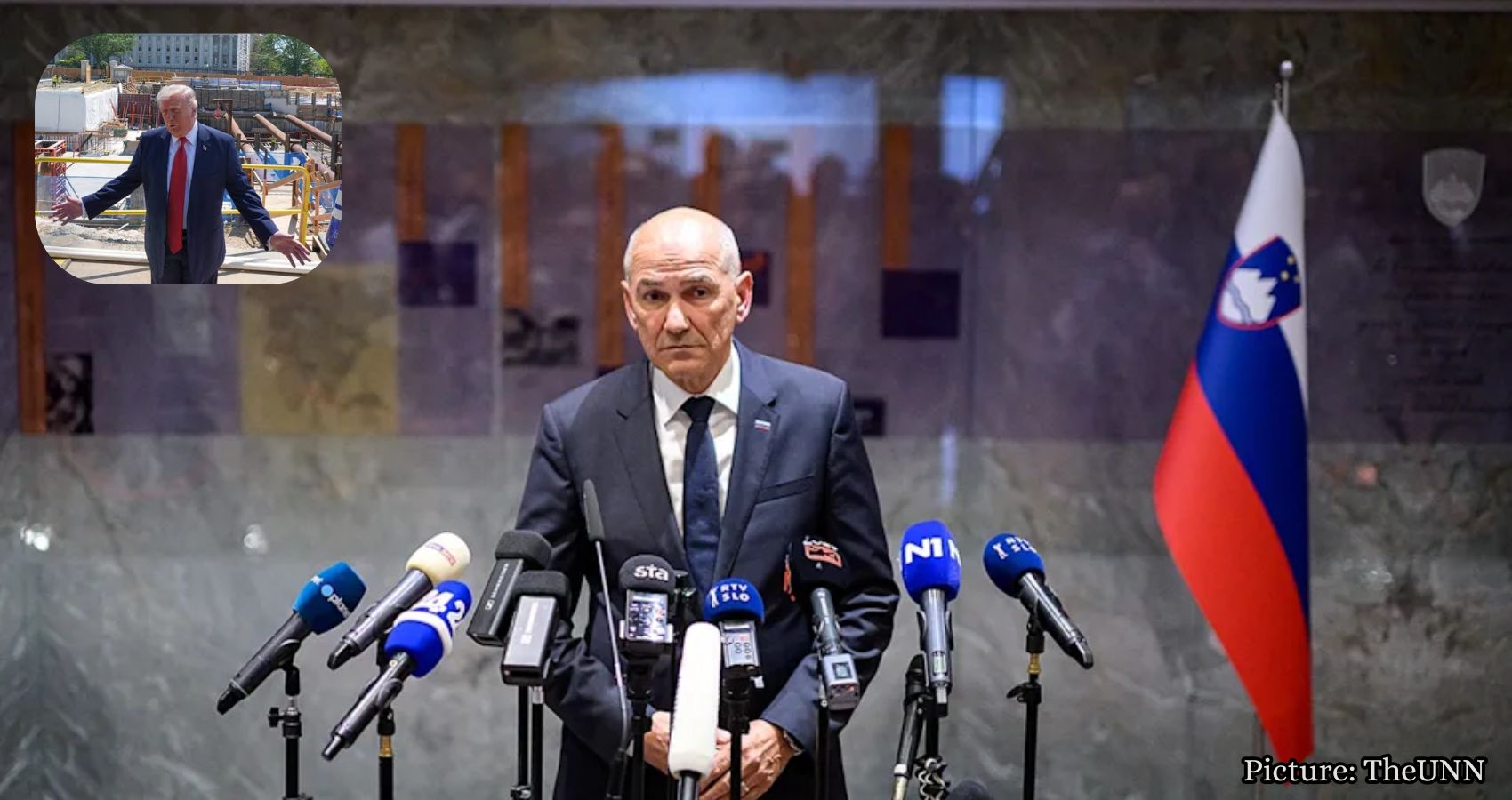
Slovenia’s political landscape is shifting as Prime Minister Janez Janša returns to power, implementing policies reminiscent of former U.S. President Donald Trump.
ŠKOFJA LOKA, Slovenia — The Republic of Slovenia, notable for being the birthplace of First Lady Melania Trump and LA Lakers star Luka Dončić, is experiencing a significant political transformation with the return of Prime Minister Janez Janša. Recently, Janša formed a coalition government that ousted the country’s leftist leader, Robert Golob, marking his fourth term in office.
Janša’s government is characterized by a series of policy reversals that many observers liken to the Trump administration’s approach. One of his first actions was to announce plans to move Slovenia’s embassy in Israel from Tel Aviv to Jerusalem, a decision that aligns with pro-Israel sentiments. Additionally, he has frozen Slovenia’s recognition of a Palestinian state and lifted a ban on military trade with Israel that was set to take effect in 2025.
During an America 250 event hosted by the U.S. Embassy in Ljubljana, Janša emphasized the importance of strong relations with the United States. He articulated a vision of Slovenia as a nation inspired by American ideals, stating, “We imagined America, the United States of America, as the ideal embodiment of that free world… That Slovenia, too, would become the home of the brave in a land of the free.”
Domestically, Janša has pledged to reverse what he describes as the inefficiencies of the Golob administration. He aims to transform Slovenia into “a country of opportunity, prosperity, and justice,” where every responsible citizen feels safe and accepted. His plans include reversing anti-business policies, reducing government bureaucracy, supporting private education and healthcare, reforming the pension system, decreasing the size of government, and investing in infrastructure projects, including a proposed second reactor at Slovenia’s Krško nuclear power plant.
Despite some policy disagreements, Janša has maintained a close relationship with former Hungarian Prime Minister Viktor Orbán. He has expressed support for Ukraine, having traveled to Kyiv in March 2022 alongside the Polish and Czech Prime Ministers to demonstrate solidarity against the Russian invasion. Recently, he returned to Kyiv to commemorate Ukraine Statehood Day during the Ukraine–Southeast Europe Summit.
Janša advocates for increased military aid to Ukraine and tougher sanctions against Russia. He has also adopted a hardline stance on immigration, reminiscent of Trump’s policies. During the 2015 migration crisis, he was vocal in his opposition to the influx of migrants traveling through Slovenia. Following his return to office, Janša joined 18 other EU leaders in signing a letter calling for a “fundamental change in immigration policy” across Europe. The letter emphasizes reducing irregular migration, combating human smuggling, increasing deportations, and enhancing cooperation with third countries.
However, Janša’s return to power has not been without controversy. Critics have labeled him “the greatest threat to Slovenia’s sovereignty and democracy.” He is known for his active presence on social media, where he frequently engages in political commentary and critiques his opponents. This has led to accusations of undermining media independence in Slovenia. Janša has also faced legal challenges, having served time in prison for a conviction he claims was politically motivated.
Janša’s political journey has been marked by resilience. Despite losing elections, he has managed to secure the prime ministership multiple times. In the most recent election held on March 22, Janša’s Slovenska demokratska stranka (Slovenian Democratic Party) garnered 28 seats with 27.9% of the vote, while Golob’s Gibanje Svoboda (Freedom Movement) won 29 seats with 28.7%. The outcome mirrored the 2008 elections, where Janša also lost the popular vote but formed a governing coalition.
After a month of attempts, Golob was unable to establish a new ruling coalition. Slovenian President Nataša Pirc Musar declined to nominate a prime minister, as no candidate could secure the necessary 46 votes in Parliament. Enter Janša, who many analysts regard as a master coalition builder. Following two weeks of negotiations, his coalition received 51 votes in a secret ballot of the National Assembly, including support from representatives of the Italian and Hungarian minorities in Slovenia, as well as an unexpected vote from an anonymous opposition member.
Janša’s political career began long before Slovenia gained independence. In 1988, he was arrested and imprisoned by the Yugoslav People’s Army for allegedly sharing military documents with journalists, a case that sparked public outcry. After serving six months of an 18-month sentence, he was released. In 1989, he co-founded the Slovenian Democratic Union, one of the first opposition parties in the then-Socialist Republic of Slovenia. Following Slovenia’s first free elections in May 1990, Janša was appointed minister of defense, playing a key role in the country’s brief war of independence against Yugoslavia in 1991.
In June 2013, Janša was convicted in a corruption case involving a military supply contract and sentenced to two years in prison. He maintained that the charges were politically motivated and was released after serving six months. The Constitutional Court later overturned his conviction in April 2015.
Looking ahead, Janša is expected to address the United Nations General Assembly in September. It remains uncertain whether he will meet with former President Trump and the First Lady during his visit.
According to Fox News, Janša’s return to power signals a shift in Slovenia’s political landscape, echoing themes familiar to those who followed the Trump administration.