
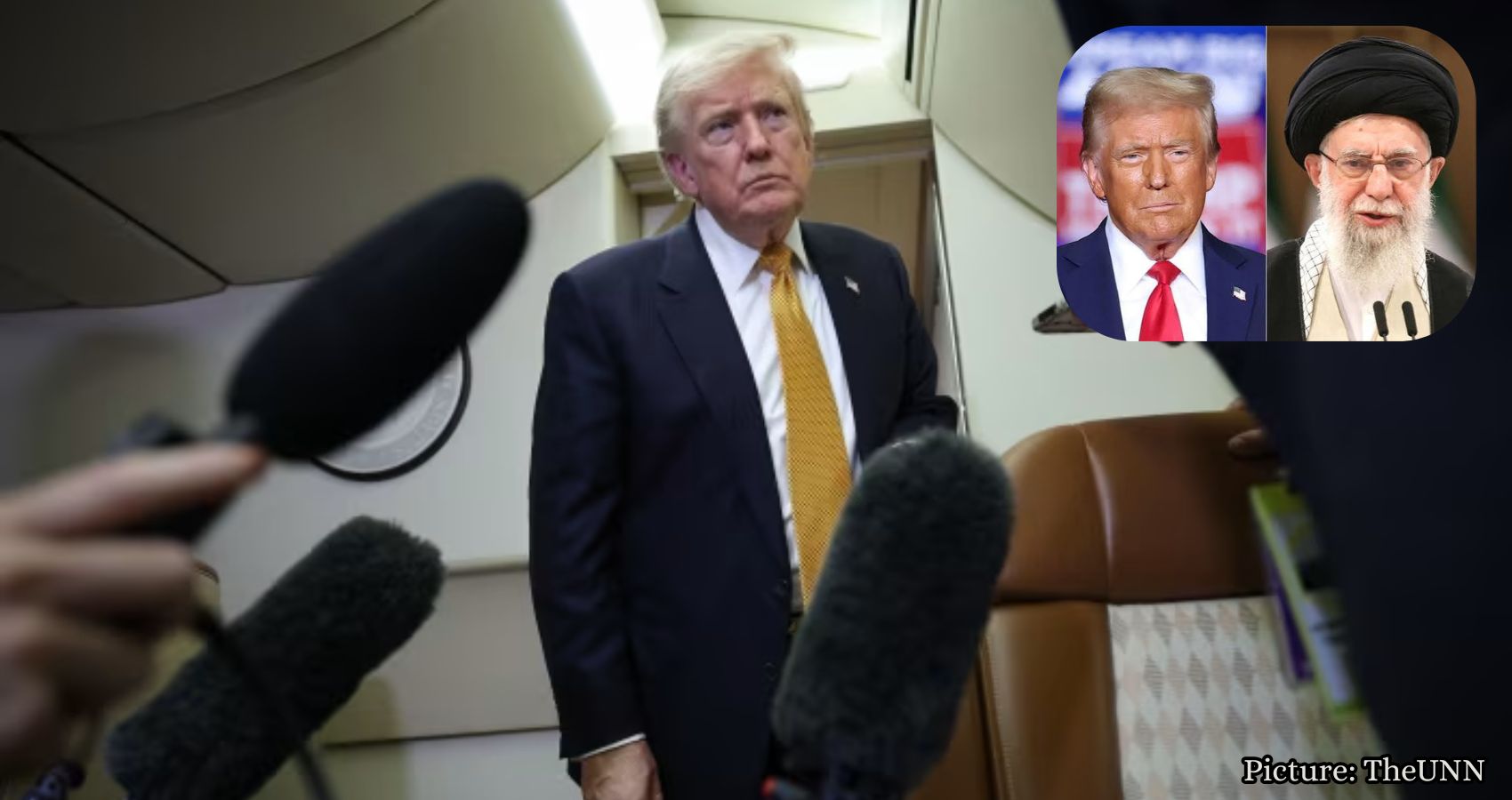
President Trump announced a strong military response to Iran after a failed missile attack on U.S. forces, as experts warn of the regime’s increasing boldness in the region.
President Donald Trump has vowed to retaliate decisively against Iran following the confirmation from U.S. Central Command (CENTCOM) that all ballistic missiles targeting American forces in Jordan were intercepted, with no casualties reported.
In a significant escalation, the United States resumed airstrikes inside Iran late Wednesday night in response to Tehran’s attempted surprise attack on U.S. military personnel. An expert on Iran cautioned that the regime is increasingly willing to test the limits of U.S. resolve, despite its diminished military capabilities.
“The strikes are a powerful response to yesterday’s attempted Iranian attack on U.S. forces based in the Middle East,” CENTCOM stated as the new operation commenced, as reported by The Associated Press. This marked the first U.S. military action inside Iran since Trump paused airstrikes on Friday after 13 consecutive nights of bombing to allow for diplomatic efforts. However, Iran’s missile launch effectively ended that diplomatic window, reigniting direct hostilities between Washington and Tehran.
Earlier on Wednesday, Trump had indicated that the U.S. would retaliate “very hard,” stating, “We’re going to beat the f—ing s— out of them.” His comments underscored the administration’s commitment to a robust military response.
Behnam Ben Taleblu, senior director of the Iran program at the Foundation for Defense of Democracies, highlighted the significance of the surprise nature of Iran’s attack, suggesting a shift in Tehran’s military strategy. “What makes this attack different is that it’s basically a surprise attack,” Taleblu told Fox News Digital. “This is the Islamic Republic matching its deeds with its words,” he added, warning of a “more risk-tolerant, more confident, perhaps less capable, but more dangerous Iran in the Middle East.”
According to CENTCOM, the Islamic Revolutionary Guard Corps launched multiple ballistic missiles from Iran aimed at U.S. forces around 5:45 p.m. Eastern Time on Tuesday. All missiles were intercepted, and there were no immediate reports of casualties or damage.
Despite the successful interception of the missiles, Taleblu cautioned that this alone may not restore deterrence. He noted that Tehran has learned it can launch attacks on American forces, withstand U.S. retaliation, and then dictate the terms of engagement. “The dangerous lesson for America here is that you have to treat every single Iranian missile attack, whether it was successful or not, as being successful,” he stated. “You can’t over-rely on technology because ultimately this is not a technological problem. This is a political problem.”
The renewed hostilities come amid a nearly five-month conflict that threatens to expand across the region. Iran has also targeted commercial tankers in the strategically vital Strait of Hormuz, while the United States and Saudi Arabia have conducted joint strikes against Iran-backed militias in Iraq following drone attacks on Saudi oil facilities. This operation marked the first time Riyadh publicly acknowledged its participation alongside Washington, potentially opening a new front in the ongoing confrontation, according to reports from Reuters.
The escalation of violence also jeopardizes fragile negotiations concerning the Strait of Hormuz. Iran has rejected an Omani proposal for joint regional management of the waterway, insisting instead on broader control over shipping routes through the strait.
The recent missile attack followed a more deadly incident in July when an Iranian strike on U.S. forces in Jordan resulted in the deaths of two American service members and injuries to several others. Following that attack, the United States targeted Iranian positions, but Taleblu argued that Tehran remains confident it can absorb retaliation and dictate the terms of engagement.
He emphasized that the U.S. must respond decisively while also preparing for potential Iranian counterattacks. “The U.S. certainly does need to respond, and President Trump indeed has promised to respond with some very colorful language, but it has to be prepared for the Iranian response,” Taleblu warned.
As tensions continue to escalate, the situation remains precarious, with both sides poised for further military actions that could have significant implications for regional stability.
According to The Associated Press, the ongoing conflict illustrates the complexities of U.S.-Iran relations and the challenges of maintaining deterrence in a volatile geopolitical landscape.