
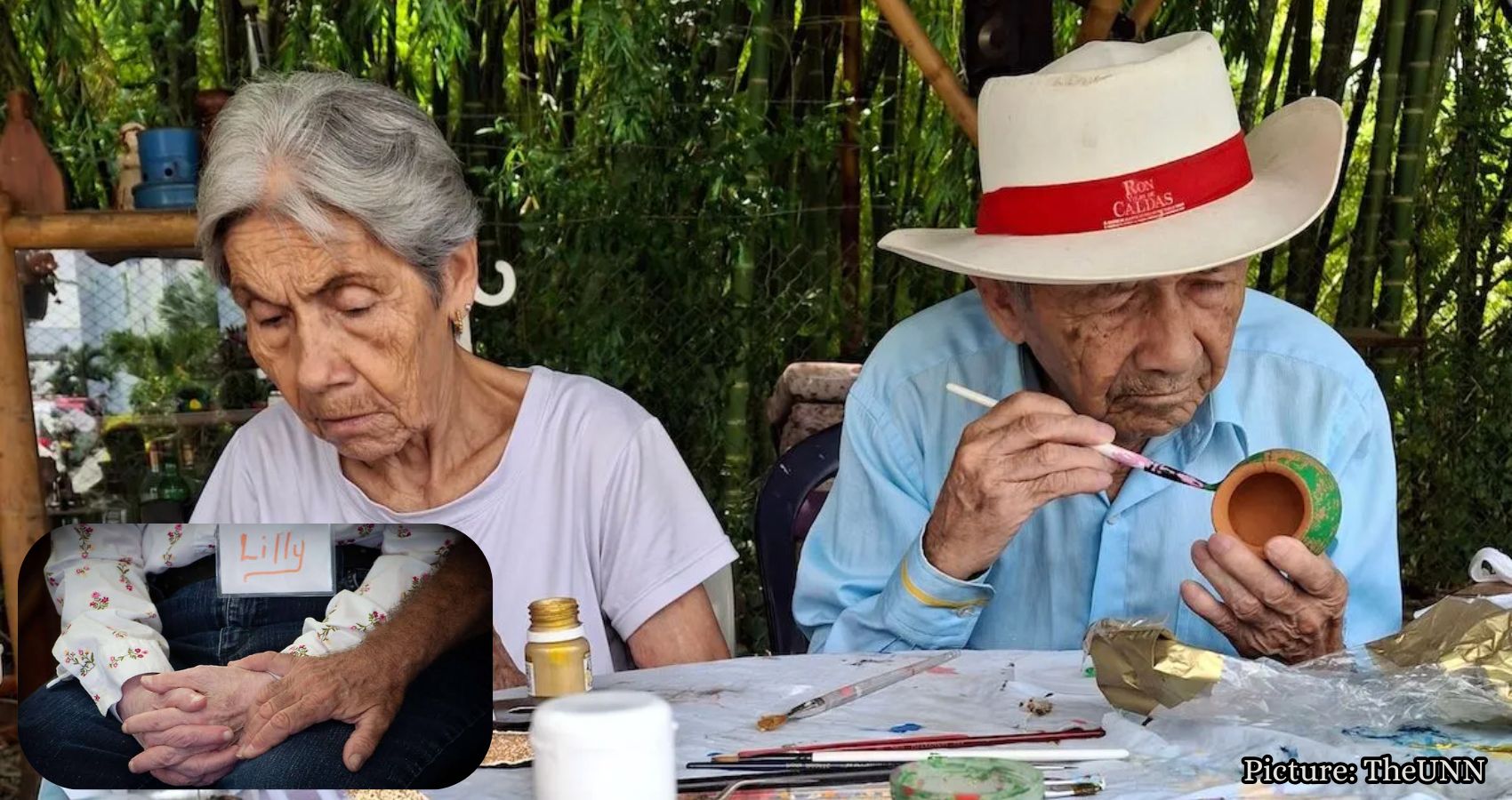
Sonoma County caregivers shared their experiences and challenges at a community briefing, emphasizing the need for more support and resources in managing the demands of caregiving for aging relatives.
When a caregiver in Sonoma County drops her mother off at an adult day program, the transformation is striking. “She paints, she sings, she exercises, she engages,” the caregiver remarked. “She literally dances out the door.”
This caregiver’s mother suffers from advanced dementia and struggles to communicate in conventional ways. For the family, the adult day program offers more than just activities and companionship; it provides a crucial respite from the relentless demands of caregiving.
The caregiver was one of several Sonoma County residents who shared their stories during a community briefing held on July 16. Organized by American Community Media and the California Department of Aging, the event took place at Today & Together, a nonprofit adult day program located on the Hanna Center campus in Sonoma Valley.
As Sonoma County’s population ages, the responsibility of caring for older adults increasingly falls on relatives, friends, and neighbors. Many of these caregivers manage conditions such as dementia, strokes, chronic illnesses, and mobility challenges, often without pay, formal training, or time off.
“We need more day programs and gatherings,” the caregiver emphasized. “We need more respite, where you can take a weekend or maybe a week and take a vacation.”
For immigrant families, caregiving can be further complicated by language barriers and cultural expectations regarding who should provide care. A Vietnamese American caregiver shared her experience of helping her mother care for her grandmother, who speaks only Vietnamese. In her culture, it is customary for children and close relatives to take on caregiving responsibilities.
<p“It’s expected that the children or immediate family help out with caregiving,” she explained.
These cultural expectations can make it challenging for older adults to accept outside assistance, even when their family members are overwhelmed. Additionally, finding Vietnamese-speaking care providers and culturally appropriate services can be difficult.
The caregiver, who also works as a social worker and family consultant, often assists relatives with understanding hospital documents, completing forms, and communicating with government agencies. Although she was born in the United States, she noted that her proficiency in Vietnamese is not always sufficient for translating complex medical and administrative information.
Her situation is further complicated by her role as a parent to two young children, placing her among the “sandwich generation” of adults who are simultaneously caring for children and aging relatives.
Another speaker recounted her journey of becoming a caregiver while raising young children and managing her own health issues. She initially took on caregiving for her father, who fell seriously ill in his late 80s. After his passing, she thought she had navigated the most challenging period of her life. However, she soon found herself back in a caregiving role when her mother suffered a stroke.
She described the emotional and logistical strain of making medical and financial decisions alone while grappling with uncertainty about her mother’s recovery.
A Spanish-speaking caregiver also shared her experience, explaining that she had to leave her job when her mother became ill. She later took on the responsibility of caring for her father, who had diabetes and dementia. Despite having nine siblings, she often felt isolated in her caregiving journey, as others in her family did not fully grasp the complexities of her father’s needs. She attempted to maintain a part-time job while dedicating the rest of her week to his care.
“Her life was taken completely over,” an interpreter conveyed on her behalf.
Adult day programs can play a vital role in allowing older adults to remain at home while providing caregivers with the necessary time to work, rest, or focus on their own health. Today & Together offers structured activities, meals, and supervision for older adults, including those with dementia and cognitive changes related to strokes. Participants return home each evening, enabling their relatives to continue providing care while receiving daytime support.
California’s adult day programs also offer art, music, exercise, meals, health monitoring, and caregiver education. The California Department of Aging describes these programs as suitable for individuals who require daytime assistance but do not need 24-hour skilled nursing care.
In response to the growing needs of caregivers, Sonoma County has prioritized the expansion of respite programs and adult day care in its local caregiving plan. County officials are also exploring options to provide more financial support for individuals who reduce their work hours or leave their jobs to care for loved ones.
Caregivers seeking assistance can reach out to the Sonoma County Area Agency on Aging for help in locating local programs. California’s Caregiver Resource Centers also offer care planning, counseling, support groups, and assistance in arranging temporary respite care.
For the families present at the Sonoma gathering, one message resonated clearly: while caregivers often provide support out of love, duty, or cultural obligation, they cannot be expected to shoulder the burden alone.
“First, you have to get into the system, and you have to navigate that system,” one caregiver stated. “And that starts here today,” according to Source Name.