
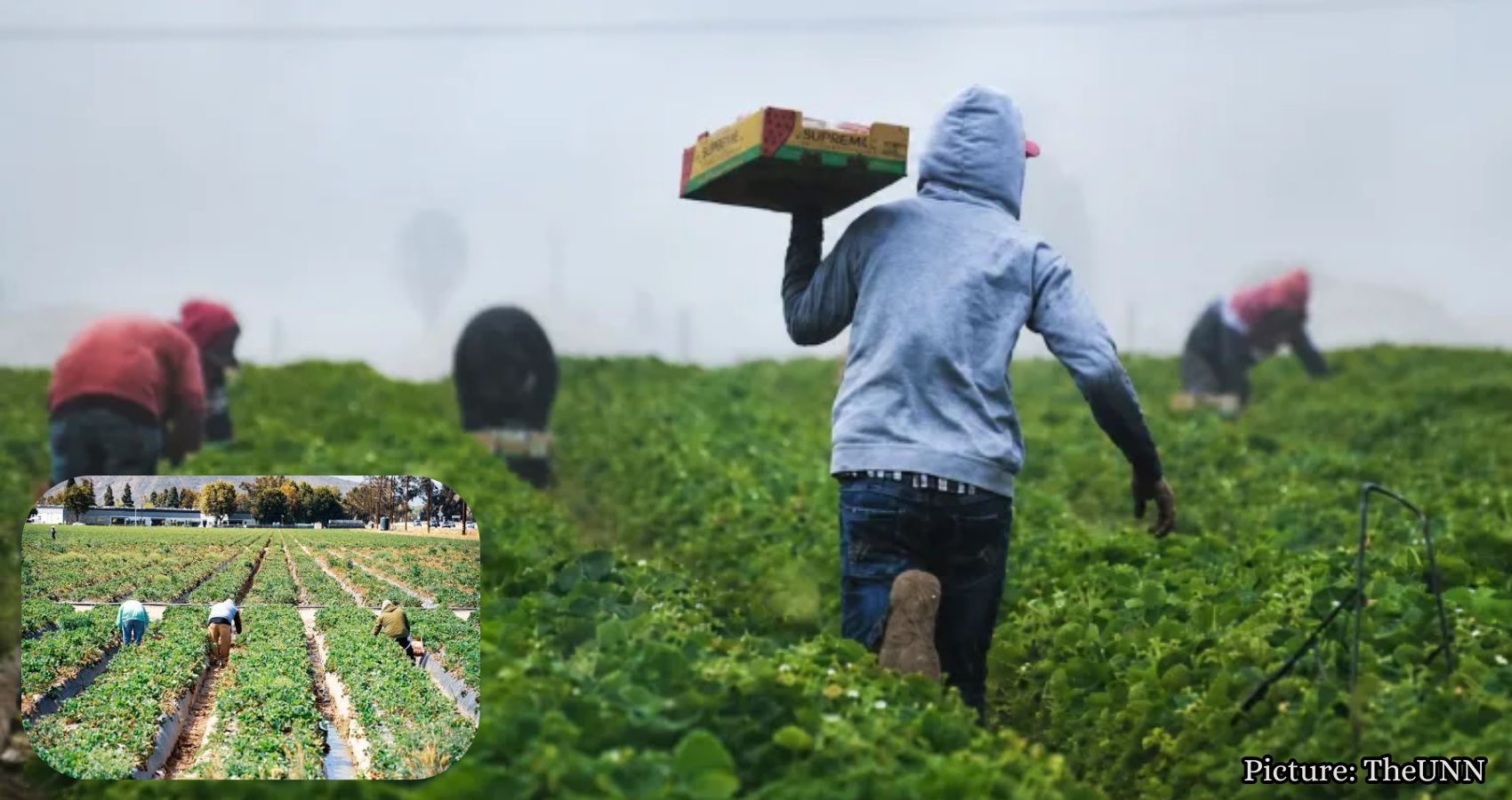
New research highlights the essential role of immigrant workers in Texas’ food and agriculture sectors, emphasizing their significant contributions to the state’s economy.
Recent research from the American Immigration Council reveals the vital role immigrants play in Texas’ food sectors, particularly in agriculture. The report, titled From Field to Fork: The Economic Impact of Immigrants on Texas’ Food Industry, was developed in partnership with Texans for Economic Growth, a statewide coalition of over 160 business members supported by the American Immigration Council. This comprehensive study focuses on the state of Texas, with particular attention given to the Houston Metro Area.
The report was publicly unveiled during an event hosted by Amegy Bank, which brought together multiple Texas-based partners. This gathering aimed to showcase the report’s findings and engage local leaders in a discussion about the impact of immigration on Texas’ food industry. The event, held on May 21, featured a dialogue among business and civic leaders on actionable steps Texas can take regarding this critical issue.
“Texas’ agriculture and food industries are a cornerstone of our state’s economy, generating more than $102 billion in economic output and supporting communities across every region of Texas,” said Chelsie Kramer, Texas State Organizer for the American Immigration Council and Texans for Economic Growth. “This report underscores something Texas employers and community leaders already know firsthand: immigrants are essential to keeping our food system moving. The report also highlights the reality that 14.5 percent of Texas’ food workers and 13.5 percent of the state’s agricultural workforce are undocumented immigrants, reinforcing that workforce stability and practical policy conversations are critical to the long-term strength and competitiveness of Texas’ food economy.”
Emily Williams Knight, Ed.D., president and CEO of the Texas Restaurant Association, emphasized the importance of immigrant workers in the restaurant sector. “Texas restaurants are built by people who work hard, serve their neighbors, and help make our communities stronger. Immigrant workers have long been part of that story, not only in restaurant kitchens and dining rooms but across the farms, suppliers, and small businesses that make our food system work,” she stated. “This report is an important reminder that practical workforce solutions do exist that would protect local businesses, keep food costs in check, and preserve the hospitality that defines communities across Texas.”
Anne McBride, Vice President of Impact at the James Beard Foundation, noted the interconnectedness of the food system. “This report provides crucial data on the essential role that immigrants play to power the American food system via Texas, from farms to restaurants. These two sectors cannot exist without the other and face similar challenges when it comes to our immigrant entrepreneurs and workers, which is why the James Beard Foundation is thrilled to partner on the release of this important work,” she said.
Justin Yancy, President and CEO of the Texas Business Leadership Council, echoed the report’s findings. “This report highlights a reality Texas employers know well: immigrant workers are essential to the strength, stability, and competitiveness of our agricultural and food economy. As Texas continues to grow, maintaining a dependable workforce will remain critical to supporting our producers, businesses, and consumers alike,” he remarked.
The report outlines several key findings regarding the role of immigrant workers in Texas’ food sector. Approximately 400,500 immigrant workers constitute nearly one-quarter (24.9 percent) of the workforce, contributing to various industries, including agriculture, food processing, food wholesale trade, food retail trade, and food services. Immigrants are essential across the broader food supply chain, facilitating the movement of food from production to consumers.
Immigrant workers in Texas hold a diverse range of immigration statuses. About one-fifth of workers in the food sector are naturalized citizens, while 14.5 percent are undocumented, including 20,100 individuals eligible for Deferred Action for Childhood Arrivals (DACA). The state’s reliance on workers with varied immigration statuses across the food industry indicates that changes in immigration policy can significantly impact workforce stability and the continuity of food production and distribution.
In 2024, agriculture, food processing, and food services are projected to generate $102.6 billion in economic output in Texas. The state exports approximately $6.5 billion worth of agricultural commodities annually and plays a significant role in the United States’ agricultural exports.
Immigrant workers occupy critical positions throughout the food sector. They represent 47.8 percent of miscellaneous agricultural workers, 31.7 percent of cooks, and 24.6 percent of cashiers. Farms, restaurants, and grocery stores depend on immigrants to fill essential frontline roles.
In the Houston Metropolitan Area, agriculture and food services are expected to contribute around $2.7 million in GDP in 2024, with immigrants making up over one-third (34.3 percent) of the workforce in the food sector.
For more detailed insights, readers can access the full factsheet.
About the American Immigration Council: The American Immigration Council works to strengthen America by shaping perceptions and actions toward immigrants and immigration. The organization advocates for a fair and just immigration system that opens doors to those in need of protection and harnesses the energy and skills that immigrants bring. The Council employs a coordinated approach to advance change through litigation, research, legislative and administrative advocacy, and communications. In January 2022, the Council merged with New American Economy to expand and protect the rights of immigrants and ensure their economic success.
About Texans for Economic Growth: Texans for Economic Growth is a coalition of over 145 Texas business leaders and associations dedicated to acknowledging and supporting the positive impact of immigrants on the Texas economy. Launched on February 26, 2019, the coalition released the Texas Compact on Immigration, a set of principles signed by business leaders to guide immigration discussions at both state and federal levels. Texans for Economic Growth advocates for common-sense federal immigration reforms and statewide policies that recognize the valuable contributions immigrants make to Texas.
According to American Immigration Council.