
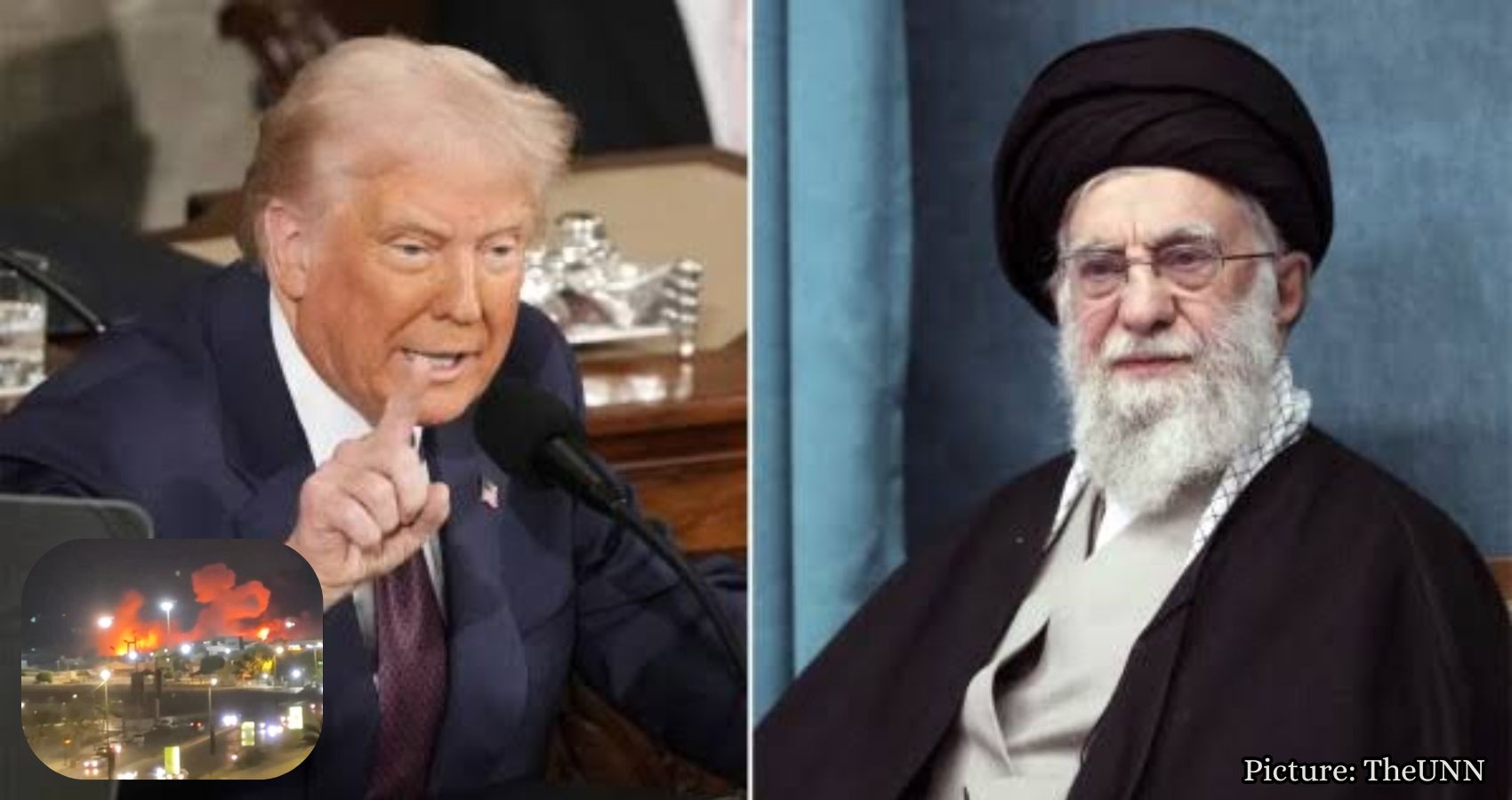
Amid escalating tensions in the Middle East, an Iranian newspaper’s provocative headline targeting Donald Trump follows the death of U.S. Senator Lindsey Graham, highlighting the fraught relations between Iran, the U.S., and Israel.
The ongoing conflict in the Middle East has intensified, with a recent front-page illustration from Iran’s Hamshahri newspaper drawing significant international attention. The publication featured the headline “Get Ready for Sudden Death,” prominently displaying U.S. President Donald Trump alongside Israeli Prime Minister Benjamin Netanyahu and other senior Western officials. This provocative illustration was released just a day after the announcement of U.S. Senator Lindsey Graham’s death, which was attributed to a “brief and sudden illness.”
The timing of the publication has added another layer of tension to an already strained relationship between Iran, the U.S., and Israel. Hamshahri, a state-run daily known for its alignment with Iran’s political establishment, has a history of publishing strong commentary on regional conflicts and foreign policy. The illustration has sparked widespread discussion on social media and among international media outlets.
The front page depicted Trump kneeling while holding a photograph of Graham, surrounded by Netanyahu, U.S. Defense Secretary Pete Hegseth, and other officials. While the newspaper did not explicitly clarify the intent behind the artwork, many observers interpreted it as a warning directed at key U.S. and Israeli leaders. This publication follows weeks of escalating military tensions between Iran, the U.S., and Israel, during which all parties have exchanged threats and engaged in military operations.
The choice to feature Trump prominently in the illustration reflects the broader political confrontation between Tehran and Washington. Trump has been a vocal supporter of hardline policies against Iran, advocating for military action and economic sanctions. Iranian media have criticized him for backing Israeli military operations and policies aimed at undermining Iran’s leadership.
In the wake of Graham’s death, Iranian state media extensively covered the event, with one television presenter labeling him a “war-mongering, anti-Iranian, U.S. senator” and suggesting he had been “sent to hell.” The authenticity of this widely circulated clip has not been independently verified. Iranian Foreign Ministry spokesperson Esmaeil Baqaei also condemned Graham, stating, “Our people will not mourn a man whose philosophy on life was aggression and intimidation,” and described him as “malicious.”
Lindsey Graham, who served as a U.S. senator from South Carolina, was known for his staunch support of a tougher stance on Iran. Throughout his political career, he consistently advocated for military assistance to Ukraine and expressed strong support for Israel during the Gaza conflict. Following U.S.-Israeli strikes on Iran, Graham publicly called for regime change in Tehran and the removal of then-Supreme Leader Ayatollah Ali Khamenei. His office announced that he had died due to a tear in his aorta.
Prior to the controversial front page, Hamshahri reportedly released another infographic listing 13 foreign leaders it claimed should be targeted in retaliation for the killing of Ayatollah Khamenei. This list included Trump, Netanyahu, Hegseth, and several other senior Western political figures, further escalating concerns about the aggressive rhetoric emerging from sections of Iran’s state-backed media.
Relations between Iran and the United States remain deeply strained, as military operations and political tensions continue to unfold across the region. Recent strikes, sanctions, and public exchanges of threats have widened the divide between the two nations. Although diplomatic talks have taken place in recent months, no significant breakthroughs have been achieved.
Political analysts suggest that the latest media controversy underscores the increasingly hostile atmosphere surrounding U.S.-Iran relations. The provocative headline from Hamshahri is unlikely to alleviate tensions between Tehran, Washington, and Israel. As military operations persist and political leaders on both sides maintain strong rhetoric, further diplomatic efforts may become increasingly challenging.
For now, the controversial newspaper headline serves as a stark reminder of the deepening confrontation between Iran and its Western rivals, illustrating how the conflict continues to manifest through both military actions and public messaging. The situation remains fluid, and the implications of such provocative statements could have far-reaching consequences in an already volatile region.
According to The Sunday Guardian, the ongoing tensions highlight the precarious state of international relations in the Middle East.