
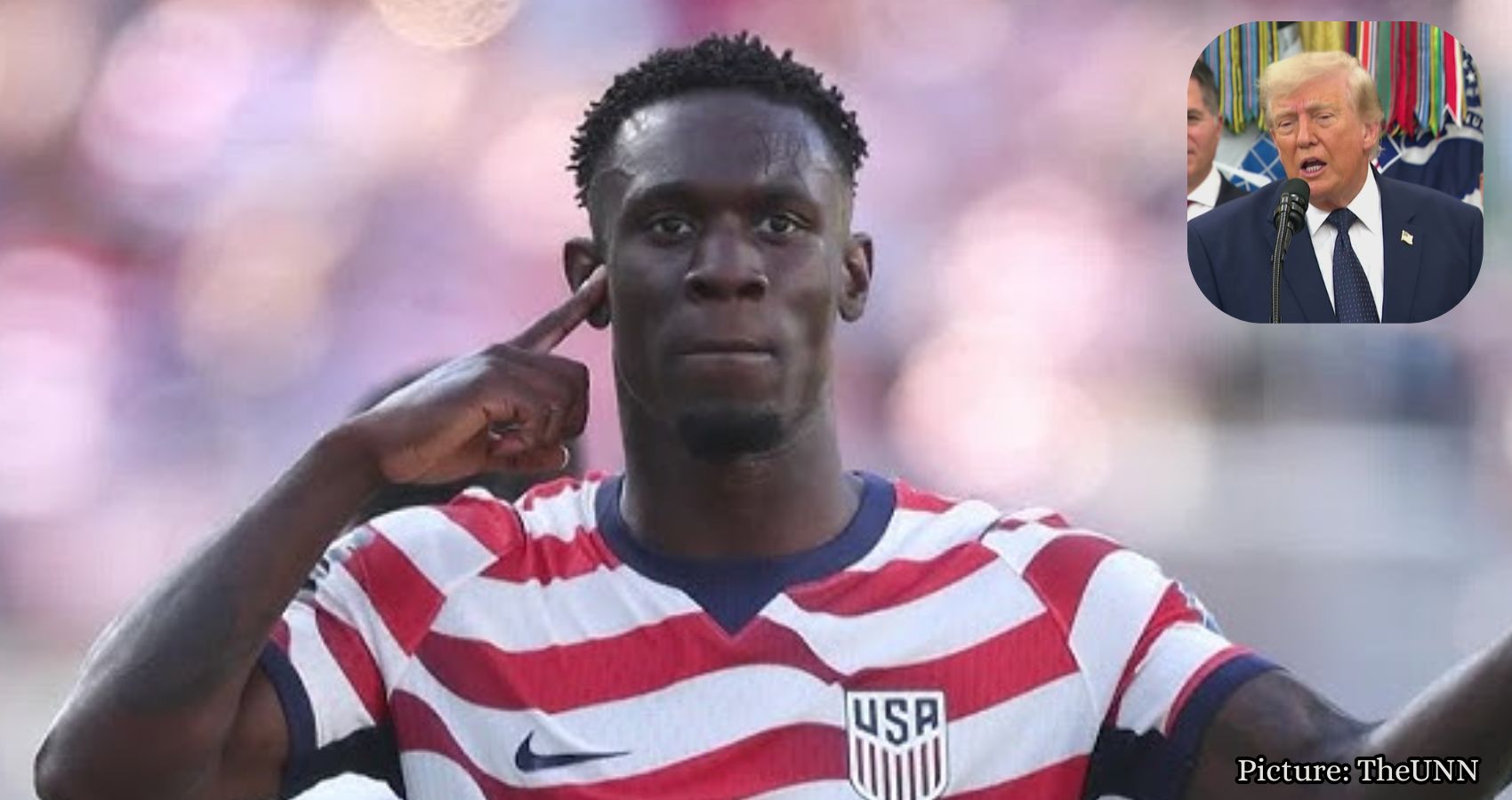
FIFA’s suspension of Folarin Balogun’s one-match ban, following a request from former President Donald Trump, has sparked significant controversy ahead of the 2026 World Cup knockout stage.
FIFA’s recent decision to suspend the automatic one-match ban imposed on United States striker Folarin Balogun has ignited one of the most significant controversies of the 2026 FIFA World Cup. This move came after former President Donald Trump acknowledged that he had asked FIFA President Gianni Infantino to review Balogun’s red card.
Balogun, who has emerged as the United States’ leading scorer in the tournament with three goals, received a red card during the Americans’ 2-0 victory over Bosnia and Herzegovina in the Round of 32. The incident occurred when he stepped on defender Tarik Muharemovic’s ankle. According to FIFA regulations, a straight red card typically results in an automatic one-match suspension.
However, FIFA announced that it had decided to suspend the ban by invoking Article 27 of its disciplinary code. This allowed Balogun to participate in the upcoming Round of 16 match against Belgium while the red card remains on his record under a probationary period.
The decision followed Trump’s confirmation that he had spoken with Infantino, requesting a review of the incident, while clarifying that he did not direct FIFA on what decision to make. This intervention has led to accusations of political influence over the football governing body.
Belgium’s football federation expressed its astonishment at the ruling and filed an appeal, arguing that overturning an automatic suspension undermines the integrity of the competition. Belgium’s coach, Rudi Garcia, also criticized the decision, suggesting that FIFA had created an unprecedented situation just before a crucial knockout match. Ultimately, FIFA rejected Belgium’s appeal.
The backlash against FIFA’s decision intensified when UEFA issued a strongly worded statement, labeling the action as “unprecedented, incomprehensible, and unjustifiable.” The governing body of European football warned that altering a disciplinary sanction due to outside intervention could damage confidence in football’s judicial processes and set a troubling precedent for future tournaments.
According to Al Jazeera, this marks the first instance since the 1962 World Cup that a player sent off during the tournament has avoided serving an automatic suspension. While FIFA has previously suspended bans arising from qualifying matches, reversing a World Cup red-card suspension during the competition is highly unusual.
As Balogun prepares to lead the United States attack against Belgium in one of the tournament’s most anticipated Round of 16 matches, the debate surrounding FIFA’s controversial decision is expected to persist long after the final whistle.