
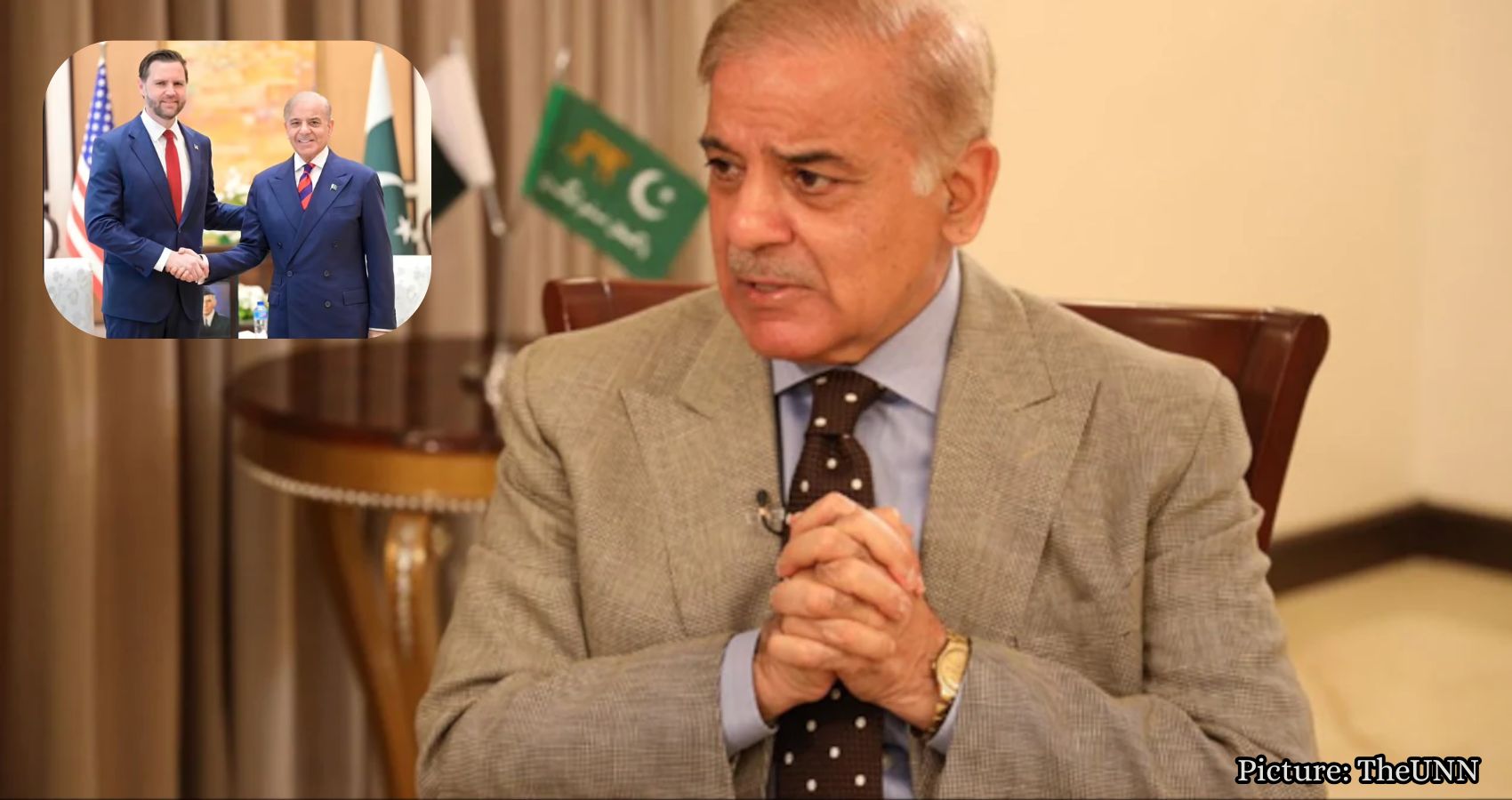
Bahrain’s foreign ministry has accused Iran of launching attacks on its territory, while Pakistani Prime Minister Shehbaz Sharif emphasized the need for freedom of navigation in the Strait of Hormuz.
Bahrain’s foreign ministry has made serious allegations against Iran, claiming that the country launched attacks on its territory. This development comes amid heightened tensions in the ongoing conflict involving the U.S., Israel, and Iran.
In a statement, Bahrain’s foreign ministry condemned what it described as retaliatory strikes by Iran, labeling them a “serious violation” of international law and Bahrain’s sovereignty. The ministry asserted that “peace cannot be built through terrorism, and security cannot be established through aggression.” While the statement indicated that some of Iran’s counterstrikes impacted Bahraini territory, it did not provide further details.
In response to the escalating situation, Iran’s foreign ministry has criticized the United States following a series of airstrikes. Tehran characterized the American actions as a “blatant violation of Article 2, Paragraph 4 of the UN Charter.” The Iranian Revolutionary Guard Corps (IRGC) defended its retaliatory actions as an exercise of its “inherent right to self-defense under Article 51 of the United Nations Charter.” Abbas Araghchi, a senior Iranian official, is currently in Pakistan to discuss the next phase of peace talks between the U.S. and Iran.
During a naval event in Karachi, Pakistani Prime Minister Shehbaz Sharif called for “freedom of navigation” in the Strait of Hormuz. He emphasized that “the right of free passage and freedom of navigation are no longer luxuries but have become an absolute necessity for the entire world.” Sharif also highlighted Pakistan’s role as a peacemaker since the signing of a memorandum of understanding (MoU).
The situation escalated further when Iran targeted a cargo vessel, the Ever Lovely, as it was exiting the Strait of Hormuz using drones. This incident prompted the International Maritime Organization (IMO), the UN’s maritime agency, to suspend operations in the strategic waterway.
U.S. President Donald Trump condemned the attack on the Ever Lovely, stating, “Obviously, this is a foolish violation of our Ceasefire Agreement.” He also reported that Iran had targeted four transiting ships in the Strait of Hormuz.
U.S. Vice President JD Vance remarked, “Iran signed a ceasefire agreement. We have honored it. If they have disagreements about how the MoU is being applied, they can pick up the phone.” He added, “Violence will be met with violence.”
In a related development, Lebanese and Israeli officials signed a framework agreement this morning, brokered by the United States, after months of tension between the two nations. Lebanese Ambassador Nada Moawar and Israeli Ambassador Yechiel Leiter hailed the agreement, which also involves U.S. participation.
Lebanese Prime Minister Joseph Aoun described the framework agreement as “a first step” that would enable Lebanon to reclaim its “fully liberated lands” and rebuild homes under the sovereignty of the Lebanese state. In contrast, Israeli Prime Minister Benjamin Netanyahu referred to the agreement as “a major achievement,” vowing to maintain it as long as Hezbollah remains armed.
In a reassuring update, Netanyahu announced that the Israeli military would allow the Lebanese army to gain control of the territory, with both countries jointly establishing two pilot zones in accordance with recommendations from the Israel Defense Forces (IDF).
The ongoing conflict and recent developments underscore the fragile state of relations in the region, with Bahrain’s claims against Iran and calls for navigation freedom highlighting the complexities of international maritime security.
For more information, see The Sunday Guardian.