
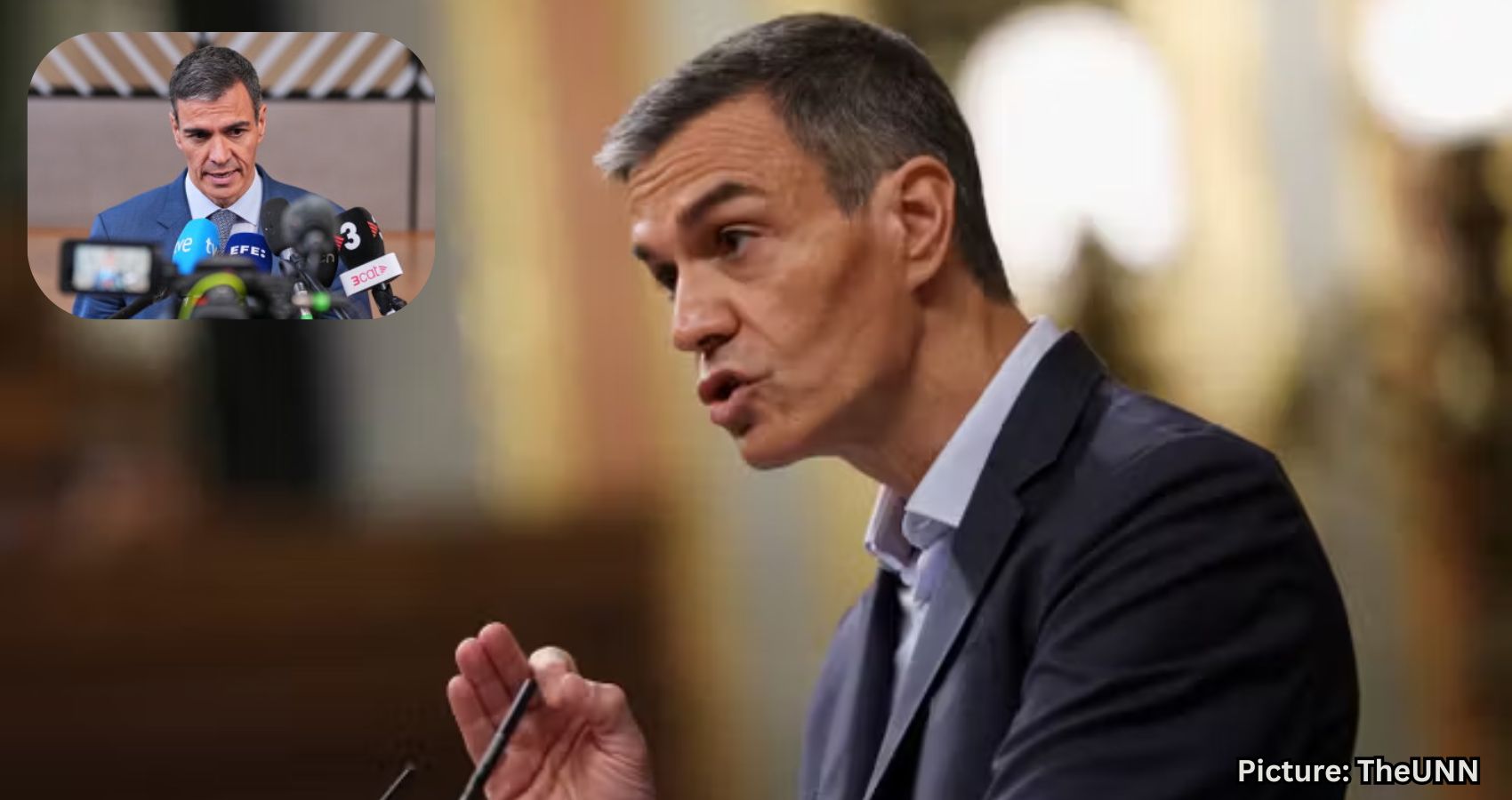
Spanish Prime Minister Pedro Sanchez has expressed his support for the Supreme Court’s sentencing of former transport minister Jose Luis Abalos, emphasizing that there will be “no impunity for anyone.”
Spain is currently grappling with a series of corruption scandals that have raised questions about the integrity of its government. In a recent statement, Prime Minister Pedro Sanchez praised the Supreme Court’s judgment against Jose Luis Abalos, a former transport minister and close aide, asserting that accountability is essential in governance.
During a parliamentary session, Sanchez emphasized that there can be “no impunity for anyone,” regardless of their political affiliation. He firmly denied any involvement of his party, the Spanish Socialist Workers Party (PSOE), in financial misconduct. “There should be no shadow of doubt about the actions of the government,” he stated, urging those who may wish to cast doubt on his administration to provide concrete evidence rather than engage in speculation or insinuation.
Many observers anticipated a strong response from Sanchez regarding Abalos’ sentencing, given their close relationship. However, the Prime Minister’s remarks focused on the broader implications of the ruling.
Last week, the Supreme Court sentenced Abalos to 24 years in prison for multiple offenses, including bribery, misuse of office, influence peddling, and embezzlement. Although the court’s ruling could potentially be reduced to 16.5 years, the implications of the case are significant. The Supreme Court highlighted that a society perceiving its leaders as acting in self-interest rather than for public service suffers a loss of institutional legitimacy, which undermines the stability of the system.
Abalos is not the only figure in the PSOE facing scrutiny. The ongoing investigation into his actions coincides with a high-profile corruption scandal involving Begoña Gómez, the wife of Prime Minister Sanchez. Recently, Gómez was ordered to surrender her passport and was subjected to a strict travel ban, with Judge Juan Carlos Reinado requiring her to attend court hearings every two weeks.
While both scandals underscore the pervasive issue of corruption within the current government, there is no direct link between the cases. The investigation into Abalos was initiated by the Supreme Court, whereas Gómez’s situation arose from a complaint filed by the legal group Manos Limpias (Clean Hands).
As Spain approaches general elections scheduled for next year, the multiple scandals surrounding the ruling PSOE party could have significant political ramifications. Alberto Núñez Feijó, leader of the opposition People’s Party (PP), has called for Sanchez to dissolve parliament and hold snap elections in light of the controversies. However, Sanchez has firmly rejected this notion, maintaining that elections will proceed as planned in August 2027.
The unfolding events highlight the challenges facing the Spanish government as it navigates allegations of corruption and public scrutiny. As the situation develops, the Prime Minister’s commitment to accountability will be tested in the eyes of the electorate.
According to The Sunday Guardian, the ramifications of these scandals could reshape the political landscape in Spain as the country heads toward its next electoral cycle.