
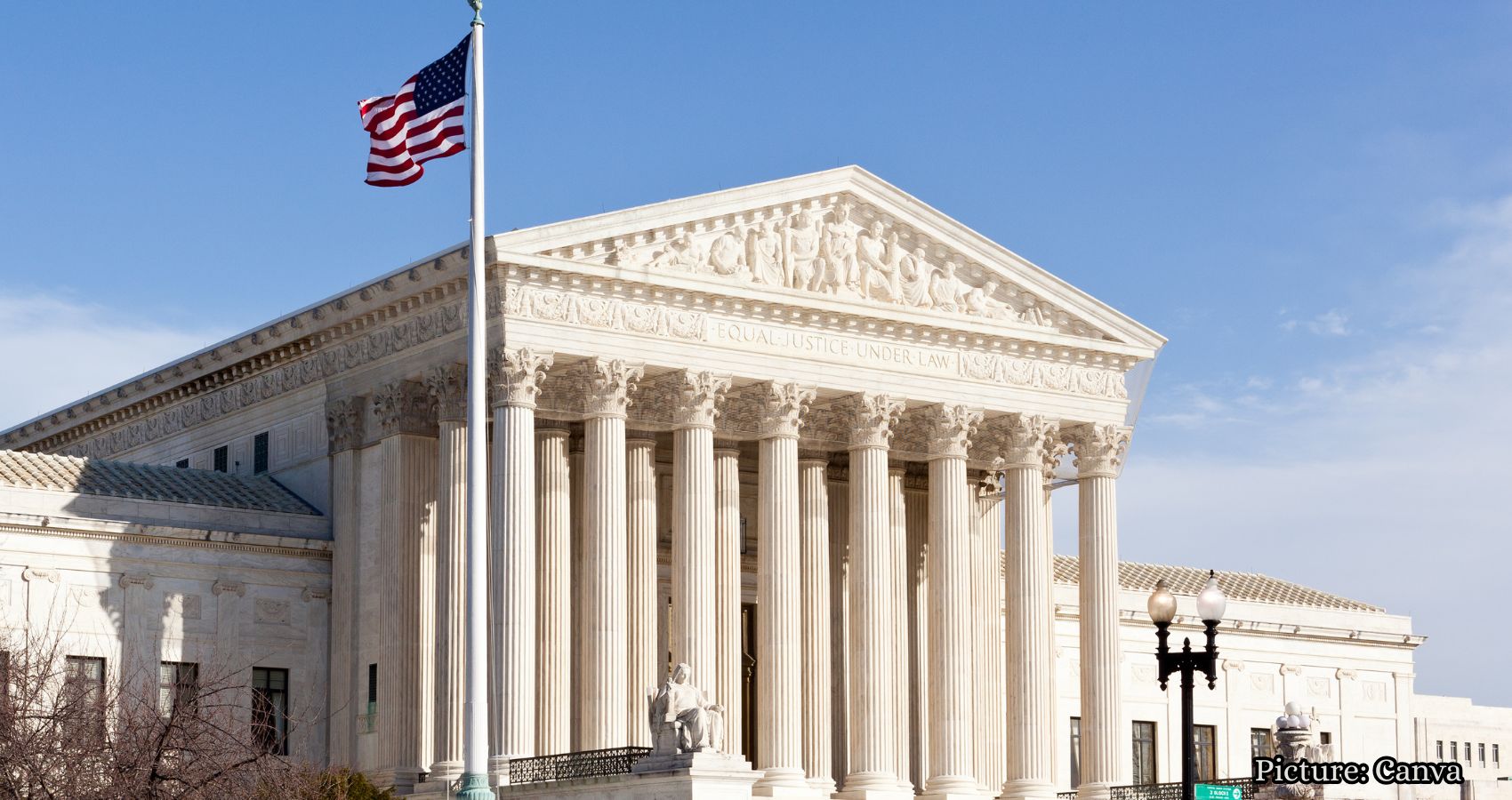
Immigration advocates presented arguments before the Supreme Court, asserting that the Trump administration’s turnback policy unlawfully denied thousands the right to seek asylum, with significant implications for refugee rights.
On March 24, 2026, in Washington, D.C., immigration advocates argued before the Supreme Court that the Trump administration’s turnback policy violated federal immigration law. This now-defunct policy allowed immigration officers at official border crossings to physically and indefinitely block individuals seeking safety from entering the United States, disregarding their legal obligation to inspect and process asylum requests.
Kelsi Corkran, Supreme Court Director of the Institute for Constitutional Advocacy and Protection, who presented the case, emphasized the long-standing legal framework supporting asylum seekers. “For more than 45 years, Congress has guaranteed people arriving at our borders the right to seek asylum, consistent with our international treaty obligations,” she stated. “Yet this Administration believes that Congress gave it discretion to completely ignore those requirements and turn back those who are seeking refuge from persecution at its whim. Nothing in the law supports that result.”
The turnback policy, often referred to as “metering” by government officials, marked a departure from established practices and was deemed unlawful by courts in both 2022 and 2024. Although the policy has not been in effect since 2021, the Trump administration sought to overturn the Ninth Circuit Court of Appeals’ decision that declared it illegal.
Nicole Elizabeth Ramos, Border Rights Project Director at Al Otro Lado and a plaintiff in the case, highlighted the dire circumstances faced by those turned away at the border. “The right to seek asylum is not a policy preference or a loophole—it is a promise to human beings in their most desperate hour,” she said. “The people turned away at our border are fleeing rape, torture, kidnapping, and death threats. You cannot tell families running for their lives to go back and wait in danger because their suffering is inconvenient.”
Ramos further asserted that the case raises critical questions about the United States’ commitment to protecting those fleeing persecution. “We brought this case because the United States made a legal and moral commitment to protect people fleeing persecution. The question before the Court is whether that promise still means something—or whether it can be discarded when it becomes politically uncomfortable.”
U.S. immigration laws have long mandated that government officials inspect individuals seeking asylum at designated ports of entry along the U.S.-Mexico border. This requirement is intended to prevent vulnerable individuals from being sent back to danger without the opportunity to seek protection. Melissa Crow, Director of Litigation at the Center for Gender & Refugee Studies (CGRS), criticized the turnback policy, stating, “It fueled chaos and dysfunction at the southern border. And it was a complete humanitarian catastrophe, returning thousands of vulnerable refugees to grave harm.”
She added, “For far too many, the turnback policy was a death sentence. We are here at the Supreme Court today for them, and for all people who continue to look to the United States as a beacon of hope, as a place where the persecuted may find safe haven.”
Baher Azmy, Legal Director of the Center for Constitutional Rights, expressed hope that the Court would reject the administration’s attempts to manipulate the meaning of the border to evade fundamental protections of international law. “Our humanitarian treaty obligations, forged out of the horrors of WWII, are too important to suffer from the whims of CBP,” he said.
Skye Perryman, President and CEO of Democracy Forward, condemned the Trump administration’s actions, calling them an unlawful overreach that jeopardized the lives of thousands, including children. “Democracy Forward is proud to work with these brave plaintiffs and our partners to protect the rights of people seeking asylum,” she stated.
Rebecca Cassler, Senior Litigation Attorney at the American Immigration Council, underscored the human impact of the turnback policy. “The Trump administration’s illegal turnback policy has flouted both U.S. and international law, all while creating massive dysfunction at our southern border,” she said. “But most importantly, we cannot forget the people at the heart of this case—the hundreds of thousands of vulnerable asylum seekers who were sent back to danger, and in some cases, death. They deserve justice most of all.”
The arguments presented in the Supreme Court case have far-reaching implications for the future of asylum seekers in the United States. Advocates continue to call for a legal framework that honors the commitments made to protect those fleeing persecution.
For further information about the case, visit the campaign website, No Turning Back.
According to American Immigration Council.