
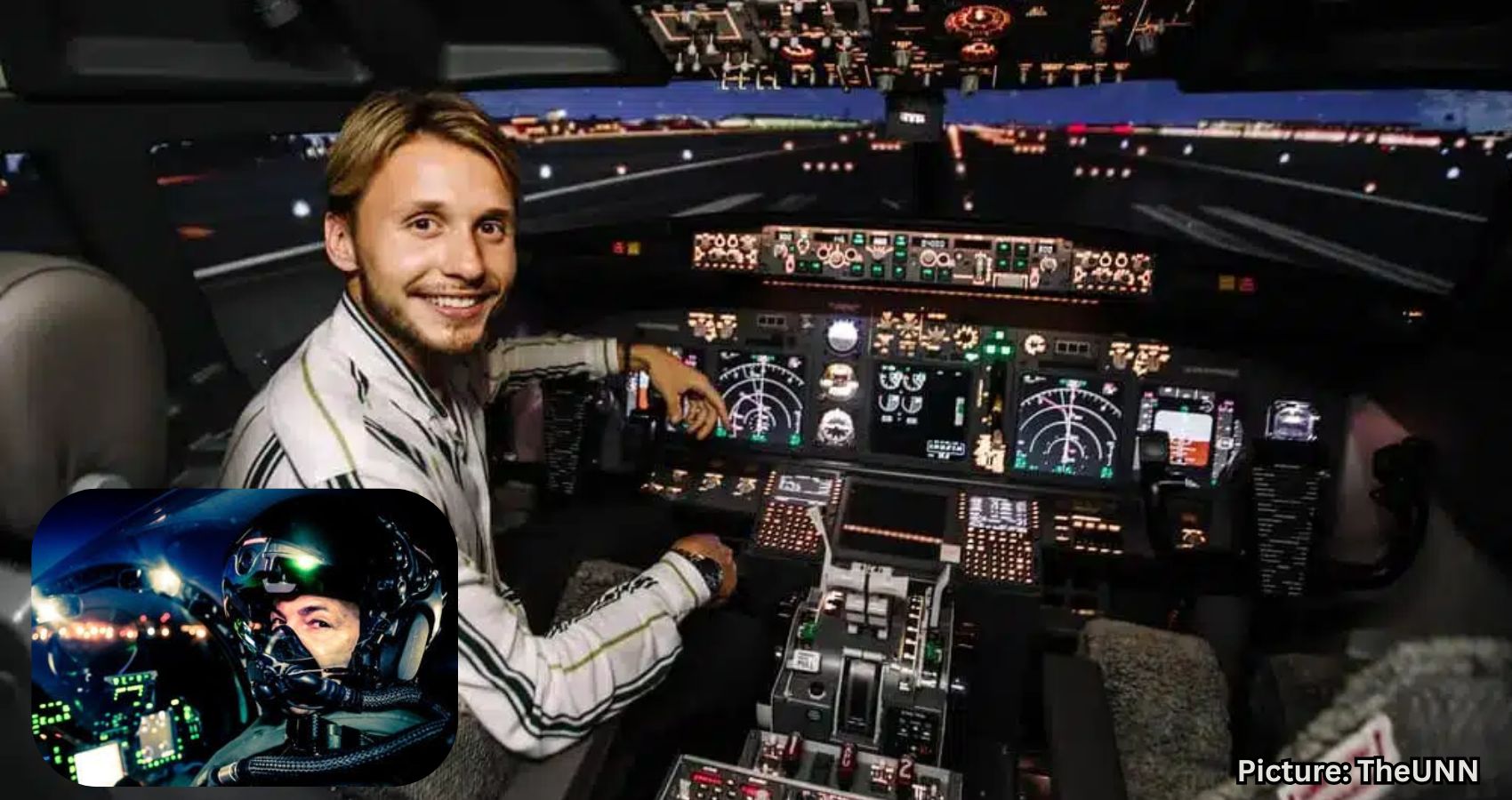
AerAware, a new cockpit vision system for Boeing 737 Next Generation aircraft, aims to enhance pilot visibility in low-visibility conditions using advanced technology and wearable displays.
The Federal Aviation Administration (FAA) has certified AerAware, an innovative cockpit vision system designed for Boeing 737 Next Generation aircraft. Developed by AerSale in partnership with Universal Avionics, AerAware combines enhanced vision technology with wearable displays to assist pilots during operations in low-visibility conditions.
Dror Yahav, a former commercial pilot and current CEO of Universal Avionics, understands the challenges of flying in low-visibility situations. He recalls instances where runways became visible only late in the landing sequence. Now, he is leading the charge to bring a solution to the market that addresses these challenges.
AerAware utilizes a nose-mounted enhanced vision camera paired with a wearable head display. This system overlays critical flight data and imagery directly into the pilot’s field of view, enhancing situational awareness during takeoff and landing.
“You turn your head up and look outside, and there’s just nothing — pitch black or foggy,” Yahav explained, reflecting on his experiences with low-visibility night approaches. The AerAware system aims to change that by integrating sensor data and imagery to provide pilots with a clearer understanding of their surroundings.
Unlike traditional head-up displays, AerAware features a dual wearable system that provides both pilots with the same information simultaneously. This design is inspired by military helmet-mounted displays, such as those used in the F-35 Lightning II aircraft, which offer enhanced situational awareness for pilots.
The FAA’s certification of AerAware comes at a time when runway safety is a growing concern. According to FAA data, there were 1,636 runway incursions reported in fiscal year 2025, a decrease from 1,758 in 2024 and 1,760 in 2023. Notably, pilot deviations accounted for 62% of these incursions from 2021 through 2025, underscoring the need for improved situational awareness tools.
The installation of the AerAware system on each aircraft takes approximately two to three days, followed by a pilot training program that has been approved by the FAA. Yahav noted that airline interest in the system has surged as operators seek solutions to mitigate runway incursions and enhance safety during low-visibility operations.
Jacqueline Carlon, senior vice president of marketing and communications for AerSale, highlighted that airlines considering the AerAware system are particularly focused on certification, installation downtime, and how well the system integrates into their existing operations. “It takes about a two- to three-day installation per aircraft, followed by an approved training program,” she stated.
As airlines continue to prioritize safety and operational efficiency, the AerAware system represents a significant advancement in cockpit technology for Boeing 737 fleets. The integration of this system could play a crucial role in enhancing pilot performance and reducing the risk of incidents in challenging visibility conditions.
According to Fox News, the growing interest in AerAware reflects a broader trend within the aviation industry to adopt new technologies that improve safety and operational capabilities.