
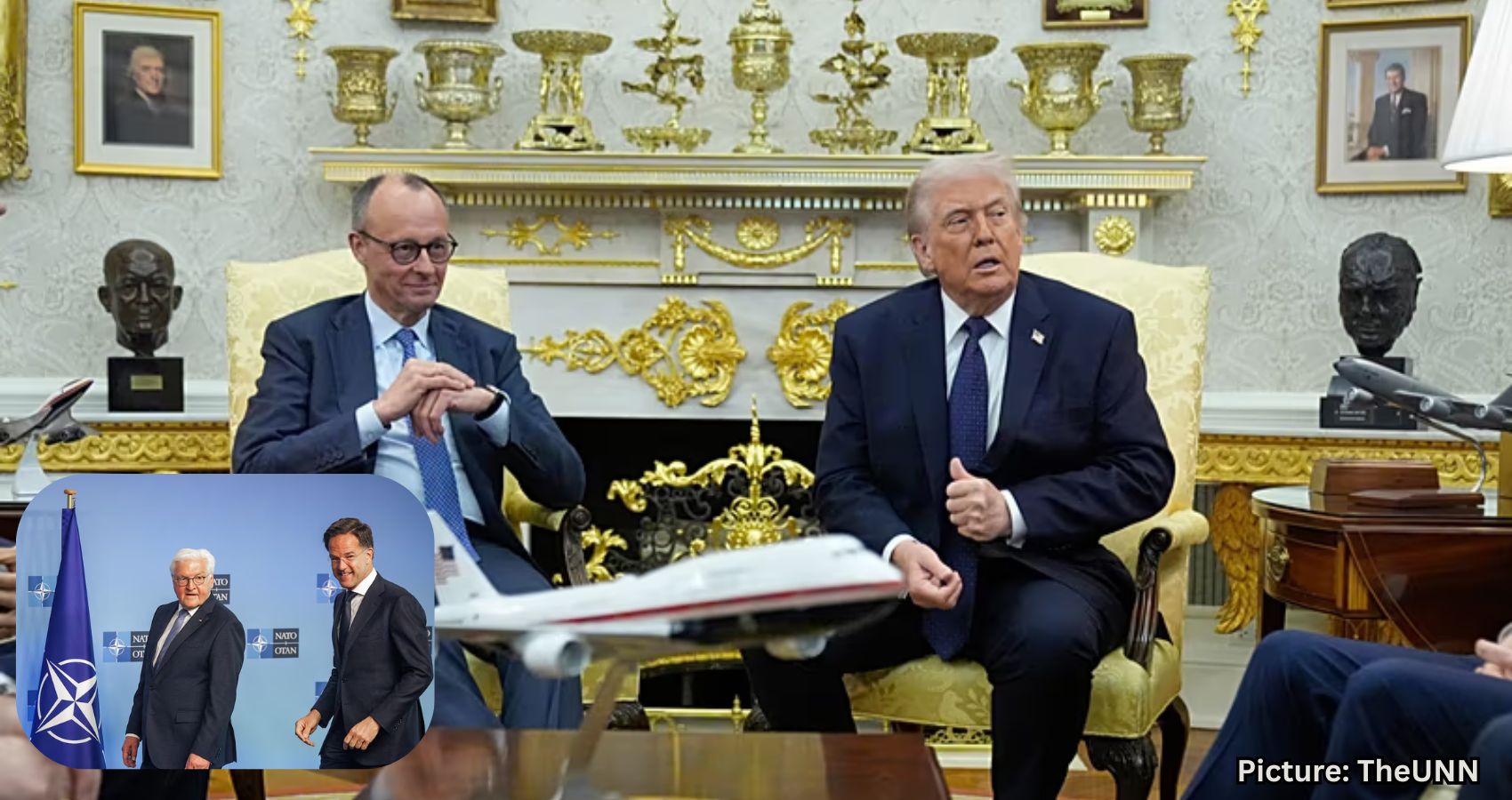
Germany is set to strengthen its military capabilities within NATO, aiming to become Europe’s leading conventional army amid evolving security challenges.
Germany has announced its commitment to becoming the strongest conventional military force in Europe as part of NATO, with its ambassador to the United States indicating that Berlin is prepared to take on a greater role in European security. This shift comes after years of reliance on U.S. military support, particularly in light of recent geopolitical tensions.
In an exclusive interview with Fox News Digital, German Ambassador to the U.S. Jens Hanefeld stated, “Germany is stepping up — we heard the call!” This declaration aligns with the vision of Chancellor Friedrich Merz, who has emphasized the need for Germany’s armed forces to lead in Europe, a goal now supported by Berlin’s new military strategy.
Hanefeld pointed to Russia’s ongoing aggression as a catalyst for this transformation. “Russia’s illegal war of aggression has shaken old certainties in Europe and Germany as the international rules we have relied on are being challenged,” he remarked. “This changes the strategic environment we operate in.”
Germany has emerged as Ukraine’s largest supporter in the conflict, with Hanefeld asserting that the nation’s commitment to becoming Europe’s strongest conventional army is firmly anchored in the NATO alliance. This marks a significant departure from Germany’s post-World War II military identity, which was characterized by restraint and a focus on collective defense within NATO.
After the reunification of Germany, the country continued to depend heavily on the U.S. security umbrella, often falling short of NATO’s defense spending targets. This reliance has been a point of contention, particularly in light of American criticisms that Europe’s largest economy was not contributing its fair share.
The full-scale invasion of Ukraine in 2022 prompted a reevaluation of Germany’s defense posture. Former Chancellor Olaf Scholz referred to this shift as a “Zeitenwende,” or turning point, and Merz is now working to translate this phrase into a long-term military buildup.
However, Hanefeld acknowledged that the changes are not without challenges, given Germany’s historical context. The ongoing transformation is also occurring against a backdrop of public friction between President Donald Trump and Merz. This tension has raised concerns among defense experts about its potential impact on critical security decisions regarding Russia.
Retired Rear Admiral Mark Montgomery, a senior fellow at the Foundation for Defense of Democracies, criticized Merz’s comments about Trump, suggesting that they could undermine Germany’s need for U.S. support. “Talking trash about the president at a meeting with school kids in Germany is not professional diplomacy,” Montgomery stated. He emphasized that Germany must navigate its relationship with the U.S. carefully, especially given the current geopolitical climate.
Montgomery also expressed disappointment over recent U.S. decisions to delay or potentially cancel the deployment of long-range strike systems to Germany, which he believes are crucial for deterring Russian aggression. He noted that the goal is not to engage Russia in conflict but to prevent such an escalation from occurring in the first place.
Despite concerns about U.S. troop levels and involvement, a source familiar with the situation indicated that the U.S.-Germany defense relationship remains robust, with ongoing cooperation between the two nations.
Germany’s development of a strong defense industrial base is seen as beneficial for NATO and Western security, with Montgomery arguing that Germany is well-positioned to become the “beating heart” of Europe’s future defense capabilities.
Hanefeld highlighted Germany’s strategic importance to the U.S. military presence in Europe, citing key facilities such as Ramstein Air Base and Landstuhl Regional Medical Center as vital to American power projection and NATO deterrence efforts. “These facilities serve U.S. national security interests and further NATO’s ability to deter and defend,” he said.
At the 2025 NATO summit in The Hague, allies agreed to invest 5% of their GDP annually in defense and related spending by 2035. Merz stated that this decision was aimed at safeguarding “freedom, security, and prosperity.” Hanefeld confirmed that Germany is already taking steps to meet this commitment, planning to increase defense spending to 5% of GDP “well before” 2035 and to recruit nearly 100,000 new active-duty soldiers into the Bundeswehr.
In response to criticisms regarding defense spending, Hanefeld noted that Germany has signed over 380 contracts worth more than $33 billion with U.S. defense companies for the procurement and manufacturing of military equipment, including fighter jets and air defense systems. “It’s a down payment on the transatlantic future and on our political commitment to shift the burden for deterrence and defense to Europe,” he asserted.
One of Germany’s most notable commitments is its permanent brigade in Lithuania, which is expected to include around 5,000 military and civilian personnel. The Bundeswehr aims to make this force fully operational for the defense of NATO’s eastern flank in the Baltic region within three years. Hanefeld described the brigade as one of Germany’s “signature efforts” to reassure Baltic allies of NATO’s commitment to defend every inch of allied territory.
For Germany, this shift represents not just an increase in military spending but a significant political and cultural departure from decades of caution regarding military power. For the United States, it serves as a test of whether Germany can fulfill its role as the European backbone that Washington has long sought.
As Hanefeld concluded, “NATO will remain transatlantic at its core, but will become more European over the next decade,” signaling a new era for Germany and its role within the alliance.
According to Fox News Digital, this commitment marks a pivotal moment in Germany’s military evolution and its relationship with NATO allies.