
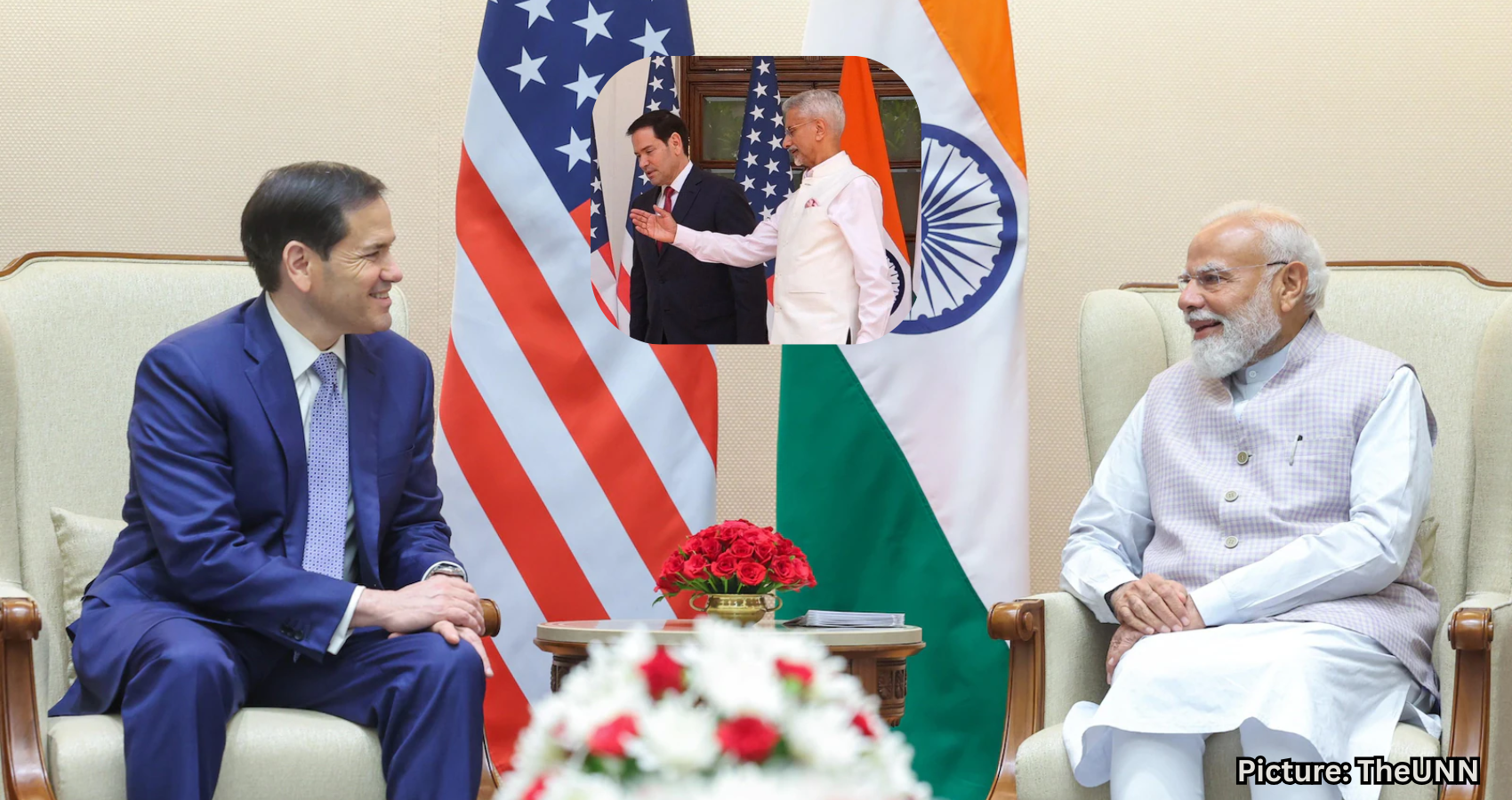
U.S. Secretary of State Marco Rubio announced a new visa processing framework and inaugurated an expanded consular wing at the U.S. Embassy in New Delhi during a visit aimed at strengthening U.S.-India relations.
U.S. Secretary of State Marco Rubio recently unveiled a new visa processing framework and inaugurated an expanded consular wing at the U.S. Embassy in New Delhi. This high-profile visit was part of ongoing efforts to deepen ties between Washington and New Delhi, particularly in light of increasing geopolitical and economic cooperation.
The rollout of this new visa policy comes at a time when visa access, student mobility, and skilled worker migration are critical issues in the U.S.-India relationship. These matters are especially significant for Indian professionals and families with connections to the United States.
In a statement shared on social media platform X, Rubio emphasized the United States’ commitment to enhancing people-to-people connections while also improving the efficiency and security of its immigration system. “Today we opened a new consular wing in New Delhi and launched a new America First visa scheduling system to serve legitimate travelers better and strengthen our national security,” he wrote.
The newly introduced “America First” visa scheduling system is designed to prioritize travelers whose visits are linked to business investment, economic partnerships, and strategic collaboration with the United States. U.S. officials indicated that this initiative aims to streamline access to appointments while tightening scrutiny of immigration compliance and security screening.
The expansion of the embassy’s consular operations in New Delhi reflects the significant demand from Indian applicants. India remains one of the largest sources of international students, technology workers, and high-skilled immigrants to the United States. Long wait times for visas since the pandemic have led to ongoing frustration among applicants, particularly for B1/B2 visitor visas and employment-based categories.
During his visit, Rubio met with Indian External Affairs Minister S. Jaishankar and other senior officials to discuss trade, Indo-Pacific security, energy cooperation, and emerging technology partnerships. Diplomatic sources reported that Indian officials expressed concerns regarding tightening U.S. immigration measures and recent policy changes affecting visa applicants and green card processing. Rubio reassured Indian counterparts that the latest measures were part of a broader global immigration overhaul rather than policies specifically targeting India.
These comments come at a time when Indian professionals continue to dominate the H-1B skilled worker pipeline and represent a substantial portion of U.S. graduate-level STEM enrollments. The visa announcement also arrives amid intensifying global competition for highly skilled talent. Analysts suggest that the United States is attempting to balance economic demands for international workers with political pressure for stricter immigration enforcement as the U.S. election cycle approaches.
For Indian American communities and diaspora families, visa policy is closely linked to broader concerns regarding educational mobility, family reunification, and long-term residency pathways. Immigration attorneys and policy analysts have noted that even minor procedural changes at U.S. consulates can significantly impact students, temporary workers, and multinational companies operating in both countries.
The new consular wing in New Delhi is expected to enhance processing capacity and alleviate appointment bottlenecks over time. However, officials have not yet provided specific timelines for implementation or measurable reductions in wait times.
Rubio’s visit highlights how immigration and mobility issues have become central to the broader U.S.-India strategic partnership. While defense and trade ties continue to expand, the movement of students, professionals, entrepreneurs, and families remains one of the most visible and politically sensitive aspects of the relationship.
As both countries work to deepen cooperation in technology, manufacturing, artificial intelligence, and defense, future visa policies are likely to play an increasingly important role in shaping economic integration and diaspora engagement between the world’s two largest democracies, according to The American Bazaar.