
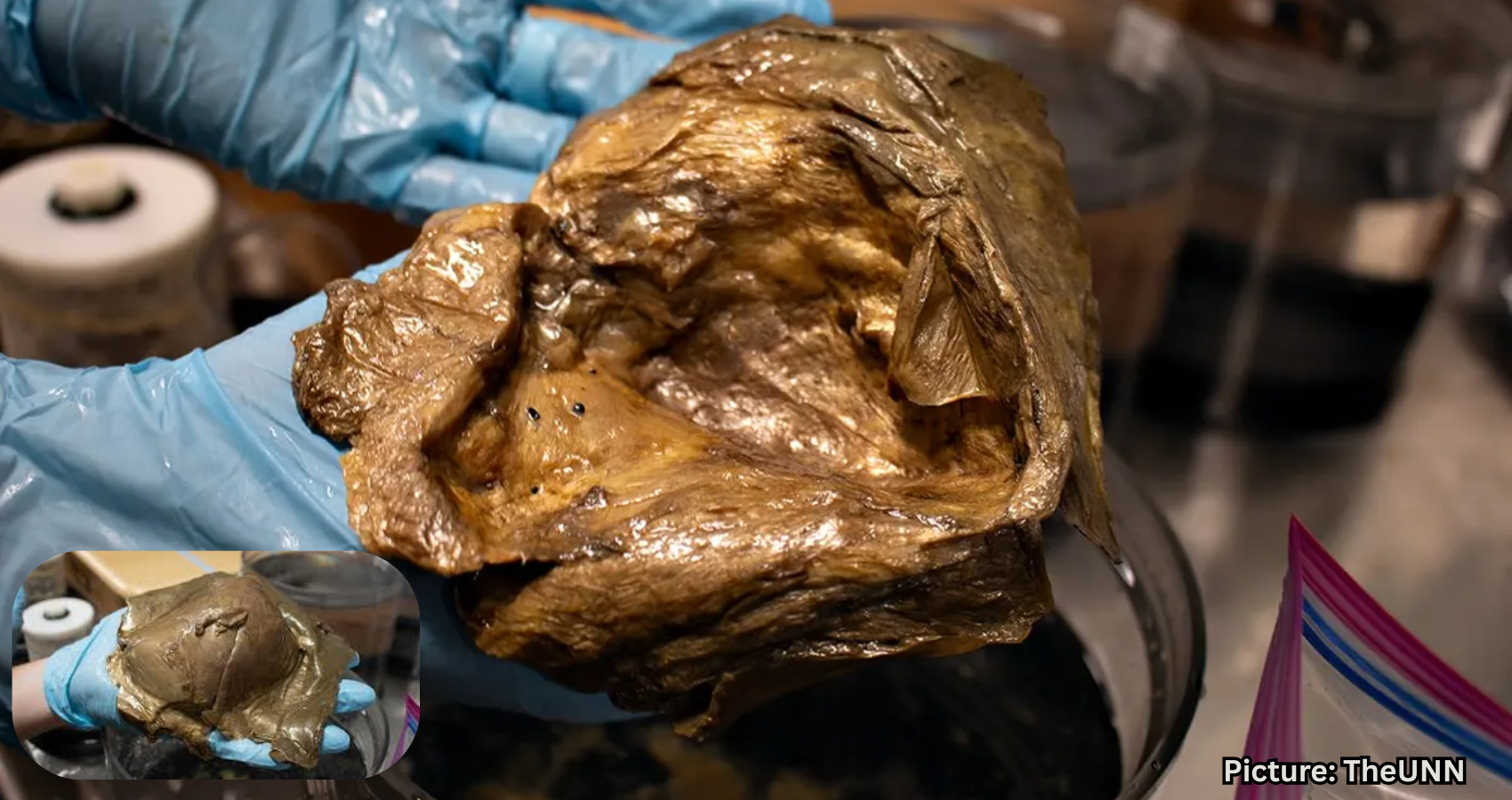
The mysterious golden orb discovered two miles deep in the Gulf of Alaska has been identified as a remnant of a rare giant deep-sea anemone, according to NOAA and Smithsonian scientists.
Scientists from NOAA and the Smithsonian Institution have unveiled the identity of a peculiar golden orb found at a depth of over two miles in the Gulf of Alaska. Initially thought to be everything from an alien egg to an undiscovered species, the orb has been confirmed to be part of a rare giant deep-sea anemone known as Relicanthus daphneae.
The orb was first discovered during a deep-sea expedition in 2023, utilizing a remotely operated vehicle that explored approximately 3,250 meters (over two miles) below the ocean surface. The vehicle encountered an unusual mound-shaped structure attached to a rock, which left scientists baffled.
Upon its discovery, the orb sparked a flurry of speculation both online and within the scientific community. Researchers were initially uncertain about its nature, pondering whether it was an egg case, a dead sponge, or something that had crawled into or out of it.
Dr. Allen Collins, a zoologist and director of NOAA Fisheries, noted that identifying the orb required a collaborative effort that extended beyond standard investigative procedures. “This was a complex mystery that required morphological, genetic, deep-sea and bioinformatics expertise to solve,” Collins explained.
Scientists faced challenges in their investigation due to the orb’s lack of recognizable animal features. However, detailed analysis eventually revealed that it was composed of fibrous layers filled with stinging cells, indicating a connection to cnidarians, the biological group that includes corals and anemones.
Capt. William Mowitt, acting director of NOAA Ocean Exploration, emphasized the importance of continued exploration of the deep ocean. He stated, “This is why we keep exploring — to unlock the secrets of the deep and better understand how the ocean and its resources can drive economic growth, strengthen our national security and sustain our planet.”
The discovery of the golden orb not only sheds light on the mysteries of the deep sea but also highlights the ongoing need for scientific exploration in understanding the complexities of marine ecosystems.
According to NOAA, the findings underscore the potential for uncovering more captivating mysteries hidden beneath the ocean’s surface.