
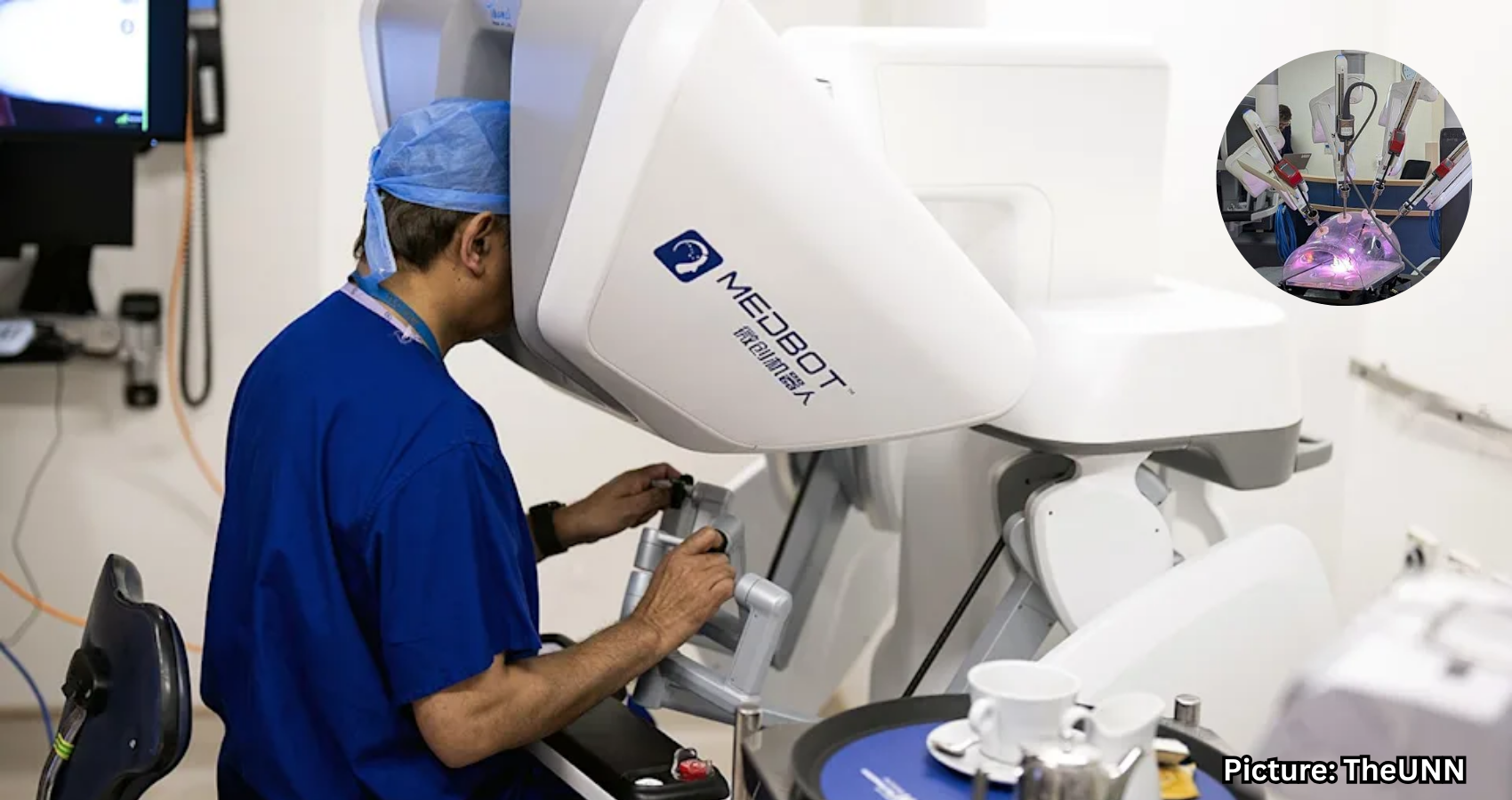
U.K. surgeons have successfully performed remote robot-assisted surgery to remove prostate cancer from a patient located 1,500 miles away, marking a significant milestone in telesurgery.
Surgeons in the United Kingdom have achieved a groundbreaking milestone in medical technology by successfully conducting remote robot-assisted surgery to remove prostate cancer from a patient located 1,500 miles away. This pioneering operation, carried out at The London Clinic, represents the first instance of robot-assisted telesurgery in the U.K.
Traditionally, patients requiring specialized cancer surgery must travel to see a specialist. In this case, however, the specialist traveled to the patient. The procedure took place at St. Bernard’s Hospital in Gibraltar, where the patient remained in the operating room while Professor Prokar Dasgupta operated the robotic system from a control console at The London Clinic’s robotic center on Harley Street in London.
The advanced surgical robot used for this procedure is the Toumai robotic surgical system, developed by MicroPort MedBot. This platform is specifically designed for high-precision, minimally invasive surgeries. The operation was made possible through a secure fiber optic network that transmitted the surgeon’s movements to the robot in Gibraltar, with a latency of just 48 milliseconds—fast enough to create an almost real-time experience.
During the procedure, local urological surgeons James Allen and Paul Hughes were on standby in Gibraltar, ready to intervene if any complications arose or if the connection was interrupted. Fortunately, the operation proceeded without any issues.
The patient, 62-year-old Paul Buxton, has been a resident of Gibraltar for approximately four decades. He had initially planned to travel to London for his surgery, but was offered the opportunity to participate in a telesurgery trial earlier this year. This innovative approach allowed him to undergo the procedure in his local hospital, significantly reducing the disruption to his life. Reports indicate that he felt fantastic just days after the surgery.
The development of remote robotic surgery has been a long time in the making, with early examples dating back to the Lindbergh Operation, where surgeons in New York performed a gallbladder removal on a patient in Strasbourg, France. Since then, technology has advanced significantly, with cross-continental robotic surgeries being conducted between cities such as Rome and Beijing, as well as long-distance prostate operations in parts of Africa.
The successful procedure at The London Clinic signifies a shift in the landscape of remote robotic surgery, moving from experimental demonstrations to practical medical applications. To further showcase this technology, the hospitals plan to live-stream a telesurgery procedure to thousands of surgeons at the upcoming European Association of Urology Congress.
Several key technologies work in tandem to make remote surgery feasible. Surgeons need to see and react instantly during operations, as even minor delays can complicate precise movements. Modern fiber optic networks, along with backup 5G connections, help maintain extremely low latency. Robotic surgical systems translate a surgeon’s hand movements into smaller, more stable actions inside the patient’s body, which can enhance outcomes in delicate procedures like prostate cancer removal. High-definition 3D cameras provide surgeons with exceptional clarity, often surpassing the visibility offered by traditional open surgery.
Despite these advancements, remote robotic surgery still faces significant challenges. Infrastructure remains a critical issue, as hospitals must ensure that their networks are highly reliable with minimal downtime. The costs associated with robotic surgical systems and specialized networks can also be prohibitive, often running into millions of dollars. Additionally, regulatory concerns arise when surgeons operate across borders, introducing complexities related to legal and licensing requirements.
Every remote procedure necessitates contingency plans, with local surgical teams prepared to step in if technology fails. For now, hospitals view telesurgery as an emerging capability rather than a routine practice.
The long-term implications for patients could be profound. In the future, individuals may not need to travel to major medical centers for complex procedures. Instead, specialists could operate remotely, allowing patients to remain in hospitals closer to home. This evolution could particularly benefit those in rural areas or regions with limited access to specialized care, potentially reducing wait times for certain procedures.
Safety remains the paramount concern in this transition. Hospitals must demonstrate that remote procedures are as reliable as traditional surgeries before the technology can become widespread. The successful connection between London and Gibraltar illustrates the rapid advancements in surgical technology, with reliable networks and sophisticated robots enabling surgeons to guide delicate procedures from thousands of miles away.
While remote surgery may not become commonplace overnight, the trajectory is clear. As technology continues to improve, distance may no longer be a barrier to accessing world-class surgical care.
For further insights on this topic, please refer to Fox News.