
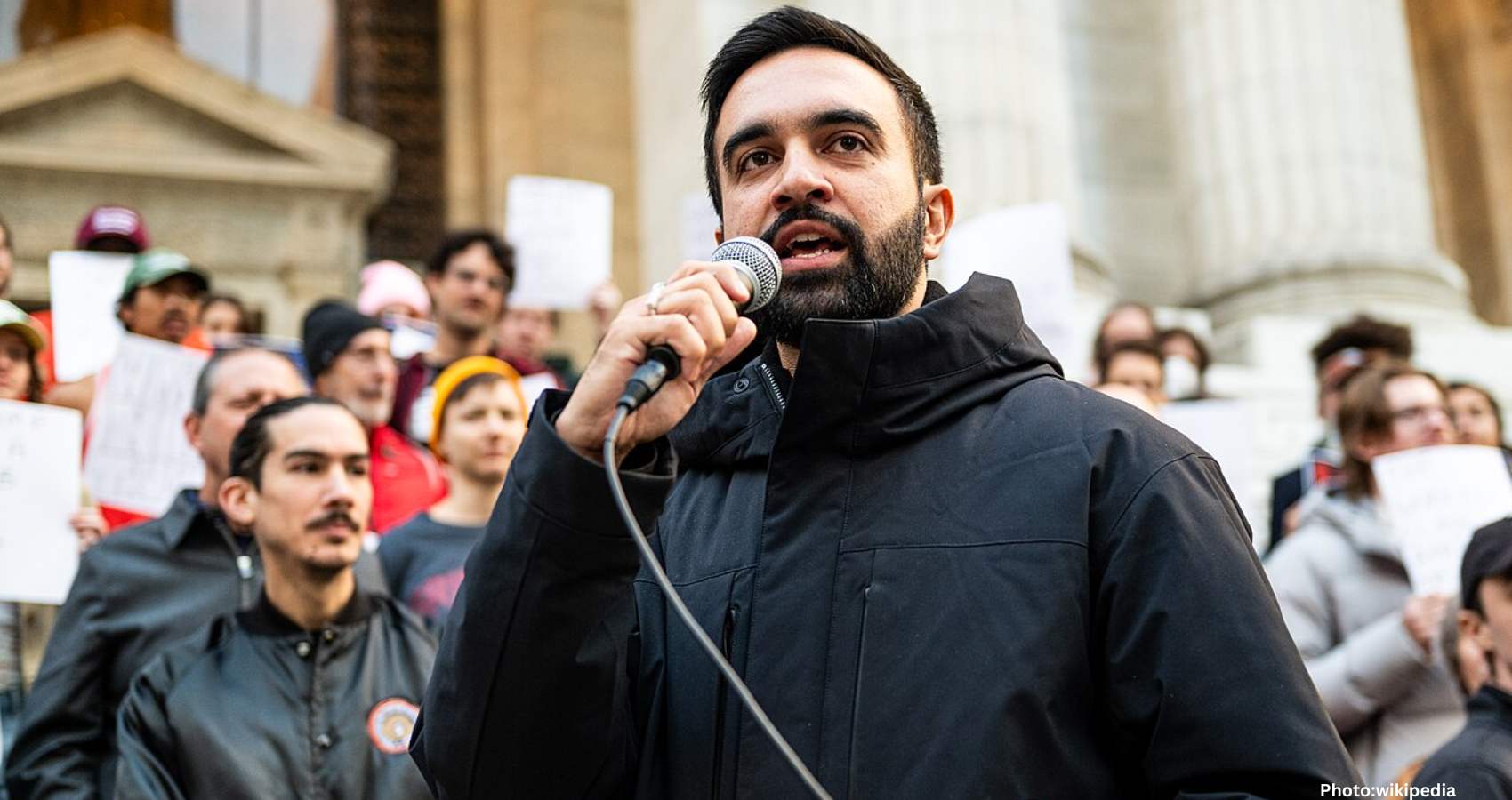
Mira Nair’s son, Zohran Mamdani, has made history as New York City’s first mayor of Muslim and South Asian descent, shining a light on his mother’s legendary filmmaking career.
In a heartfelt reflection, the author recalls a cherished memory from 2017, when they took their grandmother, affectionately known as Ambulu Paati, to see Mira Nair’s musical adaptation of “Monsoon Wedding” in Berkeley. The anticipation of the evening was palpable, leading them to leave their apartment early to avoid traffic. They enjoyed Viks Chaat and played Scrabble at a nearby coffee shop, where Paati’s skills outshone the author’s.
Upon arriving at the theater, excitement turned to dismay when they realized that Paati was too short to see the stage clearly due to the high railing of their loge box seats. Fortunately, a kind couple nearby offered to switch seats, allowing them a better view. The performance captivated both the author and Paati, showcasing Nair’s unique storytelling that resonates with the South Asian diaspora.
As the author reflects on the recent rise of Zohran Mamdani as New York City’s mayor, they find themselves often identifying him primarily as Mira Nair’s son. The connection is undeniable, especially when Nair’s presence is felt during news coverage of her son’s political achievements. Nair, a celebrated filmmaker, has long been a source of inspiration for those who feel underrepresented in mainstream cinema.
Throughout her career, Nair has crafted films that explore the complexities of identity and culture, making her a pioneer in diasporic storytelling. The author recalls their attempts to secure an internship with Nair’s production company, Mirabai Films, during their college years, highlighting the impact Nair’s work has had on aspiring filmmakers.
While Mamdani and his wife, Rama Duwaji, capture headlines for their political significance, the author expresses surprise that more people do not discuss Nair’s groundbreaking contributions to cinema. The author speculates that the visibility of Mamdani’s father’s last name may overshadow his mother’s influence in the public eye.
Nair’s films have featured a diverse array of talent, including Denzel Washington, Kate Hudson, Riz Ahmed, Kal Penn, Irrfan Khan, and Tabu. Her film “Salaam Bombay!” received an Oscar nomination in 1989, marking a significant milestone in her career.
During the winter holidays, the author revisited several of Nair’s films, noting how their themes of immigration, race, family, and relationships remain relevant. Among the standout titles were:
Mississippi Masala (1991): A groundbreaking film that explores Brown-Black interracial love and the complexities of migration and race in the American South.
Monsoon Wedding (2001): This film offers a nuanced portrayal of family dynamics, highlighting the often-overlooked issue of sexual abuse within families and the need for accountability.
The Reluctant Fundamentalist (2012): Based on Mohsin Hamid’s novel, this film provides a poignant perspective on the experience of being a Pakistani in post-9/11 America.
The Namesake (2006): Nair’s adaptation of Jhumpa Lahiri’s novel captures the struggles of a first- and second-generation Indian American family grappling with identity and cultural heritage.
As 2023 began, Mamdani made history as NYC’s first mayor of Muslim and South Asian descent, while Nair proudly documented the moment with her smartphone, embodying the pride of a mother witnessing her son’s achievements.
Little did many Americans or New Yorkers realize the remarkable talent behind that camera, a testament to Nair’s legacy in the world of film.
This article was first published in redwhiteandbrown.com.