
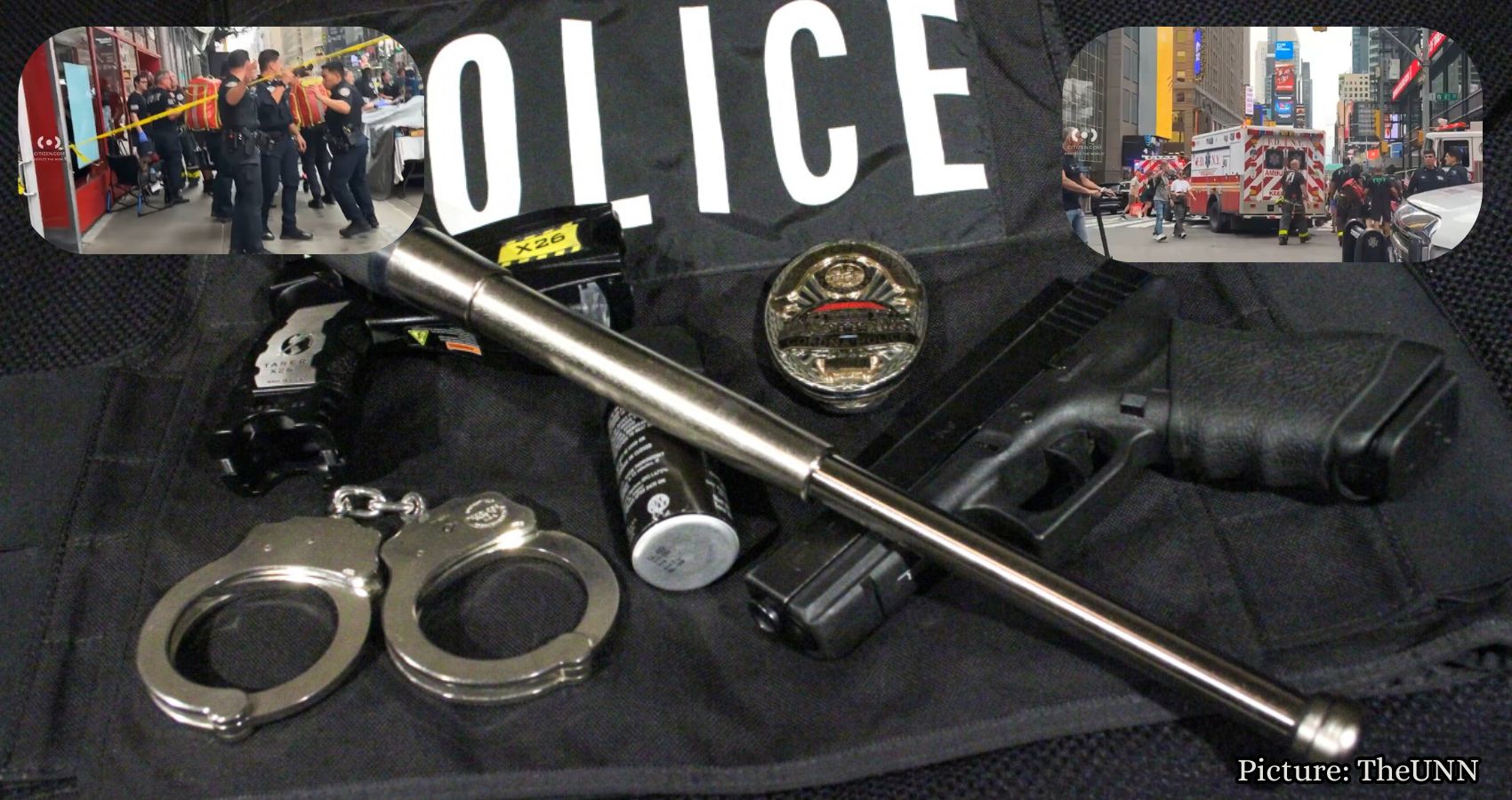
Multiple Taser deployments failed to subdue a suspect in a Times Square stabbing incident, raising concerns about the impact of body composition on Taser effectiveness.
In a recent incident in Times Square, multiple Taser deployments were ineffective in stopping 49-year-old Pamela Cisneros during a four-minute standoff after she allegedly stabbed two individuals. The attack resulted in the death of a 32-year-old woman and left a 68-year-old man injured.
New York City Police Commissioner Jessica Tisch addressed the media following the incident, stating, “As multiple officers discharged Tasers, which proved to be ineffective, the subject continued to advance toward our officers with the knives.” Despite the officers’ attempts to subdue Cisneros with Tasers, she reportedly declared, “I’m not dropping anything. I would rather kill both of you.” Ultimately, two officers fired their weapons, striking Cisneros, who was later pronounced dead at Bellevue Hospital.
The incident has sparked a broader discussion about the reasons Tasers sometimes fail to incapacitate suspects, particularly regarding the role of body composition. A standard Taser operates by firing two small, barbed probes connected to the device via insulated wires. According to Axon, the manufacturer of Tasers, “Electrical pulses travel along those wires and into the body, triggering involuntary muscle contractions.” For optimal effectiveness, the probes should ideally be spaced at least 12 inches (30 cm) apart.
Steve Keller, a retired police sergeant from Blue Ash, Ohio, noted that several factors can contribute to Taser failure, including clothing, probe placement, substance abuse by the suspect, and the connectivity between the probes. He pointed out that obesity can also play a significant role, as a substantial layer of body fat may hinder the electrical connectivity necessary for the Taser to function effectively.
“The purpose of the Taser is neuromuscular in capacity,” Keller explained. “Your large muscle masses are your back and thighs. Officers are trained to aim for those areas.” He emphasized that officers must also consider clothing and the distance from the subject when aiming.
Keller elaborated on how obesity can affect Taser performance, stating, “If one of the probes hits the abdomen and the person is obese, it can affect the connectivity of the two probes.” He added that if one probe strikes a target while the other misses, the Taser will not function as intended. For instance, if one probe hits a thigh and the other strikes a thick jacket, the connectivity may be compromised, leading to reduced effectiveness. Similarly, a large layer of body fat could diminish the Taser’s impact, although the individual may still feel the electrical shock.
In Cisneros’ case, Keller highlighted the potential influence of mental health on a person’s response to a Taser. Tisch confirmed during the press conference that Cisneros had a documented mental health history with the NYPD, including incidents in 2018 and 2019.
Dr. Marc Siegel, a senior medical analyst for Fox News, concurred with Keller’s assessment, noting that body composition can significantly affect Taser effectiveness. “Tasers are much more effective for muscle than fat because muscle conducts electricity much better, and the Taser delivers a high voltage,” he explained. “In an obese person, it is more difficult to find an area that conducts electricity.”
Fox News Digital reached out to Axon, the NYPD, and various obesity organizations for additional comments regarding the incident and the effectiveness of Tasers.
As discussions continue about the limitations of Tasers in law enforcement situations, the Times Square incident serves as a poignant reminder of the complexities involved in subduing suspects, particularly those with unique body compositions and mental health challenges.
According to Fox News, the implications of these factors are critical for law enforcement agencies as they evaluate their use of Tasers in high-stress situations.