
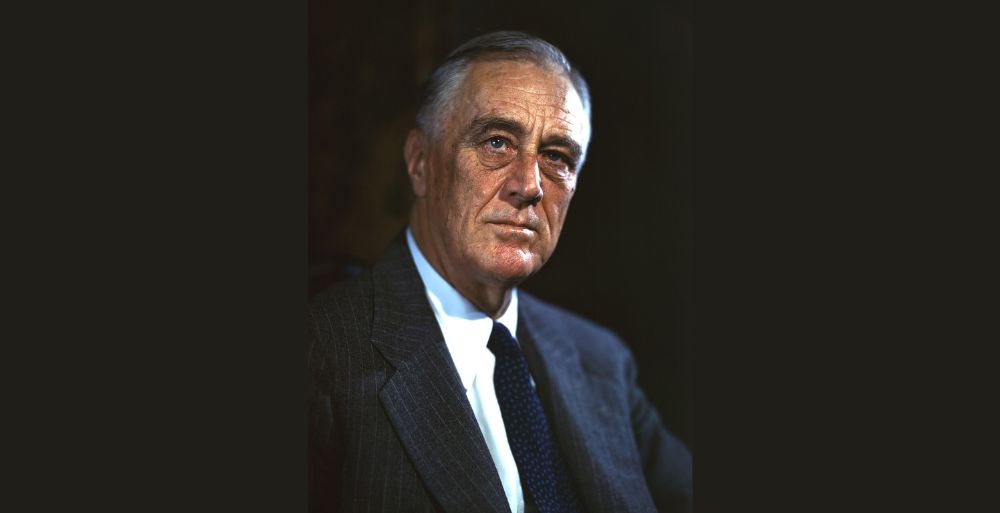
As tensions escalate in the Middle East, reflections on Franklin D. Roosevelt’s principles reveal insights into the current conflict with Iran and the implications for global order.
American military supremacy, after years of perceived decline, has reasserted itself in unmistakable terms. The world is watching as the United States engages in decisive military action in the Middle East, prompting reflections on the legacy of Franklin Delano Roosevelt (FDR) and his vision for international order.
In a famous photograph from Yalta in February 1945, a frail FDR is seen slumped in his chair between Winston Churchill and Joseph Stalin. Despite his physical decline, Roosevelt was one of the most significant architects of the post-World War II international order. The United Nations, the Bretton Woods institutions, and the framework for multilateral cooperation were all products of his vision, conceived just months before his death. FDR understood that a nation’s strength is not solely defined by its military might but also by its commitment to building enduring structures that transcend individual ambitions.
However, FDR also recognized that such structures require protection. Throughout his presidency, he sought to awaken an isolationist America to the existential threats facing Western civilization. He understood that there are moments when negotiation reaches its limits, and inaction can carry greater costs than decisive action. FDR witnessed the consequences of appeasement and the hesitance of democracies in the face of aggression.
In January 1941, FDR articulated his Four Freedoms: freedom of speech, freedom of worship, freedom from want, and freedom from fear, declaring them universal rights for all people. At that time, America was officially neutral, steeped in isolationism. Yet, FDR, a masterful political pragmatist, insisted that American security was intertwined with the security of human dignity worldwide, emphasizing that these freedoms had adversaries that could not be ignored or negotiated away.
Fast forward to February 28, 2026, as the aftermath of military operations in Iran unfolds. The United States and Israel have launched Operation Epic Fury, targeting military facilities and leadership in Tehran, resulting in the death of Supreme Leader Ayatollah Ali Khamenei. President Trump confirmed the operation’s success, stating that “most” of Iran’s senior leadership is gone.
In Tehran, reports indicate that ordinary citizens celebrated Khamenei’s death, a stark contrast to the regime’s long-standing rhetoric of “Death to America.” This reaction highlights a significant shift in the Iranian populace’s sentiment, as they express hope for a future free from oppression.
FDR would have recognized the significance of this moment. He was a proponent of decisive action, understanding that victory in war requires targeting the command structures and centers of power that perpetuate tyranny. The Iranian regime, which has consistently demonstrated its aggressive behavior, has been a destabilizing force in the region, funding proxy militias and pursuing nuclear capabilities. FDR would have seen the necessity of confronting such threats before they escalate further.
With the expiration of the New START Treaty earlier this month, the absence of legally binding agreements constraining nuclear arsenals poses a significant risk. FDR, who authorized the Manhattan Project, understood that some threats must be addressed proactively. He would have recognized that a nuclear-armed Iran would not only threaten regional stability but also pose a civilizational risk, potentially triggering a cascade of nuclear proliferation.
Operation Epic Fury represents a departure from the protracted conflicts of Iraq and Afghanistan, which were characterized by miscalculations and a lack of coherent strategy. Instead, this operation is a targeted campaign designed to dismantle the Iranian regime’s capacity for aggression without the intention of occupying or restructuring the nation. It aims to empower the Iranian people to determine their own future.
FDR would have noted this strategic shift with cautious optimism. He understood the importance of distinguishing between destroying an enemy’s capacity for aggression and attempting to administer its society. He would have advocated for a commitment to support the aspirations of the Iranian people, ensuring that their voices are heard in the aftermath of regime change.
As American military supremacy is reaffirmed, FDR would have emphasized the need for wisdom in its application. The recent military actions have sent a clear message to adversaries around the world, reshaping the landscape of deterrence. However, he would have cautioned that military strength must be accompanied by a commitment to building a just and equitable order.
FDR’s third freedom, freedom from want, would resonate deeply in today’s economic landscape. He would recognize the stark contrast between America’s immense wealth and the growing insecurity faced by many citizens. The federal deficit and rising economic inequality would concern him, as he believed that true freedom cannot exist without economic security. He would advocate for equitable distribution of resources to ensure that the burden of conflict does not fall disproportionately on those least able to bear it.
FDR’s commitment to democratic governance and the protection of individual freedoms would guide his response to the current situation in Iran. He would see the recent protests against the regime as a reflection of the people’s desire for self-determination and freedom. The brutal suppression of dissent by the Iranian government would reinforce his belief that such a regime has forfeited its legitimacy.
If FDR were to address the world today, he would assert that moments in history require the application of force to preserve civilization. He would recognize the Iranian regime as a threat to the international order and emphasize the importance of confronting such challenges. He would call for a commitment to support the Iranian people’s aspirations for freedom and self-governance, ensuring that American actions are aligned with the principles of democracy and justice.
In closing, FDR would remind us that the willingness to act must be accompanied by the wisdom to build what follows. The challenges of our time demand both decisive action and a commitment to fostering a just and equitable world. The events of February 28, 2026, mark a pivotal moment in history, one that requires careful consideration of the responsibilities that come with power.
American military supremacy has been reaffirmed, but the true test lies in how we navigate the complexities of the future. The unfinished business of this generation is to ensure that the sacrifices made lead to a brighter and more just world for all.
These reflections on FDR’s principles serve as a reminder of the enduring relevance of his vision in addressing contemporary challenges, particularly in the context of the ongoing conflict with Iran and the broader implications for global order, according to The American Bazaar.