
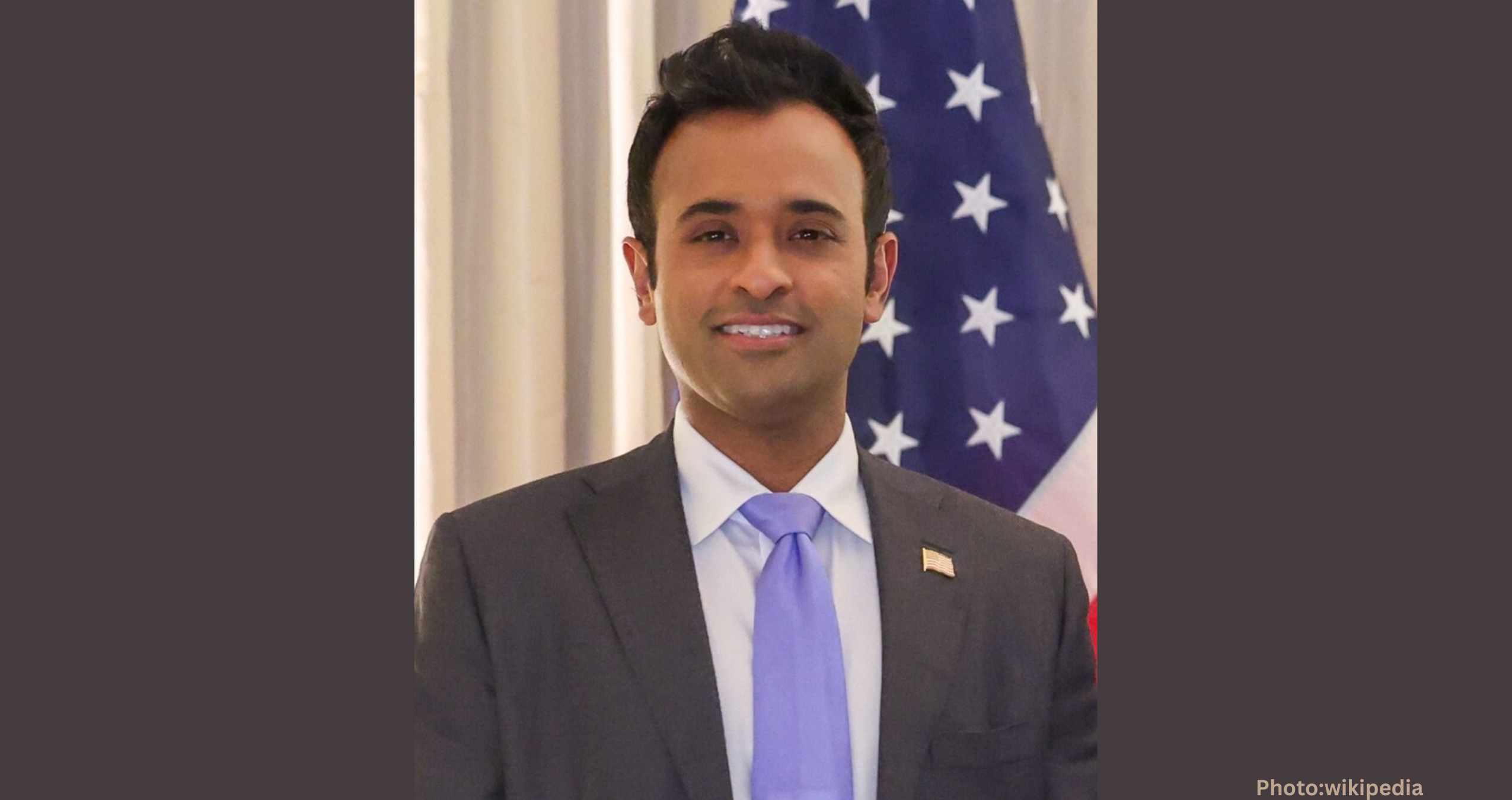
Vivek Ramaswamy faces backlash from far-right figures, including Nick Fuentes, after defending American identity in a New York Times op-ed, igniting a debate over race and immigration.
Vivek Ramaswamy, an Indian American entrepreneur and former Republican presidential candidate, has come under fire from far-right commentator Nick Fuentes following his recent opinion piece in the New York Times. The backlash highlights ongoing tensions within the American right regarding race, immigration, and national identity.
In his op-ed, Ramaswamy argued that the United States is not defined by ethnicity or bloodlines but rather by a shared set of civic ideals. His assertion, which promotes a values-based vision of American identity, drew sharp criticism from white nationalist factions, with Fuentes labeling him an “anchor baby” and questioning his legitimacy as an American.
Ramaswamy responded to the criticism on social media platform X, stating, “American identity isn’t a scalar quality that varies based on your ancestry. It’s binary: either you’re an American, or you’re not.” He emphasized that true American identity is rooted in belief in the rule of law, freedom of conscience and expression, colorblind meritocracy, and allegiance to the U.S. Constitution.
Fuentes escalated the situation with a provocative post on X, where he dismissed Ramaswamy’s arguments by reiterating the derogatory term “anchor baby.” He claimed that individuals like Ramaswamy, whom he views as lacking legitimate ties to the nation, should not lecture others on what it means to be American.
In response to Ramaswamy’s op-ed, some users on X expressed their disdain, with one user accusing him of being unqualified to discuss American identity due to his background. Another user criticized Ramaswamy’s views as overly simplistic, arguing that America is a distinct culture that should not be diluted by vague principles of inclusion.
Ramaswamy’s op-ed explicitly challenged identity politics rooted in “lineage, blood, and soil,” which he associated with white nationalist ideologies. He also called out the influence of the Groyper movement, an online group that promotes a white-first vision of America.
The phrase “either you’re an American or you’re not” has sparked significant debate, with some immigrants and civil rights advocates arguing that such a binary framing overlooks the complex and pluralistic history of the United States.
The term “anchor baby” is often used derogatorily to describe children born in countries with birthright citizenship, suggesting that they are born primarily to help their families gain legal status. Ramaswamy himself was born in Cincinnati, Ohio, to parents who immigrated from Kerala, India. His father, V. Ganapathy Ramaswamy, is an engineer, while his mother, Geetha Ramaswamy, is a geriatric psychiatrist.
This incident underscores the ongoing cultural and political battles within the American right, as figures like Ramaswamy advocate for a more inclusive understanding of national identity, while others cling to exclusionary narratives that emphasize racial and ethnic purity.
As the debate continues, it remains to be seen how these discussions will shape the future of American conservatism and the broader discourse on immigration and identity in the United States.
According to The American Bazaar, the fallout from Ramaswamy’s op-ed illustrates the deep divisions within the Republican Party and the challenges faced by leaders who advocate for a more inclusive vision of America.