
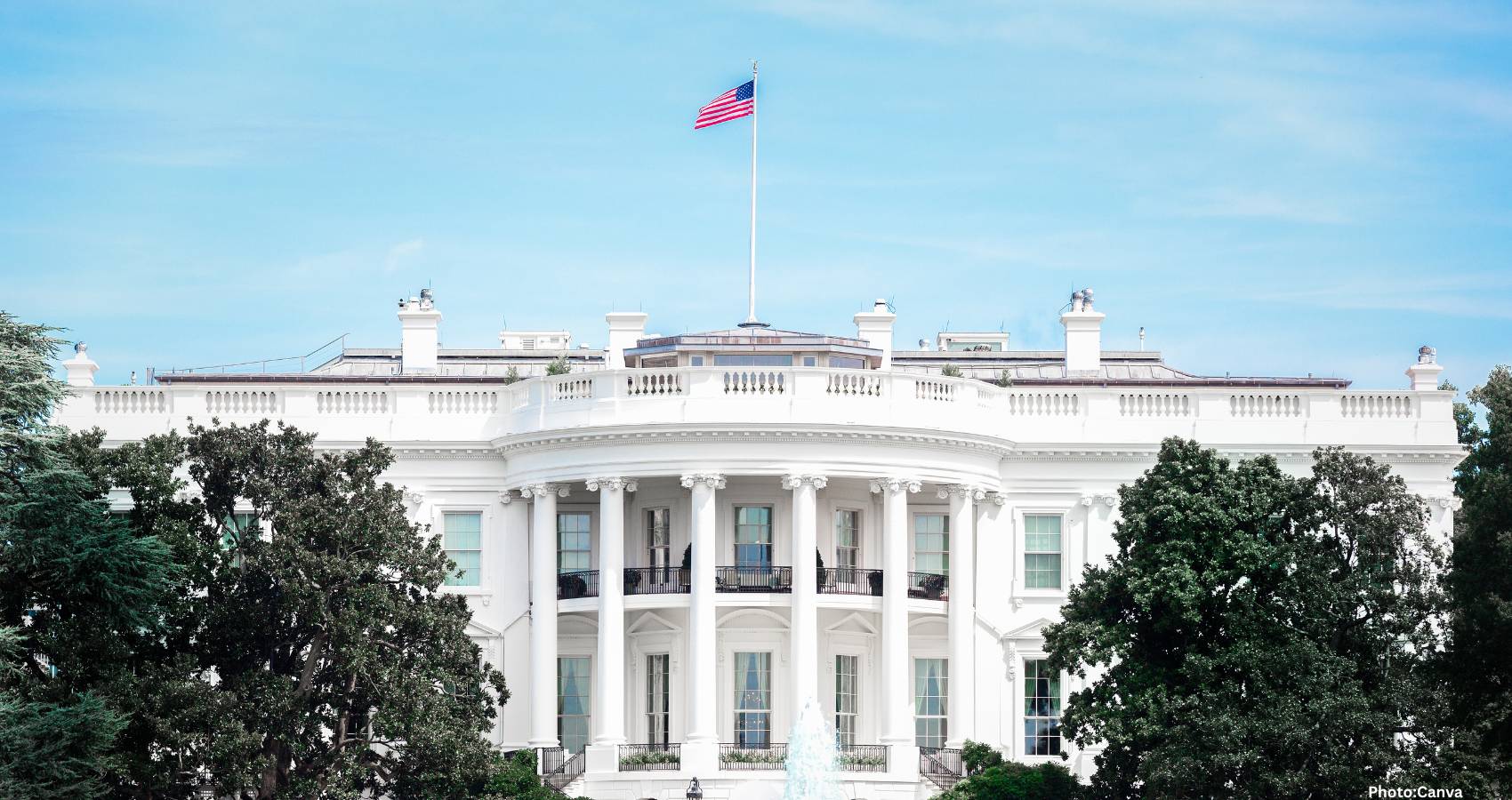
A provocative political advertisement has sparked significant backlash from both the White House and Republican leaders, highlighting the contentious nature of the current U.S. election cycle.
A controversial online political advertisement has ignited fierce criticism from both the White House and the Republican National Congressional Committee (RNCC) as it gains traction across social media platforms. The ad, which has been viewed millions of times, is part of an increasingly heated U.S. election cycle.
The short video, widely shared on X, formerly known as Twitter, appears designed to provoke intense debate surrounding immigration and national identity. Supporters argue that the ad effectively conveys critical messages about border policy and national security. However, detractors contend that it crosses the line into inflammatory rhetoric and misleading insinuations.
Conservative commentator Nick Knudsen highlighted the controversy on X, noting that both the White House and the RNCC have criticized the ad’s creators. He suggested that the strong reactions from political establishments indicate the ad’s provocative nature, stating that this is precisely why it should be “spread everywhere.” The post has resonated with users across the political spectrum, leading to widespread sharing.
The ad’s creator, filmmaker Ladd Ehlinger Jr. from Louisiana, has previously faced national scrutiny for producing graphic and polarizing political advertisements. One of his past works was labeled “the most racist and sexist political ad ever” by opponents. Ehlinger is known for portraying public figures and political narratives in exaggerated ways, often igniting backlash from both sides of the political divide.
In a rare public rebuke, the White House press office condemned the ad’s creators, accusing them of promoting “dangerous and divisive imagery” at a time when national unity is essential. The statement emphasized that the administration would not tolerate political messaging that exploits sensitive issues for partisan gain. “We reject content that weaponizes fear and undermines civil discourse,” the statement read. “Attempts to equate principled policy debate with extreme labels misrepresent the views of most Americans.” Officials did not provide specific details regarding the ad’s origins or funding.
The RNCC also criticized the advertisement, albeit from a different perspective. A spokesperson for the committee described the messaging as “irresponsible and counterproductive,” asserting that it mischaracterizes the GOP’s positions on border security and immigration enforcement. The statement cautioned that misleading advertisements could alienate moderate voters and distract from substantive policy discussions.
Political analysts suggest that this incident underscores broader tensions in contemporary campaign strategies. The rapid dissemination of short digital videos and social media posts can elicit immediate reactions from political institutions. “This episode highlights how political communication has evolved,” said A.J. Bauer, a political communication expert at the University of Alabama. “Campaigns and their allies are experimenting with highly charged visuals and narrative framing, but that’s also increasing backlash and accusations of extremism on both sides.”
The emergence of this ad coincides with a growing trend of aggressive online campaigning, which includes the use of AI-generated content, deepfakes, and sharply polarizing imagery. Both major U.S. political parties have faced scrutiny in recent months over advertisements that critics claim distort facts or incite outrage.
As of now, it remains unclear who financed or produced the contentious video, and whether it is officially linked to a campaign or political action committee. Federal campaign finance records have not yet been updated to reflect any associated expenditures.
Meanwhile, social media users continue to debate the ad’s content, with some praising it as an effective tool for political persuasion while others denounce it as fearmongering. This dispute unfolds as both major parties gear up for the upcoming election cycle, where digital media strategy is anticipated to play an increasingly significant role.
According to The American Bazaar, the ad’s provocative nature has drawn attention from across the political spectrum, emphasizing the contentious landscape of modern political advertising.