
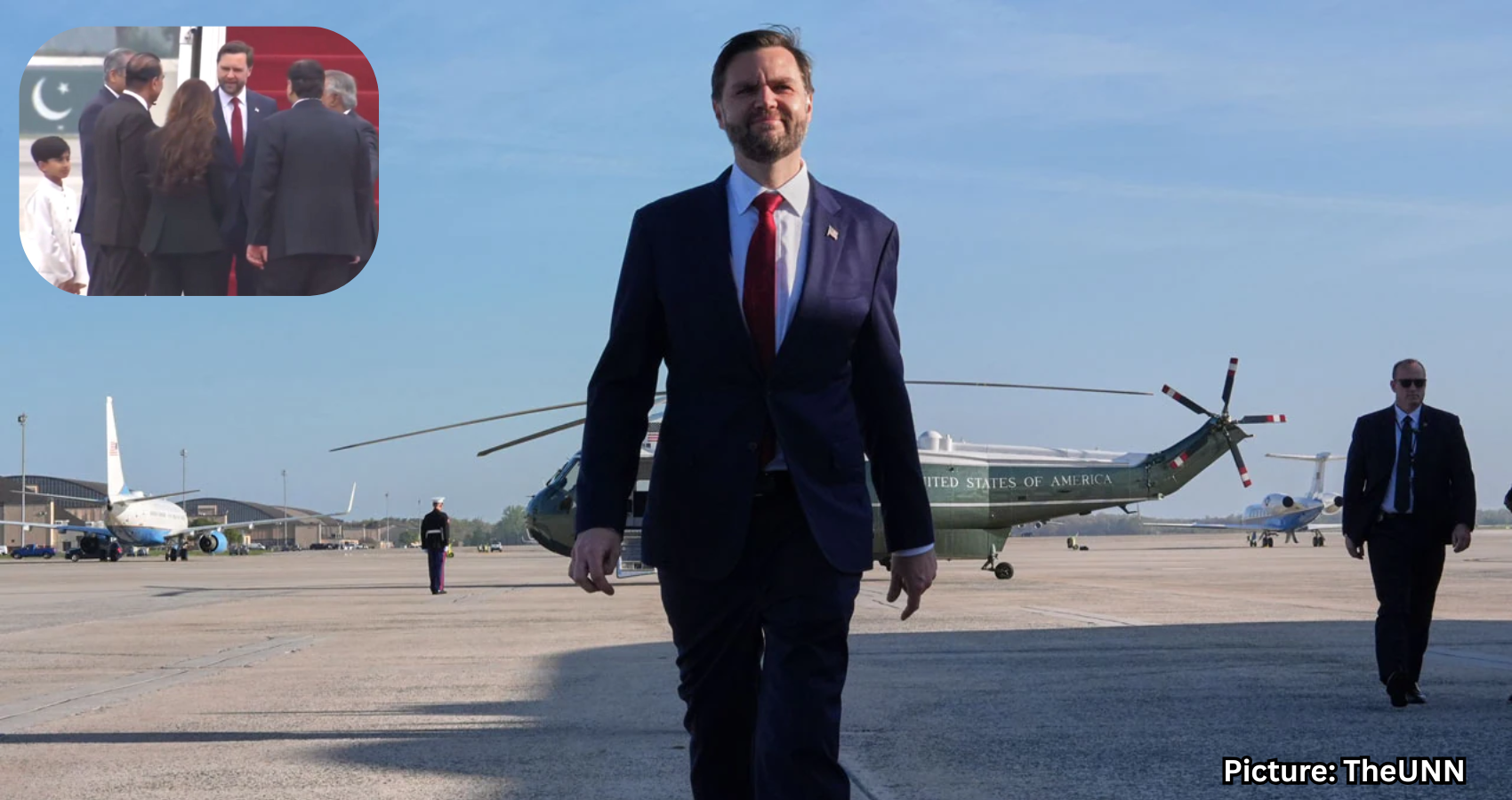
US Vice President JD Vance arrived in Islamabad, escorted by Pakistani F-16 jets, for pivotal talks with Iran amid ongoing regional tensions.
US Vice President JD Vance’s arrival in Islamabad for crucial negotiations with Iran was marked by an escort of Pakistani F-16 jets. This high-stakes meeting comes at a time of heightened tensions in the Middle East, with both nations grappling with a history of mistrust.
Visuals from the event showed five Pakistan Air Force F-16s accompanying Vance’s aircraft, a Boeing C-32A, as it entered Pakistani airspace and landed safely at Nur Khan Airbase. The meeting is being closely guarded by Pakistani officials, reflecting the significance of the discussions set to take place.
Today’s high-level meeting aims to address ceasefire talks between the US and Iran, marking a potential turning point in diplomatic relations. This gathering is particularly noteworthy as it represents the first high-level face-to-face engagement between the two countries since the 1979 Islamic Revolution.
Vance is expected to meet with key Iranian leaders, including Parliament Speaker Mohammad Bagher Ghalibaf and Foreign Minister Seyed Abbas Araghchi. Accompanying him are special envoy Steve Witkoff and Jared Kushner, the son-in-law of former President Donald Trump.
Despite the potential for progress, deep-seated mistrust looms over the negotiations. Ghalibaf expressed skepticism about the talks, stating, “We have good intentions, but we do not trust. Our experience in negotiating with the Americans has always been met with failure and broken promises,” according to Iranian state media.
Pakistan has positioned itself as a facilitator in these discussions, with Finance Minister Ishaq Dar urging both nations to engage constructively. He emphasized the importance of working towards a peaceful resolution, highlighting Pakistan’s role in fostering dialogue.
As the talks unfold, significant differences remain between the US and Iran regarding their negotiation terms. The US, under Trump, previously proposed a 15-point framework that demands Iran relinquish its highly enriched uranium and accept limitations on its military capabilities. In contrast, Iran has presented a 10-point plan that calls for reparations and recognition of its control over the strategically vital Strait of Hormuz.
In the broader context of Middle Eastern tensions, the US-Iran talks are occurring alongside separate discussions between Lebanon and Israel, scheduled for next week. A temporary pause in fighting has provided some respite, although the region remains fraught with uncertainty.
The outcome of these negotiations could have far-reaching implications for US-Iran relations and the stability of the Middle East. As both sides prepare to engage, the world watches closely to see if this historic meeting will pave the way for a new era of diplomacy.
According to The Sunday Guardian, the stakes are high as both nations navigate their complex histories and the pressing need for dialogue.