
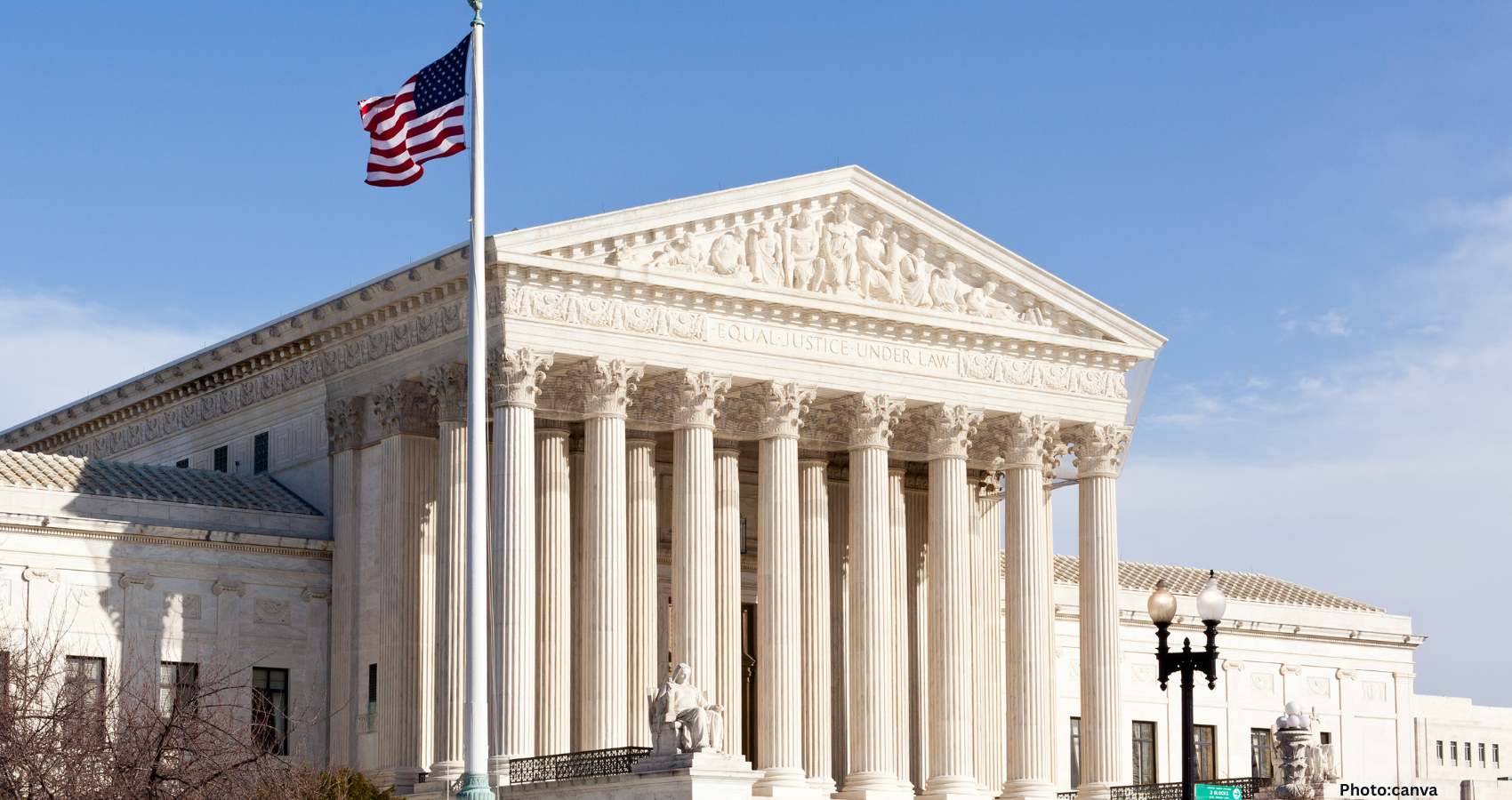
The U.S. Supreme Court is set to reconsider longstanding limits on election spending, potentially reshaping the landscape of campaign finance in the wake of a Republican-led challenge.
Caps on election spending may soon become a relic of the past as the U.S. Supreme Court prepares to hear a case that could overturn a quarter-century-old decision. This challenge, spearheaded by a Republican initiative and supported by the Trump administration, seeks to eliminate restrictions on how much political parties can spend in coordination with candidates for Congress and the presidency.
In 2001, the Supreme Court upheld a provision of the Federal Election Campaign Act (FECA) that limited coordinated spending by political parties. In the case of Federal Election Commission v. Colorado Republican Federal Campaign Committee, the Court ruled that these limits were constitutional, arguing that unrestricted coordinated expenditures could bypass contribution limits and jeopardize the integrity of federal elections.
This ruling was grounded in the longstanding authority of Congress to regulate campaign finance, aiming to strike a balance between First Amendment rights and the need to prevent corruption or its appearance in federal elections.
As of 2025, the Supreme Court is revisiting this precedent in the case of National Republican Senatorial Committee v. Federal Election Commission (NRSC v. FEC). The plaintiffs contend that the campaign finance landscape has undergone significant changes since 2001, rendering previous limits on coordinated spending overly restrictive of political speech and party activities.
They argue that subsequent rulings, particularly Citizens United v. FEC (2010), which expanded the ability of independent groups to spend on elections, have altered the dynamics of campaign finance. The Court has agreed to hear this case during the 2025–2026 term, indicating a potential reevaluation of the constitutional framework governing party-coordinated expenditures.
Following the Trump administration’s collaboration with Republicans to challenge the campaign finance law, the justices appointed a lawyer to defend the existing limits. The outcome of this case could have significant implications for the future of campaign finance in the United States.
If the Court decides to strike down or substantially weaken the limits on coordinated spending, political parties may gain the ability to invest significantly more in support of their candidates. This shift could dramatically alter campaign strategies, fundraising efforts, and the overall dynamics of federal elections.
Conversely, if the Court upholds the limits, it would reaffirm Congress’s authority to regulate coordinated spending and maintain a clear distinction between independent and coordinated expenditures. However, the actual impact of any new ruling on campaign finance behavior remains uncertain, as both political strategies and legal interpretations continue to evolve.
Roman Martinez, a seasoned Supreme Court advocate, has proposed a potential resolution for the justices that would allow them to avoid making a definitive ruling. He suggests that the case should be deemed moot, given that the Federal Election Commission (FEC) now aligns with Republicans in asserting that the law is unconstitutional and that there is “no credible risk” of enforcement.
This case before the Supreme Court marks a critical juncture in the ongoing evolution of U.S. campaign finance law. At its heart, the dispute encapsulates a fundamental tension between two principles: the need to protect the integrity of federal elections by preventing corruption or its appearance, and the imperative to safeguard political speech, a core First Amendment right.
The 2001 precedent upheld limits on coordinated spending by political parties, emphasizing Congress’s role in regulating elections and maintaining clear boundaries between independent expenditures and party-directed spending. However, the plaintiffs in the current case argue that developments in campaign finance over the past two decades, particularly following landmark rulings like Citizens United, have rendered these limits outdated and unnecessarily restrictive.
The Supreme Court’s decision in this case could redefine the landscape of campaign finance, influencing how elections are funded and conducted in the years to come, according to The American Bazaar.