
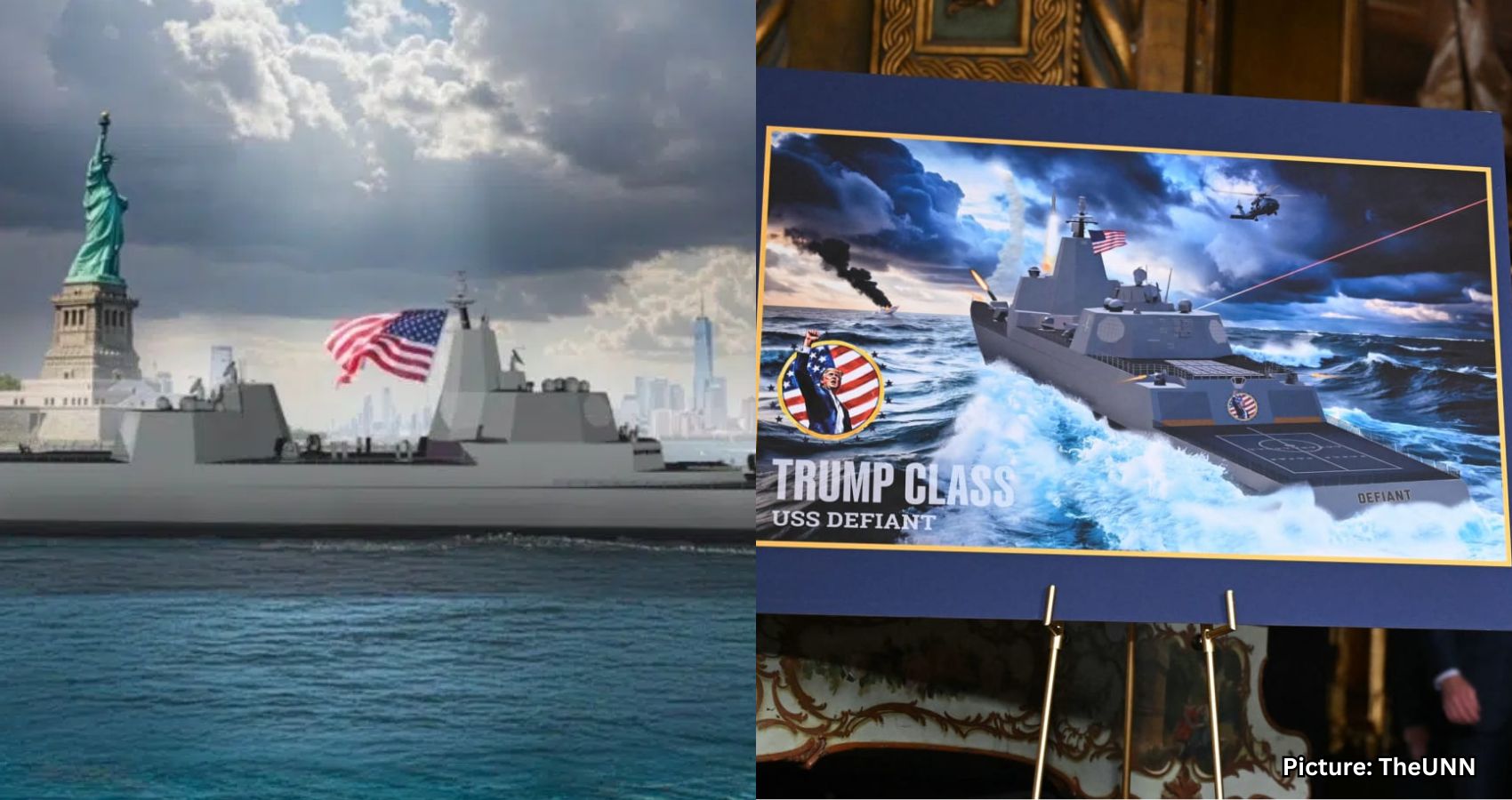
President Donald Trump’s proposal for a “Trump-class” battleship has sparked debate among experts regarding its feasibility, costs, and relevance to modern naval strategy.
President Donald Trump has unveiled plans for a new “Trump-class” battleship, aiming to make a significant impact on the U.S. armed forces. On Monday, he declared that this vessel would be “the fastest, the biggest, and by far, 100 times more powerful than any battleship ever built.”
The first ship in this proposed class is to be named the “USS Defiant,” with an initial plan to construct two vessels and the potential for fleet expansion in the future. According to Trump’s announcement, the Trump-class battleships are envisioned to feature advanced weaponry, including hypersonic missiles, nuclear-capable cruise missiles, and directed-energy weapons such as high-powered lasers. The initiative is framed as both a military enhancement and a symbolic effort to reassert U.S. strength on the global stage.
The proposal has ignited a debate among defense analysts and policymakers. Proponents argue that these ships could serve as a deterrent and bolster U.S. naval capabilities. However, critics have raised concerns, pointing out that traditional battleships have largely been supplanted by aircraft carriers, submarines, and multi-role surface vessels.
Mark Cancian, a senior adviser at the Center for Strategic and International Studies, expressed skepticism about the proposal. In a commentary published on December 23, he stated, “There is little need for said discussion because this ship will never sail.” Cancian predicted that “a future administration will cancel the program before the first ship hits the water.”
Bernard Loo, a senior fellow at Singapore’s S. Rajaratnam School of International Studies, characterized the proposal as “a prestige project more than anything else.” He noted that historically, battleships have been viewed through the lens of size, suggesting that a simplistic understanding of strategy often equates larger vessels with greater power.
Key details surrounding the Trump-class battleships, including final designs, budgets, construction timelines, and necessary congressional approvals, remain unresolved. It is still uncertain whether these ships will be built as proposed. While the announcement has garnered extensive media coverage and public interest, the Trump-class battleships currently exist as a conceptual initiative, facing significant engineering and logistical challenges before any construction could realistically commence.
High-profile proposals like this often serve as statements of intent, signaling priorities and projecting national strength, regardless of their ultimate feasibility. The ongoing debate surrounding the Trump-class initiative underscores the tension between symbolic gestures and practical defense considerations, with analysts weighing factors such as feasibility, cost, and strategic relevance.
Moreover, conceptual projects like the Trump-class battleship highlight the broader challenges inherent in modern military planning. Successful advancement from idea to implementation requires alignment of technological capabilities, resource allocation, and bureaucratic approval processes. Even proposals that encounter skepticism can shape defense discourse, influencing how policymakers, experts, and the public perceive future military developments.
The discussion surrounding the Trump-class battleship reflects the complexities of contemporary defense strategy, where innovation must be balanced with practicality and strategic necessity. As the debate continues, it remains to be seen whether this ambitious proposal will gain traction or fade into the realm of unfulfilled military aspirations.
According to American Bazaar.