
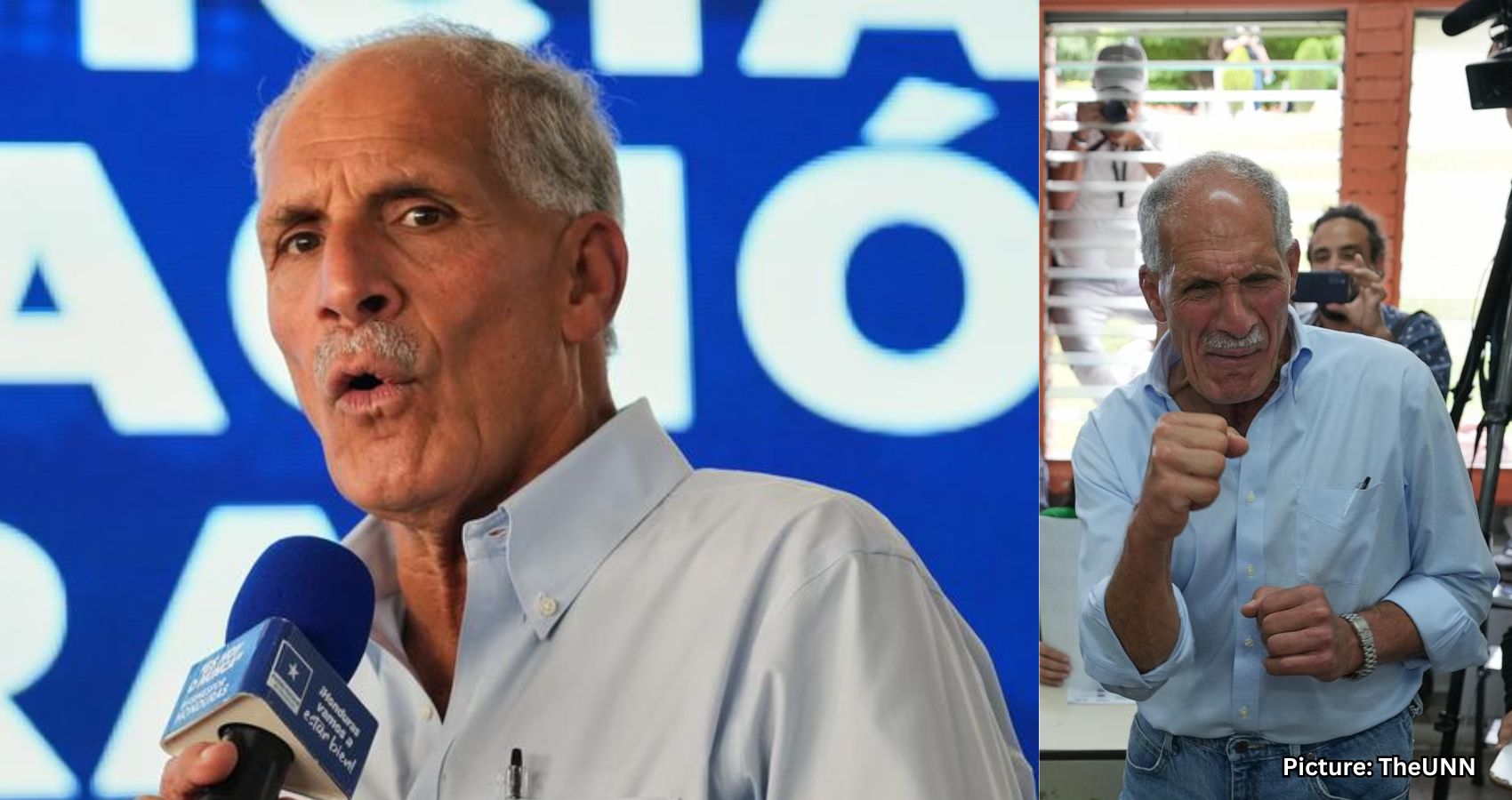
Tito Asfura has won the 2025 presidential election in Honduras, marking a significant shift in the country’s political landscape amid claims of electoral fraud and technical difficulties.
Tito Asfura has secured the presidency of Honduras, defeating opponents Salvador Nasralla and Rixi Ramona Moncada Godoy in a highly polarized election. This victory for the right-of-center National Party of Honduras (PNH) signals a notable shift in Central America’s political dynamics.
The election results, which showed Asfura receiving 40.3% of the vote compared to Nasralla’s 39.5%, were delayed for several days due to technical glitches and allegations of vote-rigging from other candidates. Rixi Moncada, representing the ruling LIBRE party, finished in a distant third place.
The vote-counting process was chaotic, with approximately 15% of the tally sheets—representing hundreds of thousands of ballots—requiring manual counting to determine the winner. Despite the razor-thin margin and disputes over the results, two electoral council members and one deputy approved the outcome. Notably, a third council member, Marlon Ocha, was absent during the announcement of the results.
In a statement on X, Asfura expressed his readiness to govern, saying, “Honduras: I am ready to govern. I will not let you down.” However, the head of the Honduran Congress, Luis Redondo, rejected the results, labeling them an “electoral coup.” Redondo, a member of the LIBRE party, stated on X, “This is completely outside the law. It has no value.”
U.S. Secretary of State Marco Rubio congratulated Asfura on X, expressing optimism about collaborating with his administration to promote prosperity and security in the region.
Initial preliminary results indicated that Asfura, 67, had garnered 41% of the votes, placing him slightly ahead of Nasralla, 72, who had around 39%. However, the official tally faced significant delays, with the website designed to share vote counts crashing due to technical issues, according to The Associated Press.
As the candidates were separated by only 515 votes, the situation escalated when former President Donald Trump commented on Truth Social, stating, “Looks like Honduras is trying to change the results of their Presidential Election. If they do, there will be hell to pay!”
By Thursday, Asfura’s lead had narrowed to 40.05%, approximately 8,000 votes ahead of Nasralla, who had 39.75%. In response, Nasralla called for an investigation, alleging that an algorithm had manipulated the vote count, similar to accusations made during the 2013 election. He claimed that over a million votes for his party were improperly attributed to Asfura’s National Party.
Asfura, often referred to as “Tito,” previously served as the mayor of Tegucigalpa and entered the race with a reputation for effective leadership, particularly in infrastructure and public safety. His campaign was notably bolstered by an endorsement from Trump, who stated that if Asfura did not win, the U.S. would not continue to invest in Honduras.
In the lead-up to the election, Trump also indicated he would pardon former President Juan Orlando Hernandez, who is currently serving a 45-year sentence for drug trafficking. Hernandez previously led the same party as Asfura.
The election not only determined the presidency but also involved voting for a new Congress and numerous local positions. The campaign was marked by allegations of fraud and a contentious political atmosphere.
Asfura’s victory represents a significant moment in Honduran politics, as the country grapples with issues of corruption and governance. The implications of this election will likely resonate throughout Central America, influencing regional stability and U.S. relations.
According to Reuters, the election’s aftermath will be closely monitored as various stakeholders assess the legitimacy of the results and the future direction of Honduras.