
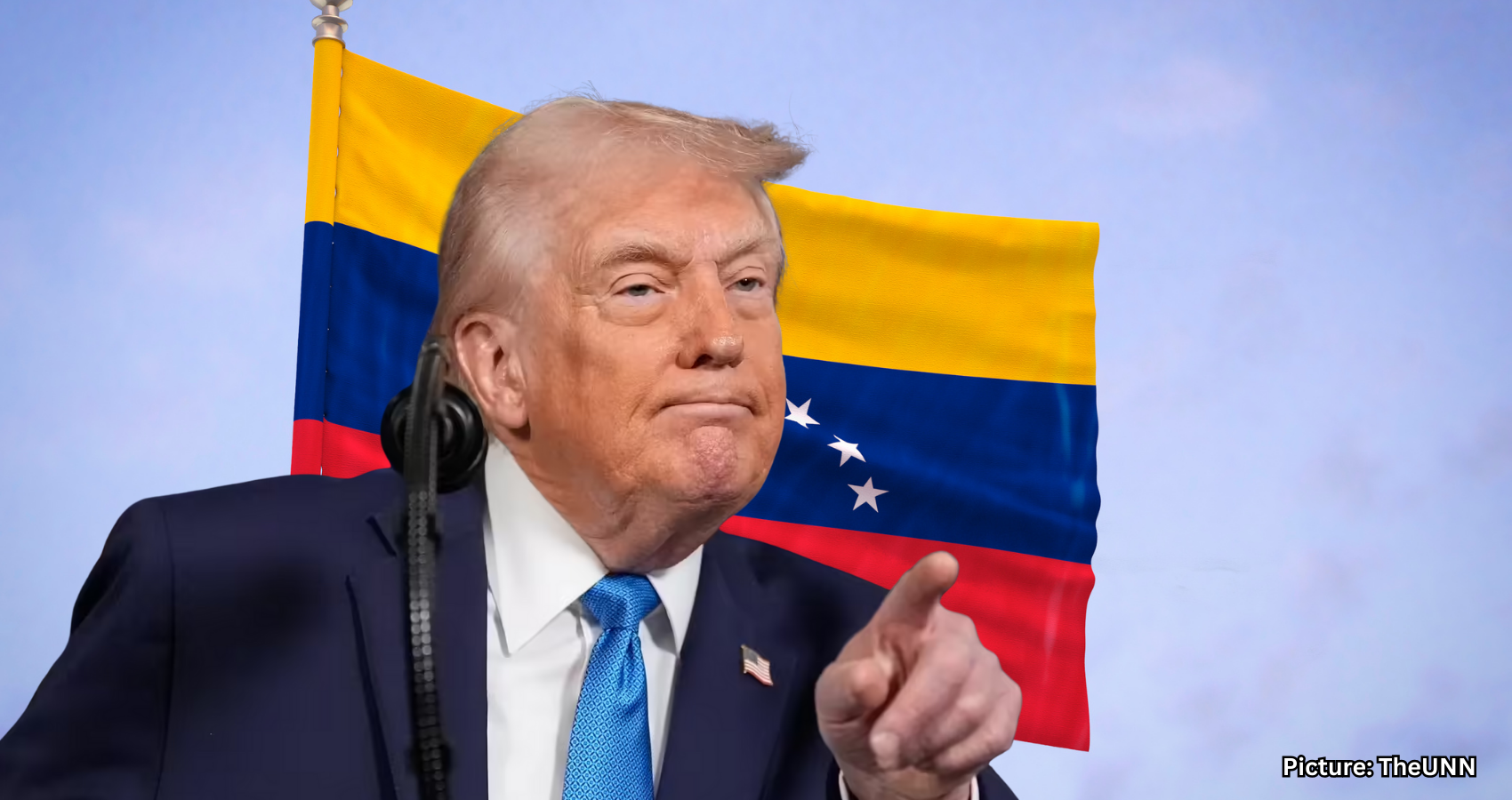
The United States is poised for significant involvement in Venezuela’s oil industry following President Trump’s claims of capturing President Nicolás Maduro amid escalating military actions in Caracas.
The United States is set to take a more active role in Venezuela’s oil sector, as President Donald Trump announced the capture of Venezuelan President Nicolás Maduro and his wife, Cilia Flores, during a military operation. This statement came on Saturday, shortly after reports of airstrikes and explosions in the Venezuelan capital, Caracas.
In a series of interviews and social media posts, Trump characterized the military action as a “large-scale strike against Venezuela,” marking a notable escalation in the U.S. efforts to oust Maduro from power. Residents of Caracas reported multiple explosions and low-flying aircraft, indicating a significant military presence in the area.
During an interview with Fox News, Trump emphasized that American energy companies would play a crucial role in revitalizing Venezuela’s oil industry, which is home to the world’s largest proven crude oil reserves. He stated, “We have the greatest oil companies in the world, the biggest and the best, and we’re going to be very much involved in it. We’re going to rebuild the oil infrastructure, and we’re going to run the country right.”
This shift from a sanctions-based approach to direct U.S. involvement in Venezuela’s energy sector signals a new chapter in Washington’s strategy regarding the South American nation.
U.S. Vice President JD Vance publicly supported the operation, citing allegations of drug trafficking and oil theft against Maduro. Vance asserted that the administration had provided multiple opportunities for Maduro to step down, emphasizing the need to stop drug trafficking and return stolen oil to the United States. He stated, “Maduro now knows that President Trump means what he says.”
In response to concerns about the legality of the operation, Vance argued that Maduro’s position as a sitting head of state did not exempt him from U.S. law enforcement. “You don’t get to avoid justice for drug trafficking in the United States because you live in a palace in Caracas,” he added.
Trump claimed that Maduro and Flores were captured during a raid on a military facility where Maduro was staying. According to U.S. media sources, American troops stormed the compound, detained the couple, and transported them out of the country. In a post on Truth Social, Trump stated that the U.S. had “successfully carried out a large-scale strike against Venezuela and its leader” in coordination with U.S. law enforcement agencies.
He further claimed that Maduro was being taken aboard the USS Iwo Jima to face charges in federal court in New York, including narco-terrorism conspiracy and cocaine importation conspiracy.
U.S. Attorney General Pam Bondi confirmed that Maduro and Flores had been indicted in the Southern District of New York on multiple counts, including serious drug-related offenses. She expressed gratitude to Trump for “demanding accountability on behalf of the American people” and commended the military for executing what she termed a successful mission.
Reports indicate that members of Delta Force, the elite U.S. military unit known for high-risk capture missions, were involved in the operation. The Pentagon has not disclosed further operational details.
In Caracas, residents reported at least seven explosions early Saturday, coinciding with the military operation. Videos shared on social media depicted fires, thick smoke, power outages, and low-flying aircraft near a major military base. The apparent strike lasted less than 30 minutes, and there were no immediate reports of casualties, with Venezuelan authorities yet to release official damage assessments.
In response to the U.S. actions, Venezuelan Defence Minister Vladimir Padrino López announced a nationwide mobilization of military forces, labeling the U.S. operation as “the worst aggression” Venezuela has ever faced. He called for calm and unity while warning against unrest, stating that all branches of the armed forces had been placed on alert following “orders from President Maduro,” without directly addressing the reports of Maduro’s capture.
The Venezuelan government condemned the U.S. actions as an “imperialist attack,” asserting that both civilian and military facilities were targeted. Authorities declared a “state of external disturbance,” which grants expanded military powers and allows for the temporary suspension of certain civil rights. Government supporters were urged to mobilize and demonstrate in the streets.
This military operation follows months of escalating pressure from the Trump administration against Maduro, who has been in power since 2013. The U.S. has accused Maduro of leading a “narco-state,” rigging elections, and suppressing opposition forces. The results of the most recent presidential election have been rejected by the U.S., Venezuela’s opposition, and several foreign governments.
Trump has consistently threatened military action against Maduro, suggesting earlier this week that it would be “smart” for him to step down. He has described the U.S. as being in an “armed conflict” with drug cartels operating in the Western Hemisphere.
Since September, the U.S. military has conducted at least 35 known strikes on suspected drug-smuggling boats, resulting in the deaths of at least 115 individuals, according to figures released by the administration. These operations have coincided with a significant military buildup near South America.
Maduro has consistently dismissed U.S. accusations, characterizing the pressure campaign as a pretext for regime change and alleging that Washington is orchestrating a conspiracy to seize Venezuela’s resources.
As global reactions to the situation unfold and questions regarding legality, sovereignty, and escalation persist, the crisis in Venezuela appears far from resolved. What began as a law enforcement operation has rapidly transformed into a geopolitical crisis with significant implications for the region and global energy markets, according to Global Net News.