
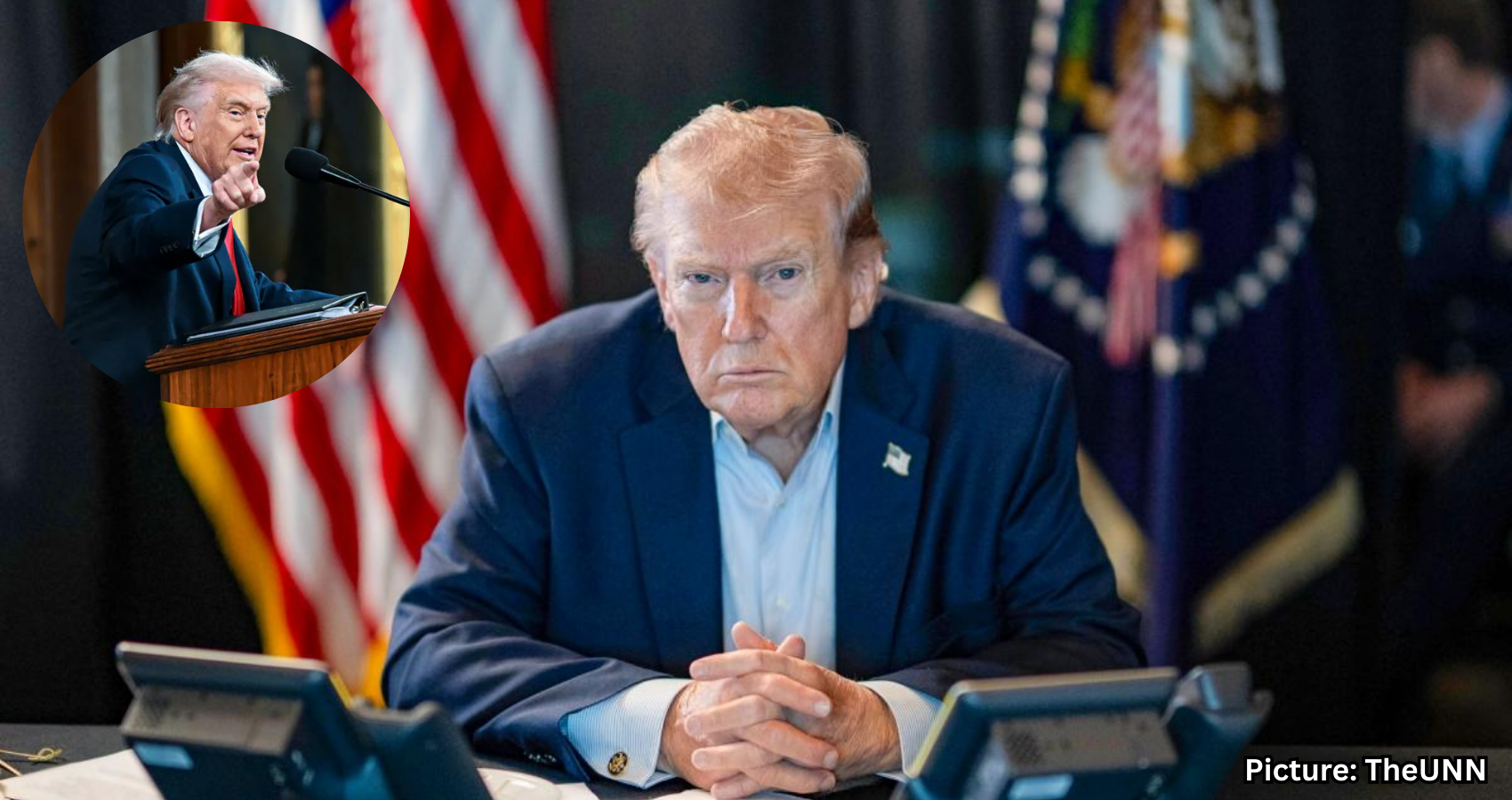
President Trump’s approval ratings are declining as a new NBC News poll reveals growing voter discontent over inflation and military conflict with Iran, complicating the Republican Party’s midterm prospects.
A recent national poll conducted by NBC News indicates a challenging political environment for the Republican Party, as President Donald Trump’s approval ratings remain low amid escalating tensions with Iran and ongoing economic concerns. The poll reveals that Democrats currently hold a six-point lead in the generic congressional ballot, raising questions about the administration’s handling of key issues such as immigration and trade.
The typical political honeymoon often enjoyed by a second-term president appears to be absent for Trump. As the United States enters what could be a prolonged military conflict with Iran, the political ramifications are already becoming evident. The NBC News survey shows that a majority of registered voters disapprove of the president’s decision to initiate strikes against Iranian targets, a military action that commenced just last weekend and has quickly become a source of national discontent.
This shift toward military engagement coincides with a growing sense of economic frustration among voters. Despite the administration’s attempts to promote a narrative of economic growth, public sentiment is increasingly pessimistic. The poll indicates that a significant 62% of voters disapprove of Trump’s management of inflation and the rising cost of living. These issues, which were pivotal to Trump’s previous electoral success, have now turned into significant liabilities. Only 27% of voters report an improvement in their personal financial situations, while 38% indicate that their circumstances are worsening.
The administration’s trade policies have also faced scrutiny following a tumultuous month in the legal arena. After the Supreme Court invalidated Trump’s primary tariff program in February, the decision to reinstate those tariffs has met with public backlash. A notable 55% of respondents believe that the administration’s tariff policies have negatively impacted the economy, a stark contrast to the favorable view of his protectionist stance during his first term.
On the legislative front, the Democratic Party appears to be solidifying its position. Currently, Democrats lead the race for control of Congress with a six-point advantage, polling at 50% compared to the Republicans’ 44%. Although Republicans maintain slim majorities in both the House and Senate, their path to retaining power is becoming increasingly narrow. Democratic pollster Jeff Horwitt of Hart Research Associates noted that the combination of military escalation and economic issues has created an electorate that is “once again fed up with those in power.”
Perhaps most striking are the evolving views on immigration and border security, which have long been central to Trump’s political identity. While 53% of voters still express approval of his approach to border security, a concerning 54% disapprove of his specific immigration policies. This disconnect can be attributed to a series of high-profile incidents and aggressive enforcement actions, including the tragic deaths of two U.S. citizens, Renee Good and Alex Pretti, at the hands of immigration officers in Minnesota earlier this year, which have sparked widespread criticism.
The fallout from these events led to the dismissal of Homeland Security Secretary Kristi Noem, who had been the public face of the administration’s mass deportation strategy. However, her removal has not yet stabilized the administration’s standing on immigration issues. While voters still favor Republicans over Democrats on border security by a 27-point margin, that lead has diminished from 31 points in October.
The survey also highlights a notable shift in American attitudes toward immigration. Sixty percent of respondents now believe that immigration benefits the United States more than it harms, a significant increase from the 50% recorded just before the 2024 election. This suggests that while the public desires effective border control, there is growing discomfort with the humanitarian and social costs associated with the administration’s current enforcement strategies.
In the realm of election integrity, Trump continues to find a receptive audience for his rhetoric, even as his legal arguments face challenges. A slim majority of 51% of voters express greater concern about preventing ineligible individuals from voting rather than expanding access to voting. This marks a significant shift from 2021, when the emphasis was predominantly on access. Trump has sought to leverage this sentiment by advocating for an overhaul of national voting laws, reiterating claims regarding the 2020 and 2024 elections.
As the 2026 midterm elections draw near, voter engagement is reaching levels typically seen in the final weeks of a presidential campaign. Sixty-four percent of voters rate their interest in the upcoming election as a “9” or “10” on a 10-point scale. Notably, Democrats report higher levels of “extreme interest” at 74%, compared to 61% among Republicans, indicating a significant enthusiasm gap that could influence turnout in key swing districts.
“Democrats have historically had an advantage on economic issues during major election victories,” observed Republican pollster Bill McInturff. He cautioned that for the first time in years, Republicans have lost their traditional edge in economic stewardship, with both parties now tied at 40% regarding who would better manage the economy. “When Republicans start losing the economic agenda, it’s usually a sign they are in deep trouble,” McInturff added.
With the nation engaged in military conflict abroad and grappling with high inflation at home, President Trump faces a shrinking window to address these challenges before the midterm elections commence. The data suggests that the “outsider” appeal that once insulated Trump from conventional political pressures may finally be yielding to the harsh realities of incumbency, according to NBC News.