
President Trump asserts U.S. control over Venezuela following Nicolás Maduro’s arrest, outlining plans for economic recovery and delayed elections amid ongoing instability in the country.
President Donald Trump declared that the United States is now “in charge” of Venezuela following the arrest of longtime leader Nicolás Maduro. During a recent press gaggle, Trump outlined a plan to manage the country, rebuild its economy, and postpone elections until what he described as a recovery is underway.
Trump’s comments came in response to mounting questions about the governance of Venezuela after a U.S. military operation led to Maduro’s capture early Saturday. When asked about who is currently in charge, Trump responded, “Don’t ask me who’s in charge because I’ll give you an answer, and it’ll be very controversial.” He then clarified, “It means we’re in charge.”
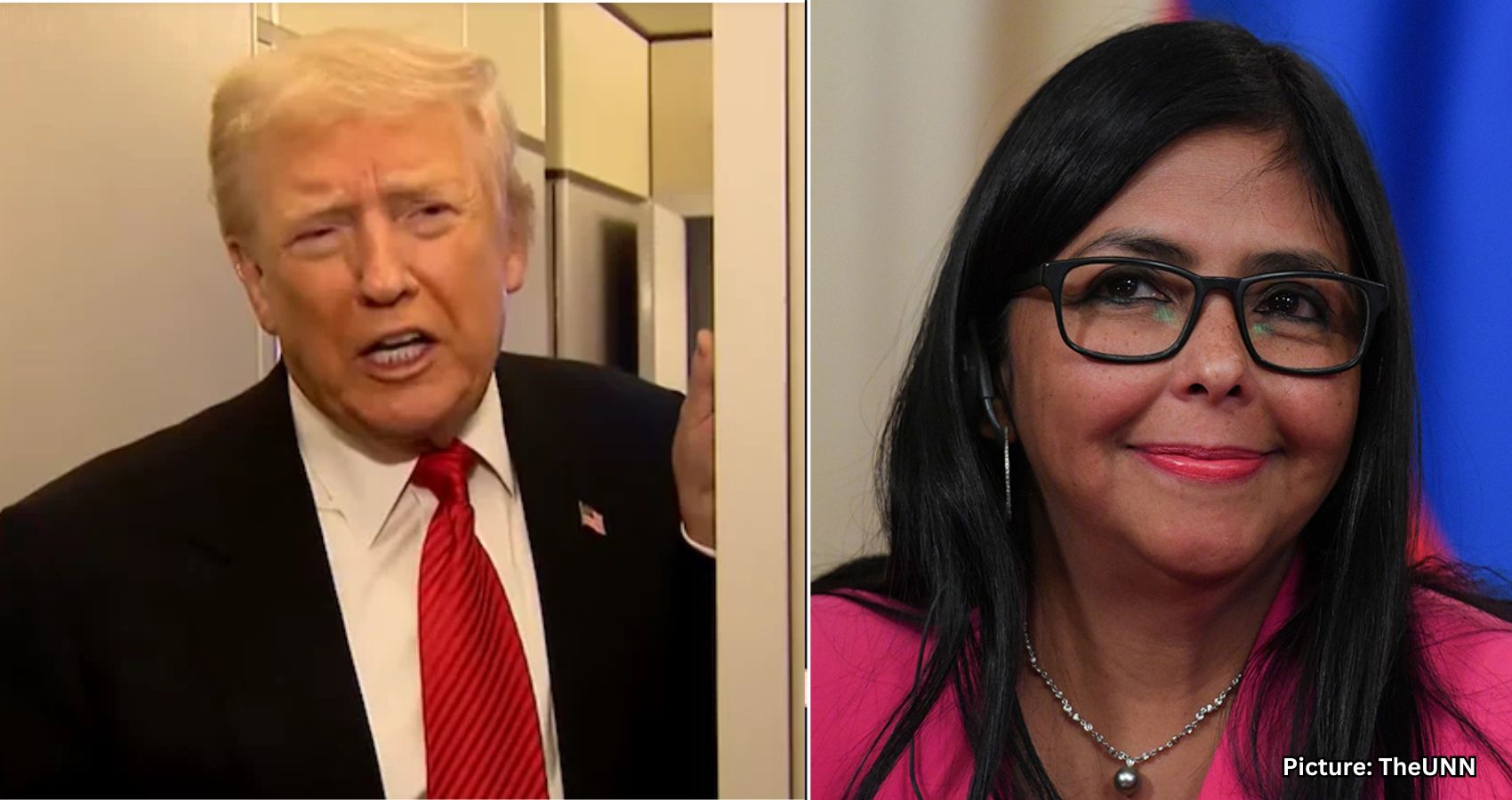
In the wake of Maduro’s arrest, Trump was questioned about whether he had spoken directly with Venezuela’s newly sworn-in Vice President Delcy Rodríguez. While he confirmed he had not personally communicated with her, he suggested that coordination between U.S. officials and the new leadership was already in progress.
Throughout the gaggle, Trump characterized Venezuela as a failed state that cannot transition to democratic rule immediately, citing years of mismanagement that have devastated the country’s infrastructure and economy. He drew a parallel between Venezuela’s collapse and what he claimed would have happened to the U.S. had he lost the election, using this comparison to justify U.S. intervention.
“We have to do one thing in Venezuela. Bring it back. It’s a dead country right now,” Trump stated. “It’s a country that, frankly, we would have been if I had lost the election. We would have been Venezuela on steroids.”
Trump emphasized that the rebuilding of Venezuela would focus on restoring its oil industry, which he claimed had been stripped from the U.S. under previous administrations, leading to decayed infrastructure and crippled production. He asserted that American oil companies—rather than U.S. taxpayers—would finance the reconstruction efforts, while the U.S. oversees the broader recovery.
“The oil companies are going to go in and rebuild this system. They’re going to spend billions of dollars, and they’re going to take the oil out of the ground, and we’re taking back what they sell,” Trump explained. “Remember, they stole our property. It was the greatest theft in the history of America. Nobody has ever stolen our property like they have. They took our oil away from us. They took the infrastructure away. And all that infrastructure is rotted and decayed.”
Trump also indicated that elections in Venezuela would not occur until the country is stabilized, arguing that rushing to hold a vote in a collapsed state would only lead to further failures. “We’re going to run everything,” he said. “We’re going to run it, fix it. We’ll have elections at the right time.”
When pressed on whether the military operation in Venezuela was driven by oil interests or amounted to regime change, Trump rejected both assertions. Instead, he framed the intervention as part of a broader security doctrine, linking it to longstanding U.S. policy in the Western Hemisphere.
“It’s about peace on Earth,” Trump stated. “You gotta have peace; it’s our hemisphere. The Monroe Doctrine was very important when it was done.” He criticized previous administrations for failing to enforce this doctrine, claiming his administration has restored it as a guiding principle.
Trump’s comments extended beyond Venezuela, as he warned of instability in other regions, particularly in Colombia, which he described as a growing security concern. He accused Colombia’s leadership of facilitating large-scale drug trafficking into the U.S. “Colombia’s very sick too, run by a sick man who likes making cocaine and selling it to the United States, and he’s not going to be doing it very long,” Trump said. When asked if this implied U.S. action, he replied, “It sounds good to me.”
Additionally, Trump addressed ongoing protests in Iran, stating that the U.S. is closely monitoring the situation and would respond if the Iranian government resorts to violence against demonstrators. “We’re watching it very closely,” he warned. “If they start killing people like they have in the past, I think they’re going to get hit very hard by the United States.”
As the situation in Venezuela continues to unfold, Trump’s administration appears poised to take a significant role in shaping the country’s future, focusing on economic recovery and political stabilization.
These remarks reflect a broader foreign policy outlook, emphasizing U.S. interests in the Western Hemisphere and a commitment to addressing threats that could impact American security.
According to Fox News, Trump’s comments underscore a pivotal moment in U.S.-Venezuelan relations as the country navigates a complex political landscape following Maduro’s arrest.