
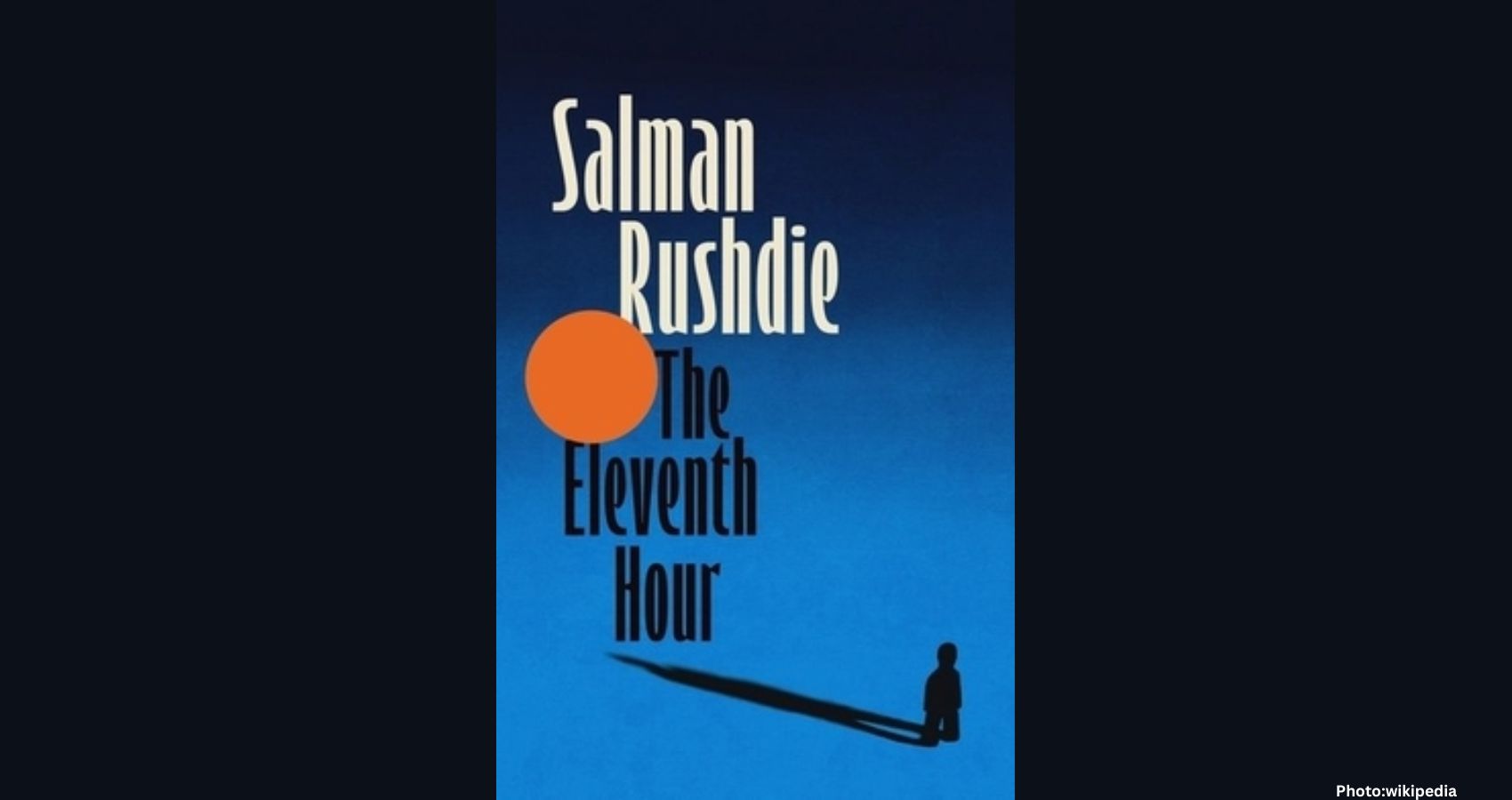
Salman Rushdie’s latest collection, *The Eleventh Hour*, features a quintet of stories that explore themes of love, mortality, and the power of narrative.
Salman Rushdie’s latest book, *The Eleventh Hour*, is a collection of five stories published by Random House in 2025. Among these, “Late” stands out as a poignant tale about a retired Cambridge academic of South Asian descent who wakes up one day to discover he is dead. The narrative captivates with its imaginative plot and offers a compassionate portrayal of the protagonist as he reflects on his life and interacts with a young student who is the only one able to see him.
Another notable story, “The Musician of Kahani,” serves as an homage to Bombay, reminiscent of Rushdie’s earlier work, *Midnight’s Children*. In this tale, a young girl named Chandni Contractor discovers her extraordinary talent for playing the piano at just four years old. As she grows up, she falls in love with a man named Majnoo. Rushdie eloquently captures the essence of love, stating, “Love lands where it lands and doesn’t ask for explanations. Explanations come from the world of rationality, and love is unreasonable.” This simple yet profound insight resonates throughout the story.
In “The Musician of Kahani,” the city of Bombay is referred to as Kahani, meaning “stories,” emphasizing the narrative’s deep connection to the city. The protagonist reflects on a villa named Westfield Estate, where many of his stories originated. “Here I am visiting my yesterday years one last time, and they are visiting me. I will not come this way again,” he muses, evoking a sense of nostalgia and farewell. This emotional conclusion left a lasting impact, reminding readers of the inevitable end of storytelling. Rushdie remains a literary treasure, and one can only hope for his continued health and creativity.
Two stories from this collection have previously appeared in *The New Yorker*. “The Old Man and the Piazza,” published in 2020, is a fable exploring the manipulation of language, while “In the South,” which came out in 2009, features two elderly neighbors who engage in amusing yet wistful conversations across their balconies. Although “Oklahoma,” a story inspired by Kafka, did not resonate with me, Rushdie’s signature wit, energy, and empathy for his characters shine through in all of his work.
On November 16, 2025, I had the opportunity to see Rushdie on his book tour at City Arts and Lectures in San Francisco, where he engaged in a lively conversation with Poulomi Saha, a professor at UC Berkeley. Following Saha’s eloquent introduction, Rushdie received a warm welcome from the audience, humorously encouraging them to continue applauding. Saha matched Rushdie’s energy with her own sensitivity and wit, leading to an engaging discussion.
During the conversation, Saha remarked that this collection feels like a return for Rushdie—perhaps even a rebirth. Rushdie confirmed this sentiment, explaining how the stories began to flow after he wrote *Knife*, his memoir detailing the assassination attempt he survived in 2022. He recounted how the first story that emerged was “Late,” a ghost story set in a college reminiscent of King’s College, where he studied. The narrative explores themes of identity and friendship, particularly in the context of a changing societal landscape.
Rushdie noted that significant changes occurred during his time at university, including the legalization of homosexuality and the introduction of women into previously all-male institutions. The story centers on an elderly gay academic who no longer has to hide his identity. As Rushdie elaborated, the story evolved unexpectedly when the protagonist woke up to find himself dead, leading to a narrative that is more about repair than vengeance.
In response to questions about whether this book signifies a farewell, Rushdie clarified that it is not a goodbye but rather a collection of stories that came to him after a period of reflection. He emphasized that literature should not be viewed through a utilitarian lens; instead, it should be beautiful and evocative.
Rushdie also shared his thoughts on magic realism, stating that it emerges from the interplay of imagination and history. He believes that everyone has a role in shaping narratives and that it is essential to tell stories authentically. When asked how he decides between writing a novel or a short story, he explained that writing is a process of listening to the characters and discerning what they need.
As for his current reading list, Rushdie mentioned Kiran Desai’s book, “Colossal!” and a new biography of James Baldwin, which explores Baldwin’s life through the lens of the people he loved. He also addressed a seventh grader’s question about fighting censorship, stating that the best way to combat it is by refusing to accept it. He highlighted the alarming number of active book bans in the U.S., which currently stands at 23,000, affecting classic literature such as *Beloved* and *To Kill a Mockingbird*.
While there was no book signing at the event, signed copies of *The Eleventh Hour* were available for purchase. The session at City Arts and Lectures was recorded and can be accessed online, providing an opportunity for those interested to hear the insightful discussion firsthand. Rushdie’s latest work and his reflections on literature continue to inspire and resonate with readers around the world, affirming his place as a vital voice in contemporary literature.
According to India Currents, Salman Rushdie’s *The Eleventh Hour* is a testament to his enduring creativity and ability to weave complex narratives that explore the human experience.