
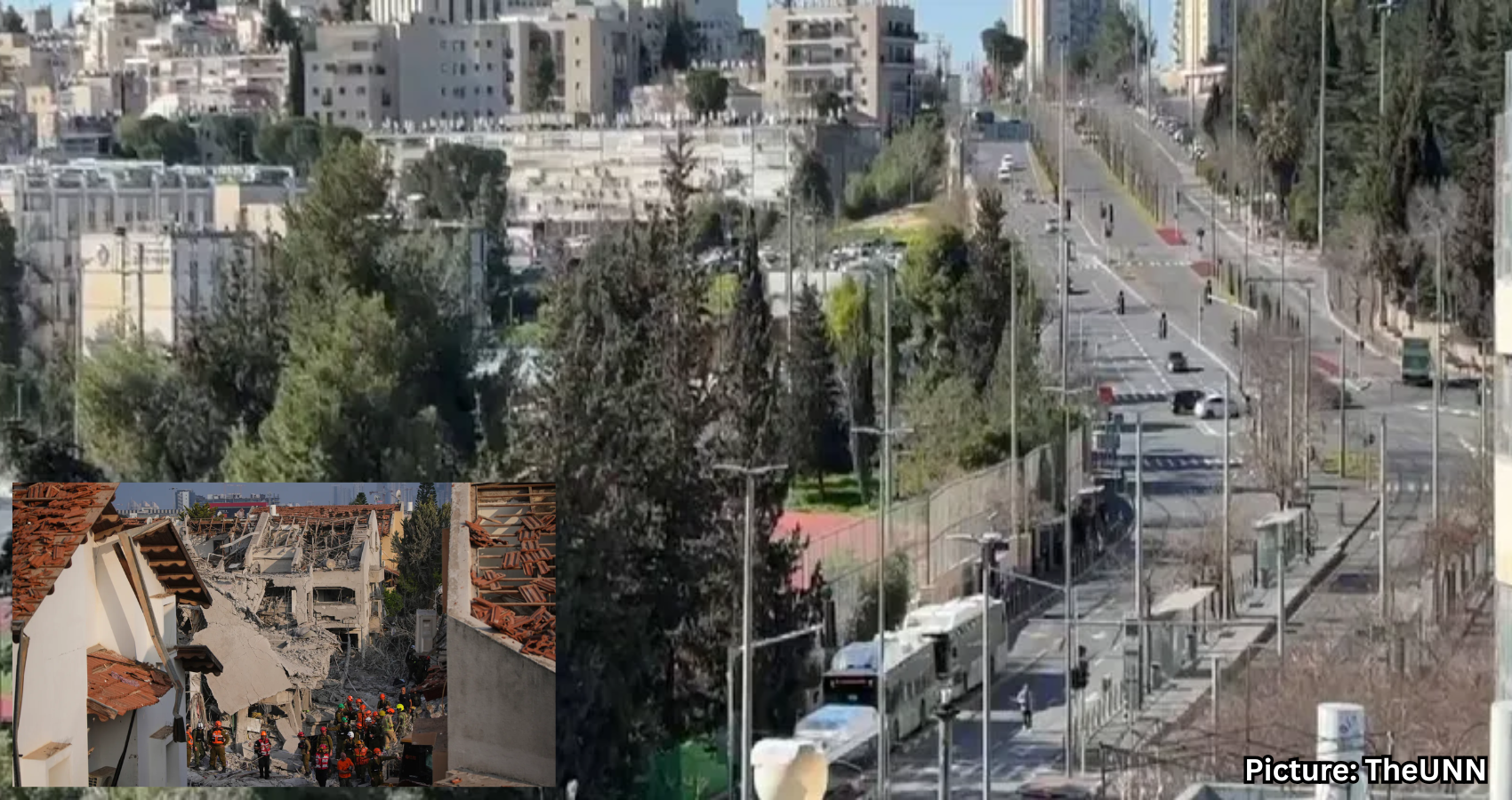
The past 48 hours in Tel Aviv have been marked by intense missile threats and military operations, with analysts suggesting that Iran may never recover from the current crisis.
In a dramatic escalation of conflict, the past 48 hours in Tel Aviv have been described as a “biblical event” by Kobi Michael, a senior researcher at the Institute for National Security Studies and the Misgav Institute. Speaking from his shelter in the city, Michael detailed the relentless barrage of missile threats that have plagued the region following Operation Epic Fury and coordinated U.S.-Israeli strikes in Iran.
Michael, like many residents, has spent significant time in reinforced rooms as sirens blared throughout the city. “I am very experienced in this,” he remarked, reflecting on the ongoing crisis. He expressed hope that President Trump would demonstrate the necessary time and determination to see the military operations through to their objectives.
In a video message, President Trump affirmed that military operations would continue “until all of our objectives are achieved.” Michael emphasized the importance of Trump’s leadership, stating, “He is the only one who can make the change — and that change will impact the entire region and the international order for years to come.”
As of Sunday, Tel Aviv remained under a state of emergency due to Iranian missile attacks that have resulted in casualties and extensive damage. According to reports from The Associated Press, Iranian missile and drone strikes have claimed the lives of approximately 11 Israeli civilians and injured dozens more in retaliation for the U.S.-Israeli strikes on Iran.
Shrapnel from missile impacts has damaged at least 40 buildings in Tel Aviv, with authorities confirming at least one death in the area from falling debris. The Philippine Embassy in Israel reported the death of a Filipino national following a missile strike in Tel Aviv on Saturday.
“We enter our shelter once the siren is heard and stay there until the Home Front Command announces that we can leave,” Michael explained. He noted that the duration of sheltering typically lasts about 20 to 30 minutes, unless further sirens are triggered during that time. Since the previous morning, residents have experienced around 30 sirens.
Israeli President Isaac Herzog visited an impact site in Tel Aviv on Sunday, delivering a message of resilience amid the turmoil. “The people of Israel and the people of Iran can live in peace. The region can live in peace. But what undermines peace time and again is terror instigated by this Iranian regime,” Herzog stated.
In the wake of reported strikes that killed Iran’s Supreme Leader Ayatollah Ali Khamenei and approximately 40 senior Iranian officials, Iran has established a provisional leadership council. Key figures in this council include Ayatollah Alireza Arafi, President Masoud Pezeshkian, and Judiciary Chief Gholam-Hossein Mohseni-Eje’i.
Michael noted the challenges facing the new leadership, stating, “The Supreme Leader did not complete the necessary groundwork regarding his own succession.” He added that Pezeshkian would confront significant obstacles due to the regime’s heavy losses and severe disruptions to its control and command systems, compounded by extensive bombing and attacks across Iran, including Tehran.
Even if the current regime manages to survive, Michael asserted, “It will never be able to reconstitute itself, recover or return to its previous position.” The implications of these developments could reshape the geopolitical landscape in the region for years to come, as the conflict continues to unfold.
As the situation remains fluid, analysts and residents alike are left grappling with the uncertainty of what lies ahead for both Israel and Iran.
According to The Associated Press, the ongoing conflict has far-reaching consequences that extend beyond immediate military objectives.