
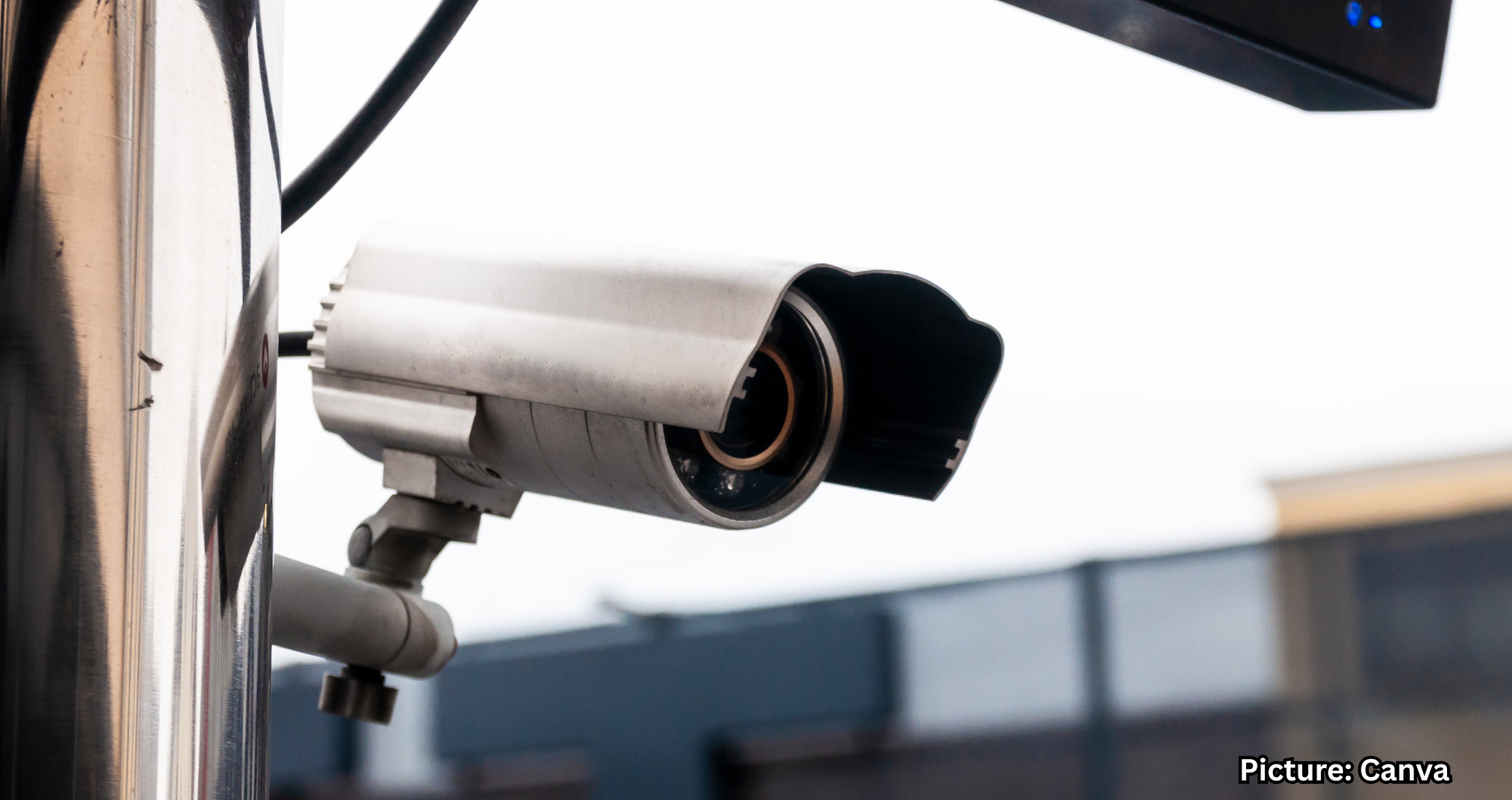
Surveillance technology is increasingly invading personal privacy in the U.S., raising concerns about its impact on civil liberties and the disproportionate benefits it provides to the wealthy.
In recent years, the expansion of surveillance technology has become a pressing issue in the United States, particularly following the approval of the One Big Beautiful Bill Act by the Trump administration. This legislation has significantly broadened the government’s ability to surveil American citizens, employing tools originally designed for counter-terrorism to facilitate mass deportation efforts.
With a historic $75 billion allocated to Immigration and Customs Enforcement (ICE), the government has begun accessing local databases to gather information on individuals’ immigration status, residency, and tax benefits, among other data points. This information is being used to identify individuals for deportation, with authorities examining records from the Department of Motor Vehicles (DMV), airline passenger lists, and even social connections to bolster their cases.
During a briefing hosted by American Community Media on February 27, experts and advocates discussed the implications of these surveillance tactics. Ariel G. Ruiz Soto, a Senior Policy Analyst at the Migration Policy Institute, highlighted the chilling effect that such practices have on communities. Many individuals are now hesitant to enroll in health and social services due to fears that their personal data will be collected and used against them. Ruiz Soto noted that ICE and the Department of Homeland Security (DHS) have acted on inaccurate information, leading to the voluntary and involuntary departure of approximately 2.5 million undocumented immigrants from the U.S. between December 2025 and early 2026, according to DHS reports.
Technological platforms have become complicit in these surveillance efforts. ICE collaborates with state and local law enforcement through a program known as 287(g), which aims to identify and process individuals with pending or active criminal charges. Ruiz Soto mentioned that the DHS utilizes an application called WebLock to scrutinize text messages, further expanding the reach of surveillance into private communications.
Juan Sebastian Pinto, a former employee of the tech company Palantir, explained that the firm’s technology, initially developed for counter-insurgency, is now being used by ICE to create an ImmigrationOS software platform. This $30 million project includes a real-time tracking system for monitoring individuals within the U.S. immigration system. Pinto warned that the government’s use of technology extends beyond mere arrests; it is increasingly aimed at targeting ideological opponents.
Journalist Jacob (Jake) Ward cautioned against sharing personal data, particularly on social media, as it can expose individuals to facial recognition technology. He likened the current state of surveillance to a panopticon—a design for a prison where a central guard can observe inmates without their knowledge. Ward emphasized that various forms of biometric data, including heartbeat patterns, are being collected, with some technologies capable of surveilling individuals in their homes through Wi-Fi networks.
Meredith Whittaker, president of Signal, has voiced concerns about the encroachment of artificial intelligence on personal privacy. After leaving Google, where she recognized the potential for user manipulation through vast data collection, Whittaker founded Signal to safeguard individual privacy.
Despite the alarming trends, there are examples of successful integration of technology in a manner that respects privacy. Ward pointed to Estonia, where a decentralized system allows citizens to pay taxes in just 90 seconds, demonstrating that efficient public services can be achieved without compromising personal data.
However, companies that resist government surveillance initiatives often face repercussions. When Dario Amodei, CEO of Anthropic, expressed his refusal to allow the use of AI for surveilling American citizens or for military applications, the Pentagon subsequently labeled the company a “supply-chain risk,” paving the way for OpenAI to secure a military contract.
In the Bay Area, local surveillance efforts have raised significant concerns. Rebecca Gerney of East Bay Sanctuary expressed skepticism about the effectiveness of contractual safeguards in preventing government access to surveillance data. In Berkeley, where the city council voted to acquire drones for first-response operations, police are now looking to integrate individual cameras into existing surveillance databases, such as Flock Safety, which collects license plate and vehicle information.
Despite privacy concerns, the Oakland City Council recently voted 7-1 to implement a $2 million expansion of the Flock Safety surveillance camera contract, even after extensive public discussion about potential data sharing with ICE.
Former San Francisco Supervisor Aaron Peskin noted that the city has approved over 100 surveillance technologies, including the installation of 400 Flock cameras. He highlighted the tension between the desire for public safety and the need to protect constitutional rights, particularly in an environment where fear-based politics are prevalent.
Tim Redmond, another journalist, warned that Flock cameras collect data at their discretion, raising concerns about accountability when responding to subpoenas or requests from the DHS.
Gerney emphasized that surveillance does not enhance community safety. She argued that while victims of domestic violence may seek police assistance, the presence of cameras does not prevent crimes; they merely document them.
Litigation has emerged as a potential avenue for enforcing privacy protections when other safeguards fail. Jacob Snow from the ACLU of Northern California noted that the organization has filed lawsuits against cities, such as San Jose, for their surveillance practices. Investigations have revealed that Amazon has shared information with law enforcement in Oregon, and an ACLU study found that Amazon’s facial recognition technology, “Rekognition,” incorrectly matched 28 members of Congress with individuals who had criminal records. Snow cautioned that such granular data poses significant risks when placed in the hands of municipalities.
Ward pointed out that San Francisco has established a “real-time investigation center” to monitor drone activity, which operates outside of police headquarters and lacks public oversight. The center is located within a crypto company’s headquarters, where access is restricted and reporters must sign non-disclosure agreements.
Panelists concluded that the issue of surveillance is closely tied to financial interests, with a clear message: “Follow the money. It’s all about making rich people richer and more powerful.” As surveillance technology continues to evolve, the implications for privacy and civil liberties remain a critical concern for society.
According to Source Name.