
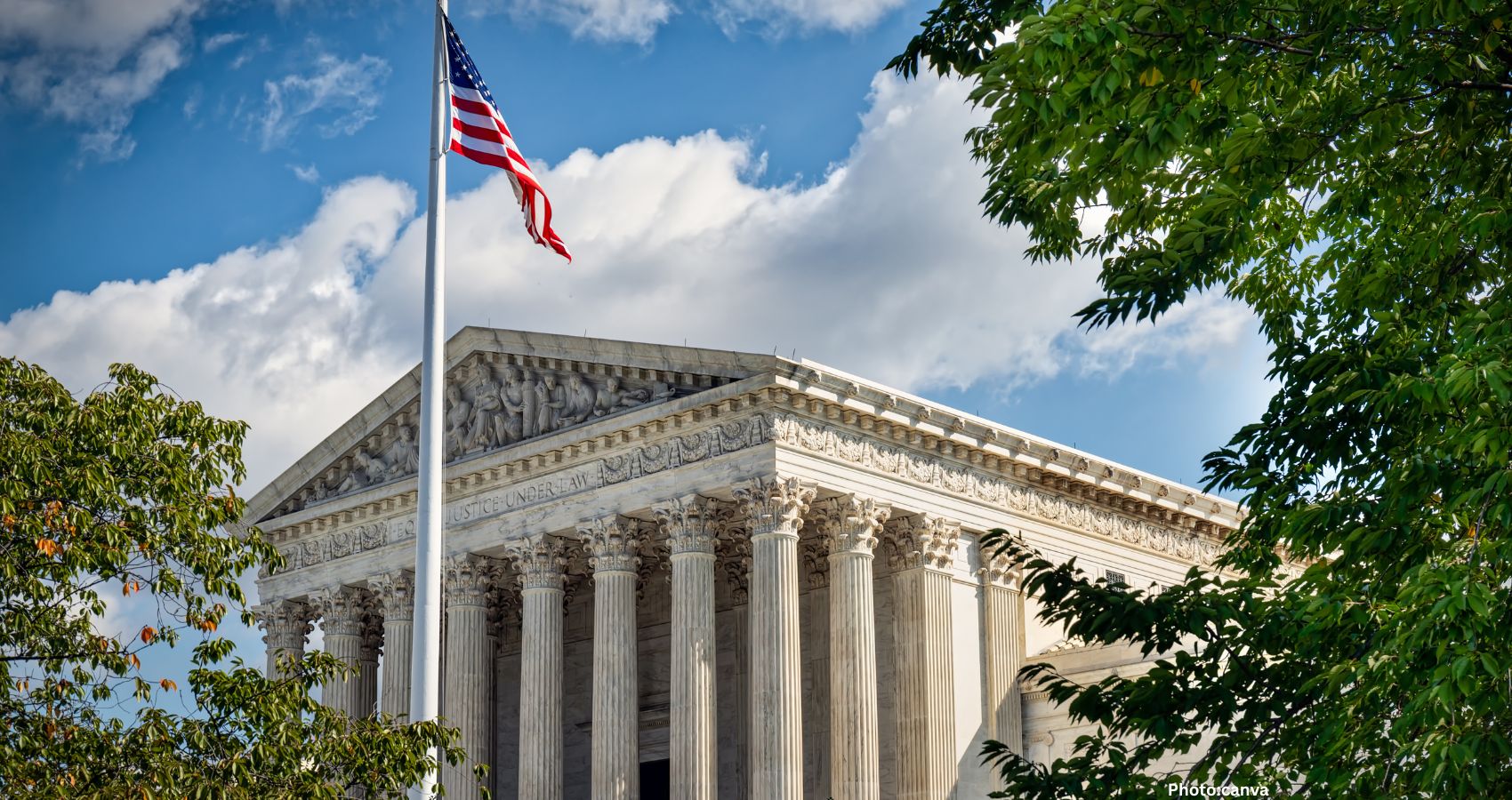
The Supreme Court is set to deliberate on President Trump’s executive order aimed at ending birthright citizenship, a decision that could have significant implications for millions of Americans.
The Supreme Court will soon consider the legality of President Donald Trump’s executive order that seeks to end birthright citizenship in the United States. This landmark case, known as Trump v. Barbara, could profoundly affect the lives of millions of Americans and lawful residents.
At the heart of the case is an executive order signed by Trump on his first day back in office. The order aims to eliminate automatic citizenship—commonly referred to as “birthright citizenship”—for nearly all individuals born in the U.S. to undocumented parents or to parents holding temporary non-immigrant visas.
The stakes are high, as this case challenges over a century of executive branch actions, Supreme Court precedents, and the text of the Constitution, particularly the Citizenship Clause of the 14th Amendment. The Trump administration views this order as a critical component of its hard-line immigration agenda, which has become a defining issue of Trump’s second term.
Opponents of the executive order argue that it is unconstitutional and unprecedented, potentially affecting an estimated 150,000 children born in the U.S. each year to non-citizen parents. A ruling in favor of Trump would signify a seismic shift in U.S. immigration policy and could disrupt long-standing notions of citizenship that the administration contends are misguided. Such a decision would also necessitate immediate action from Congress and the Trump administration to clarify the citizenship status of newborns.
During the upcoming oral arguments, justices will examine Trump’s executive order 14160, titled “Protecting the Meaning and Value of American Citizenship.” This order instructs all U.S. government agencies to deny citizenship documents to children born in the U.S. to illegal immigrants or to parents who are in the country legally but on temporary visas. The order is set to apply retroactively to all newborns born in the U.S. after February 19, 2025.
Following the signing of the executive order, numerous lawsuits were filed, with critics asserting that it violates the Citizenship Clause of the 14th Amendment. This clause states that “all persons born … in the United States, and subject to the jurisdiction thereof, are citizens of the United States.”
Lawyers for the Trump administration focus on the phrase “subject to jurisdiction thereof,” arguing that it was originally intended to narrowly grant citizenship to newly freed slaves and their descendants after the Civil War. They contend that this interpretation has been misapplied over the years.
U.S. Solicitor General D. Sauer urged the Supreme Court to take up the case, claiming that lower court rulings were overly broad and based on a “mistaken view” that birth on U.S. soil automatically confers citizenship. Sauer argued that these decisions unjustly grant citizenship to hundreds of thousands of individuals without lawful justification, undermining border security.
The justices will have a wealth of legal precedents and constitutional texts to consider, including the 14th Amendment and the 1952 Immigration and Nationality Act. Legal experts anticipate that convincing a five-justice majority to overturn more than 125 years of precedent will be a formidable challenge for the Trump administration.
Despite a general consensus among experts, the court’s conservative justices face complex issues in reconciling over a century of legal precedent with the narrower interpretation of the 14th Amendment advocated by the Trump administration. A pivotal case in this context is United States v. Wong Kim Ark, a 1898 ruling that affirmed the citizenship of a child born in the U.S. to Chinese immigrant parents. This case is widely regarded as the foundation for birthright citizenship.
Amanda Frost, a professor at the University of Virginia School of Law, highlighted several reasons why the Supreme Court should uphold the traditional interpretation of the citizenship clause. She emphasized the historical context, including Wong Kim Ark and subsequent Supreme Court cases, as well as longstanding executive branch practices that support the established understanding of citizenship.
John Yoo, a law professor at the University of California, Berkeley, expressed skepticism about the Trump administration’s position, suggesting that historical evidence does not support their interpretation. Legal experts also raised concerns about the practical implications of enforcing the executive order, particularly regarding the citizenship status of children born to parents with temporary visas.
Justice Brett Kavanaugh has already questioned the practicalities of implementing the order, seeking clarity on how hospitals and states would handle the citizenship designation of newborns. Justice Sonia Sotomayor has also expressed concerns, indicating that the order could violate established Supreme Court precedents and risk leaving some children stateless.
As the justices prepare to hear arguments, the focus will likely be on how Chief Justice Roberts and Justice Kavanaugh view the issue, as their votes could be crucial in determining the outcome. Roberts has historically relied on precedent and has shown reluctance to overturn previous court decisions, which could influence his stance on this case.
A decision from the Supreme Court is anticipated by late June, and the implications of this ruling could reshape the landscape of citizenship and immigration policy in the United States.
According to Fox News, the outcome of this case will not only affect the legal status of future generations but also reflect broader societal attitudes toward immigration and citizenship in America.