
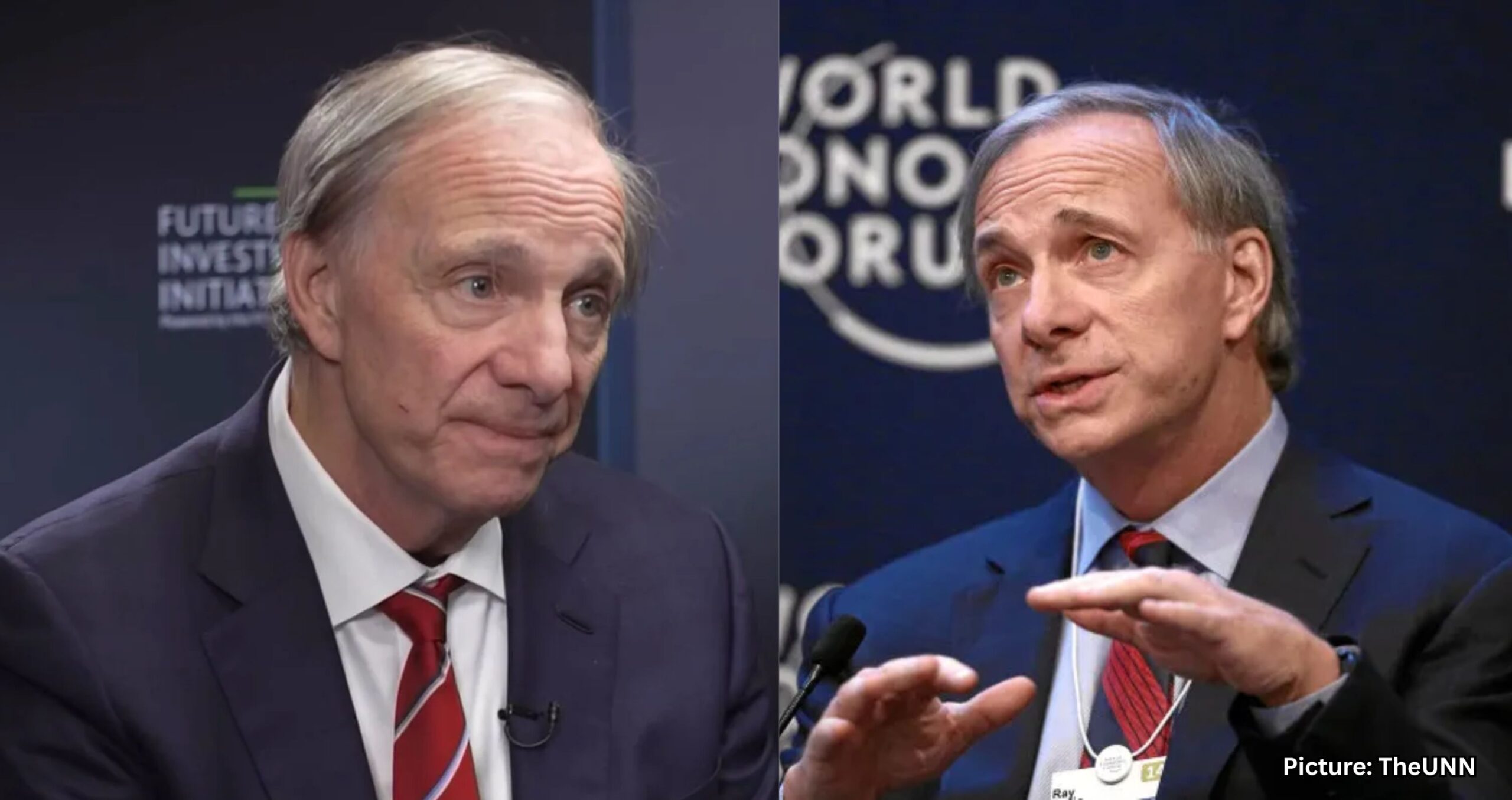
Ray Dalio asserts that the Middle East is rapidly evolving into a significant hub for artificial intelligence, drawing parallels to the rise of Silicon Valley.
Ray Dalio, the founder of Bridgewater Associates, stated on Monday that the Middle East is quickly becoming one of the world’s leading centers for artificial intelligence (AI). He likened the region’s burgeoning status to that of Silicon Valley, which has long been recognized as a global technology hub.
In an interview with CNBC, Dalio highlighted how the United Arab Emirates (UAE) and its neighboring countries have successfully combined substantial financial resources with an influx of global talent. This combination has transformed the region into a magnet for investment managers and AI innovators. Notably, the UAE and Saudi Arabia have launched significant AI initiatives this year.
One of the most notable developments is a $10 billion agreement between Google Cloud and Saudi Arabia’s Public Investment Fund, announced earlier this year. This partnership aims to establish a global AI hub within the country, focusing on creating local data centers and developing AI workloads.
Additionally, earlier this year, major technology companies such as OpenAI, Oracle, Nvidia, and Cisco collaborated to construct a significant Stargate artificial intelligence campus in the UAE. This initiative underscores the region’s commitment to advancing its technological capabilities.
Dalio remarked, “What they’ve done is to create talented people. So this [region] is kind of becoming a Silicon Valley of capitalists… So now people are coming in… money is coming in, talent is coming in.” He expressed optimism about the potential for Middle Eastern nations like the UAE, Saudi Arabia, and Qatar to emerge as leaders in the AI sector.
Having visited Abu Dhabi for over three decades, Dalio attributed the Gulf’s transformation to intentional statecraft and long-term strategic planning. He described the UAE as “a paradise in a world that’s troubled,” praising its leadership, stability, quality of life, and ambition to cultivate a globally competitive financial ecosystem.
Dalio noted the palpable excitement in the region, comparing it to the buzz surrounding technology and AI in San Francisco. “There’s a buzz here, the way there’s a buzz in San Francisco, places like that, about AI or technology. It’s very similar to that,” he said.
Despite his enthusiasm for the Middle East’s advancements, Dalio also expressed concerns about the future of the global economy. He warned that the next couple of years may be increasingly precarious, citing the convergence of three dominant cycles: debt, U.S. political conflict, and geopolitical tensions. He anticipates that U.S. politics will become more disruptive as the nation approaches the 2026 elections.
<p“As we go into the 2026 elections… you will see a lot more conflict in different ways,” Dalio stated, highlighting the challenges posed by elevated interest rates and concentrated market leadership, which he believes exacerbate economic vulnerabilities.
Dalio reiterated his belief that the AI sector is currently in bubble territory. He advised investors against hastily exiting the market, even though valuations may appear stretched. “All the bubbles took place in times of great technological change,” he noted. “You don’t want to get out of it just because of the bubble. You want to look for the pricking of the bubble.” He explained that the catalyst for such a pricking often arises from tighter monetary conditions or a forced need to liquidate assets to meet financial obligations.
As the Middle East continues to position itself as a formidable player in the global AI landscape, the insights from Dalio serve as a reminder of the complexities and potential challenges that lie ahead in both the region and the broader economy.
According to CNBC, Dalio’s observations reflect a growing recognition of the Middle East’s strategic importance in the evolving technological landscape.