
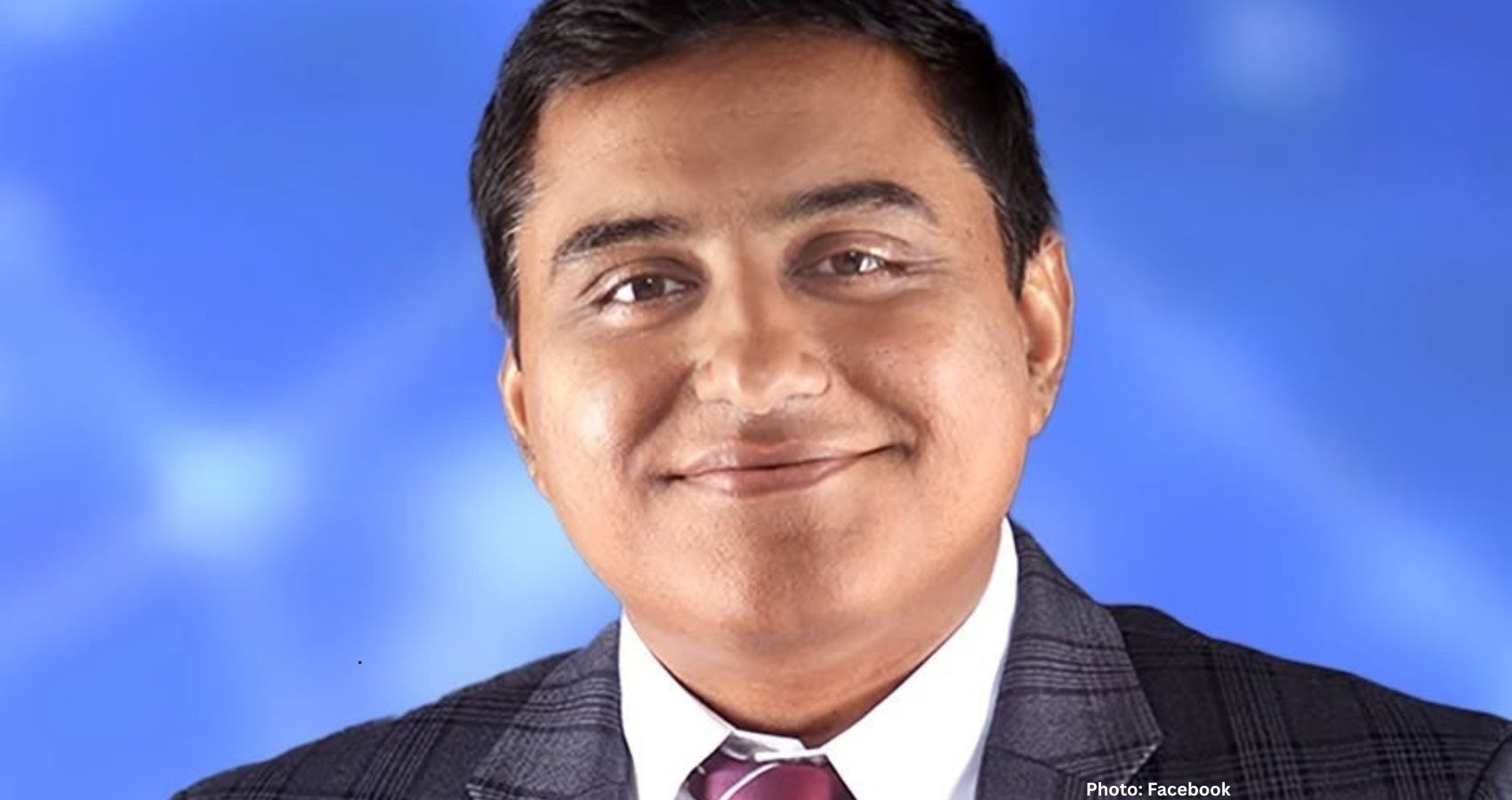
Dr. Nitin Agarwal, an Indian American professor, has gained international acclaim for his research on AI at the prestigious NeurIPS conference, focusing on improving how AI systems understand and integrate diverse data types.
Dr. Nitin Agarwal, an Indian American professor at the University of Arkansas at Little Rock, has recently garnered international recognition for his groundbreaking research in artificial intelligence (AI). His paper was presented at the 39th Annual Conference on Neural Information Processing Systems (NeurIPS), one of the most prestigious and selective AI conferences globally.
The acceptance process for NeurIPS is highly competitive, attracting thousands of submissions from leading universities, research laboratories, and technology companies worldwide, according to a university release. Agarwal’s paper was co-authored with collaborators from the University of Arkansas, Fayetteville, and the University of Florida.
Agarwal serves as the director of the Collaboratorium for Social Media and Online Behavioral Studies (COSMOS) Research Center, where he holds the Maulden-Entergy Chair and is a Donaghey Distinguished Professor of Information Science at UA Little Rock. COSMOS is an interdisciplinary research center dedicated to studying online behavior and developing data analytics tools aimed at understanding online communities and emerging cognitive threats in digital environments.
“NeurIPS is where many of the most influential advances in AI are first introduced,” Agarwal stated. His research on cognitive security has received recognition from various esteemed organizations, including the U.S. Department of War, NATO, the Five Eyes intelligence alliance, and the World Health Organization.
The paper presented by Agarwal and his team introduces MANGO: Multimodal Attention-based Normalizing Flow Approach to Fusion Learning. This innovative framework is designed to enhance how AI systems learn from and integrate multiple types of information, such as images, text, and other data sources.
The focus of the research is on multimodal AI, a form of artificial intelligence that learns from various types of information—like text, images, or audio—simultaneously. While humans naturally combine different sources of information to navigate the world, AI systems often face challenges in doing so effectively, as the data may not align in straightforward ways. MANGO aims to bridge this gap by enabling AI to better understand and integrate diverse data types.
Unlike many existing AI models that merely merge information, MANGO identifies the most relevant sources and elucidates their interrelations. This capability allows AI systems to make more accurate and reliable decisions. “The real world is inherently multimodal, so if we want AI to better understand people and complex environments, it needs to learn from multiple sources simultaneously rather than treating each independently,” Agarwal explained.
Research like this is pivotal in evolving AI to provide more context-aware analysis, which in turn enables systems to make more informed and trustworthy decisions. As AI becomes increasingly integrated into everyday life and various industries, MANGO has the potential to enhance applications ranging from healthcare to self-driving vehicles.
Moreover, the technology could bolster security measures by analyzing social media to detect coordinated influence campaigns or emerging cognitive threats through the combined analysis of text, images, videos, and patterns of online behavior.
“Ultimately, research like this helps build AI systems that are more reliable, more explainable, and better suited for solving complex real-world problems,” Agarwal noted.
Looking to the future, Agarwal and his collaborators plan to expand MANGO’s capabilities to accommodate additional data types, larger AI foundation models, and real-time decision-making environments. They aim to enhance the transparency and reliability of AI systems, striving to develop technologies that not only achieve high performance but also operate dependably in complex applications where accuracy and trust are paramount.
Agarwal earned his PhD from Arizona State University, receiving outstanding dissertation recognition. He has been acknowledged as one of ‘The New Influentials: 20 In Their 20s’ by Arkansas Business and has received the University-wide Faculty Excellence Award in Research and Creative Endeavors from UALR in both 2015 and 2021. Additionally, he was awarded the Social Media Educator of the Year at the 21st International Education and Technology Conference.
This significant achievement highlights Dr. Agarwal’s contributions to the field of AI and underscores the importance of innovative research in advancing technology for societal benefit, according to The American Bazaar.