
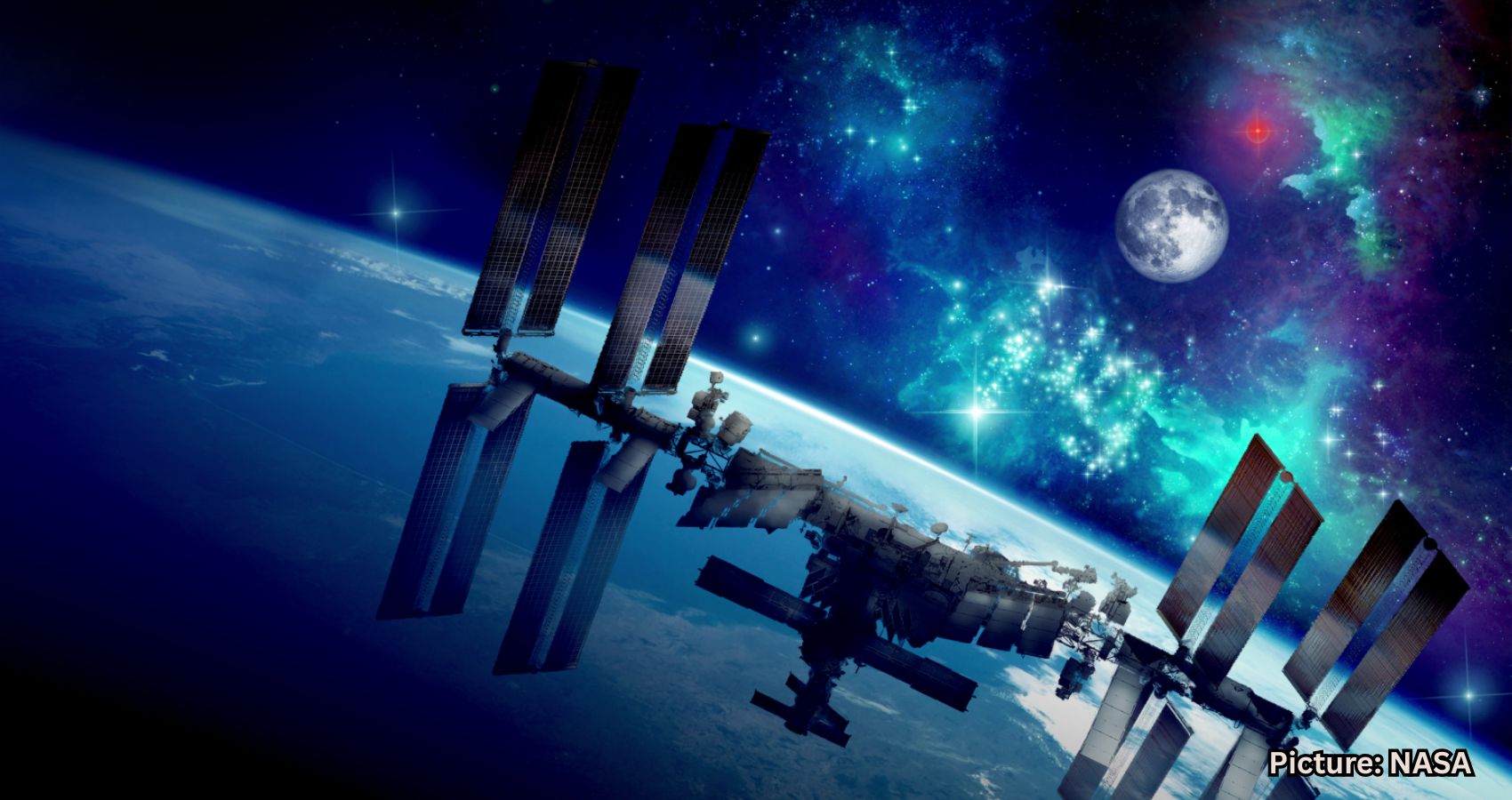
NASA has finalized its strategy for maintaining a human presence in space, focusing on the transition from the International Space Station to future commercial platforms by 2030.
This week, NASA announced the completion of its strategy aimed at sustaining a human presence in space, particularly in light of the planned de-orbiting of the International Space Station (ISS) in 2030. The agency’s document underscores the necessity of ensuring extended stays in orbit following the retirement of the ISS.
“NASA’s Low Earth Orbit Microgravity Strategy will guide the agency toward the next generation of continuous human presence in orbit, enable greater economic growth, and maintain international partnerships,” the document states.
The commitment to this strategy comes amid concerns regarding the readiness of new space stations. With the incoming administration’s focus on budget cuts through the Department of Government Efficiency, there are apprehensions that NASA may face funding reductions.
“Just like everybody has to make hard decisions when the budget is tight, we’ve made some choices over the last year to cut back programs or cancel them altogether to ensure that we’re focused on our highest priorities,” said NASA Deputy Administrator Pam Melroy.
Commercial space company Voyager is actively developing one of the potential replacements for the ISS. The company has expressed support for NASA’s strategy to maintain a human presence in space. “We need that commitment because we have our investors saying, ‘Is the United States committed?’” stated Jeffrey Manber, Voyager’s president of international and space stations.
The initiative to maintain a permanent human presence in space dates back to President Reagan, who emphasized the importance of private partnerships in his 1984 State of the Union address. “America has always been greatest when we dared to be great. We can reach for greatness,” he said, highlighting the potential for the space transportation market to exceed national capabilities.
The ISS, which has been continuously occupied for 24 years, was launched in 1998 and has hosted over 28 astronauts from 23 countries. The Trump administration’s national space policy, released in 2020, called for a “continuous human presence in Earth orbit” and stressed the need to transition to commercial platforms—a policy that has been maintained by the Biden administration.
“Let’s say we didn’t have commercial stations that are ready to go. Technically, we could keep the space station going, but the idea was to fly it through 2030 and de-orbit it in 2031,” NASA Administrator Bill Nelson remarked in June.
Recent discussions have raised questions about the continuity of human presence in space. “I just want to talk about the elephant in the room for a moment, continuous human presence. What does that mean? Is it continuous heartbeat or continuous capability?” Melroy noted during the International Astronautical Congress in October.
NASA’s finalized strategy has taken into account the concerns of commercial and international partners regarding the potential loss of the ISS without a commercial station ready to take its place. “Almost all of our industry partners agreed. Continuous presence is continuous heartbeat. And so that’s where we stand,” Melroy explained. “I think this continuous presence, it’s leadership. Today, the United States leads in human spaceflight. The only other space station that will be in orbit when the ISS de-orbits, if we don’t bring a commercial destination up in time, will be the Chinese space station. We want to remain the partner of choice for our industry and for our goals for NASA.”
Three companies, including Voyager, are collaborating with NASA to develop commercial space stations. Axiom signed an agreement with NASA in 2020, while contracts were awarded to Nanoracks, now part of Voyager Space, and Blue Origin in 2021.
“We’ve had some challenges, to be perfectly honest with you. The budget caps that were a deal cut between the White House and Congress for fiscal years 2024 and 2025 have left us without as much investment,” Melroy acknowledged. “So, what we do is we co-invest with our commercial partners to do the development. I think we’re still able to make it happen before the end of 2030, though, to get a commercial space station up and running so that we have a continuous heartbeat of American astronauts on orbit.”
Voyager has stated that it is on track with its development timeline and plans to launch its starship space station in 2028. “We’re not asking for more money. We’re going ahead. We’re ready to replace the International Space Station,” Manber asserted. “Everyone knows SpaceX, but there are hundreds of companies that have created the space economy. If we lose permanent presence, you lose that supply chain.”
Additional funding has been allocated to the three companies since the initial space station contracts, and a second round of funding could be crucial for some projects. NASA may also consider funding new space station proposals, including concepts from Long Beach, California’s Vast Space, which recently unveiled plans for its Haven modules, aiming to launch Haven-1 as soon as next year.
“We absolutely think competition is critical. This is a development project. It’s challenging. It was hard to build the space station. We’re asking our commercial partners to step up and do this themselves with some help from us. We think it’s really important that we carry as many options going forward to see which one really pans out when we actually get there,” Melroy concluded.
According to Fox News, NASA’s strategy reflects a commitment to ensuring a sustainable human presence in space as the agency navigates the transition from the ISS to future commercial platforms.