
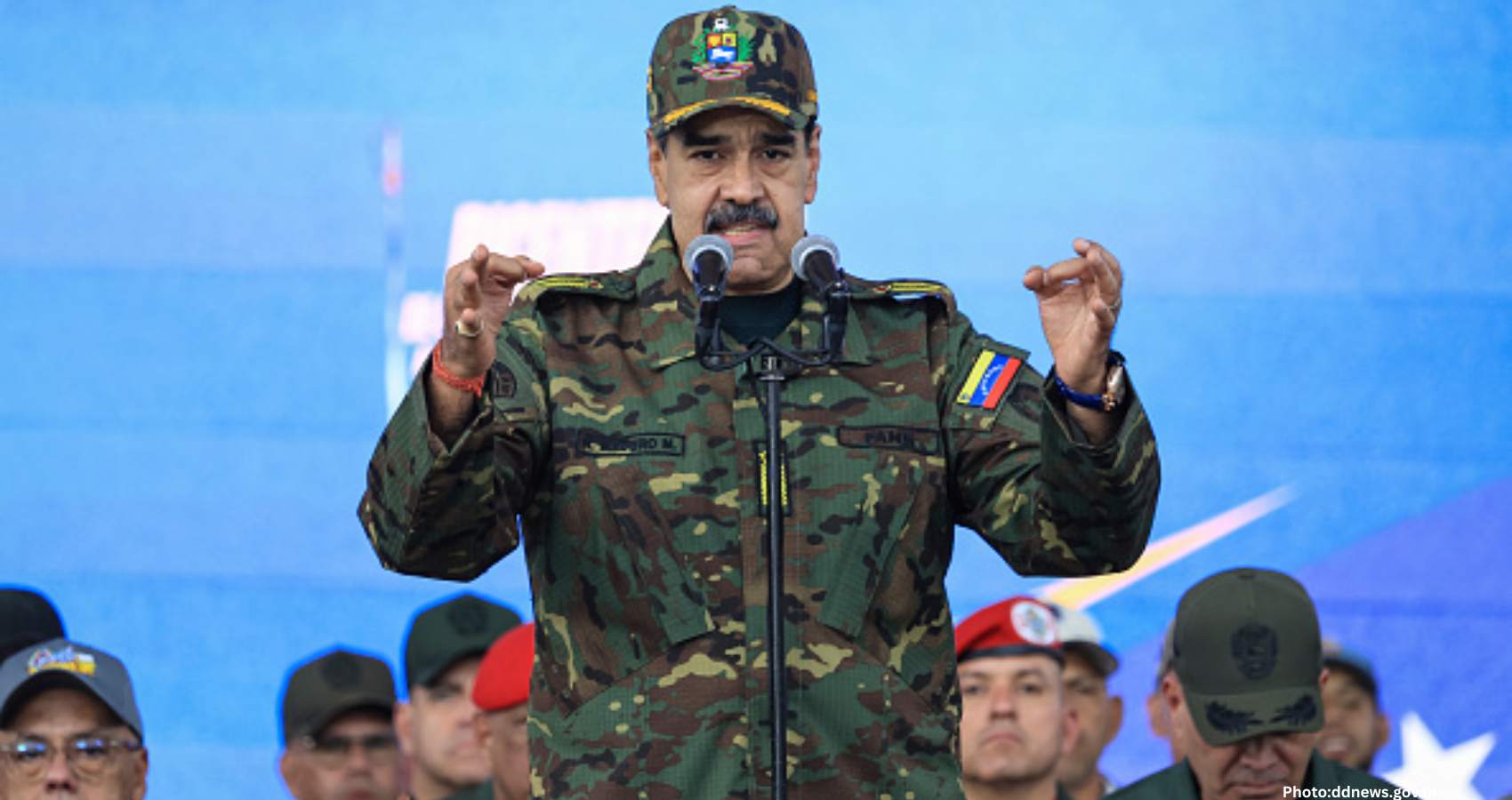
The recent capture of Nicolás Maduro in Venezuela evokes memories of the U.S. operation that toppled Panamanian dictator Manuel Noriega 36 years ago, highlighting the use of psychological tactics in warfare.
Nicolás Maduro’s capture in Venezuela has drawn striking parallels to the dramatic U.S. operation that brought down Panamanian dictator Manuel Noriega in 1989. This event, which took place on January 3, 2026, coincidentally marks 36 years since Noriega’s own capture.
Under former President George H.W. Bush, U.S. forces launched a surprise invasion of Panama on December 20, 1989, accusing Noriega of conspiring with drug traffickers to funnel cocaine into the United States. He also faced allegations of manipulating the presidential election in Panama that year.
The primary objective of the invasion, known as Operation Just Cause, was to restore the democratically elected government of Guillermo Endara and to arrest Noriega on drug trafficking charges. According to the U.S. Army’s website, this operation was the largest and most complex combat mission since the Vietnam War.
Similar to the recent operation involving Maduro, the invasion of Panama proceeded without explicit authorization from Congress. Noriega’s capture unfolded over several weeks as he evaded arrest by seeking refuge in the Vatican’s embassy in Panama City.
In a unique psychological warfare tactic, U.S. troops employed Operation Nifty Package, which involved military vehicles equipped with loudspeakers that blasted rock music non-stop. The playlist included songs from popular bands such as The Clash, Van Halen, and U2, aimed at forcing Noriega out of hiding.
Noriega ultimately surrendered to U.S. forces on January 3, 1990, exactly 36 years prior to Maduro’s capture, and was subsequently flown to the United States to stand trial. The operation resulted in the deaths of 23 U.S. service members and left 320 others wounded. The Pentagon estimated that approximately 200 Panamanian civilians and 314 Panamanian military personnel were also killed during the invasion, according to reports from The Associated Press.
In 1992, Noriega was convicted on drug trafficking charges in a Miami federal court, receiving a 40-year prison sentence. He was granted prisoner-of-war status, which allowed him to be housed separately from other inmates and to wear his Panamanian military uniform in court. After serving 17 years in a U.S. prison, he was extradited to France and later returned to Panama, where he died in 2017.
On January 3, 2026, President Donald Trump announced that Maduro and his wife had been captured and flown out of Venezuela as part of Operation Absolute Resolve. In recent months, the U.S. military has conducted a series of strikes on suspected drug vessels allegedly linked to the Venezuelan regime in the Caribbean Sea and Eastern Pacific.
Until a permanent leader can be established, Trump stated that the U.S. government would “run” Venezuela “until such time as we can do a safe, proper and judicious transition,” reflecting the ongoing complexities of U.S. involvement in Latin America.
This operation not only highlights the historical context of U.S. interventions in the region but also raises questions about the methods employed in such endeavors, particularly the use of psychological tactics in warfare.
As the situation in Venezuela continues to evolve, the implications of Maduro’s capture and the parallels drawn with Noriega’s downfall will likely remain a topic of discussion among political analysts and historians alike, according to Axios.