
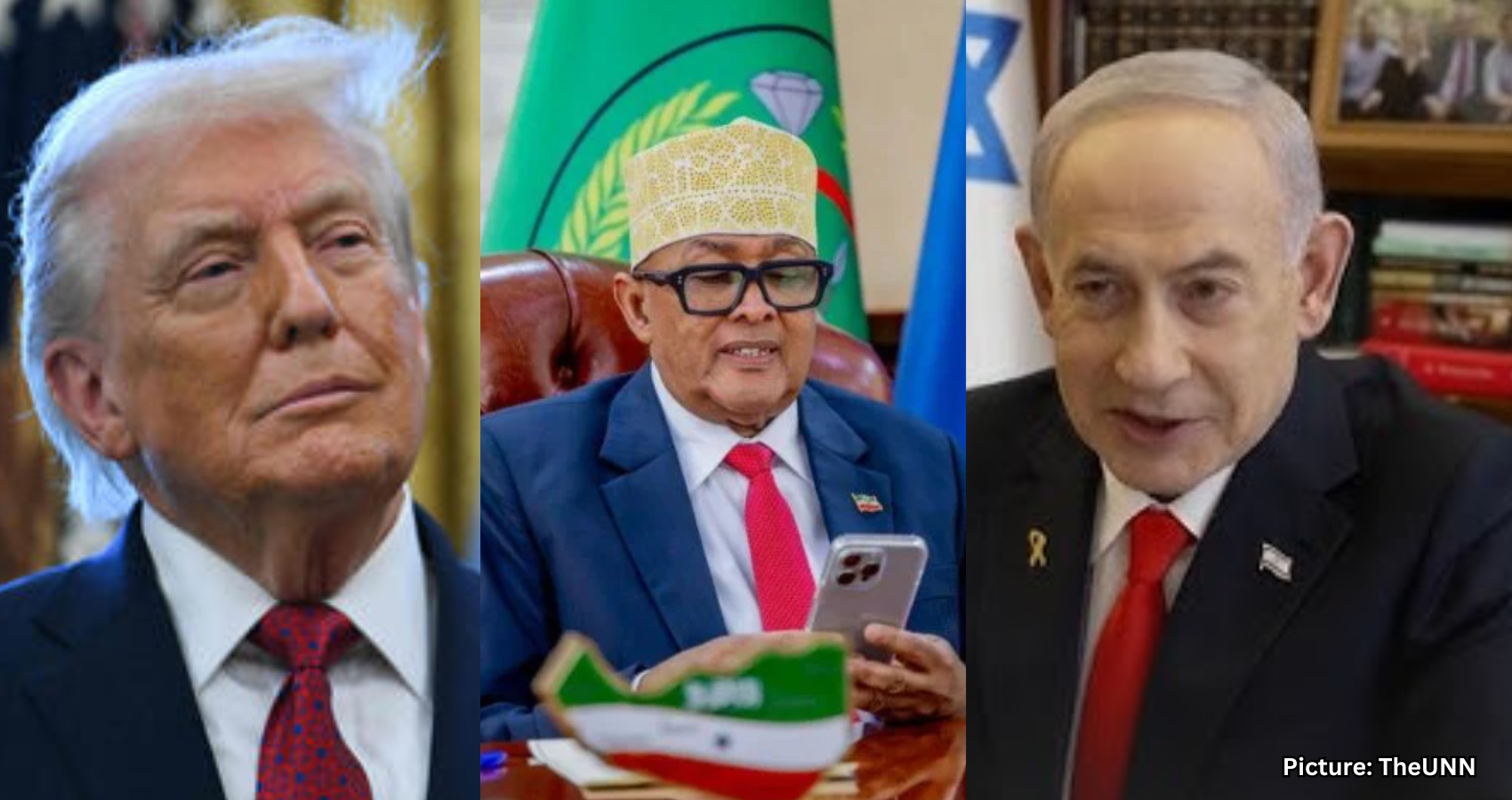
Israel has officially recognized Somaliland as an independent nation, marking a historic diplomatic milestone in the Horn of Africa.
In a significant diplomatic development, Israel has become the first country to officially recognize Somaliland as an independent nation. This announcement was made by Prime Minister Benjamin Netanyahu on December 26, alongside Israel’s Foreign Minister Gideon Sa’ar and Somaliland’s President, Dr. Abdirahman Mohamed Abdullahi.
The recognition is part of a broader framework linked to the Abraham Accords, which were brokered during the Trump administration. In a mutual declaration signed by both parties, Israel and Somaliland affirmed their commitment to establishing formal diplomatic relations.
Sa’ar expressed that the relationship between Somaliland and Israel has been strengthened through extensive dialogue. He noted that full diplomatic relations will include the appointment of ambassadors and the opening of embassies in Somaliland.
President Abdullahi welcomed Israel’s decision, stating that it represents a significant milestone in Somaliland’s long-standing pursuit of international legitimacy. He emphasized that this recognition reaffirms Somaliland’s historical, legal, and moral entitlement to statehood.
Somaliland’s Ministry of Foreign Affairs described Israel’s recognition as a “constructive contribution to peace, stability, and cooperation” in the Horn of Africa and the Middle East. The ministry also expressed Somaliland’s intention to join the Abraham Accords, looking forward to engaging with Israel on the basis of mutual recognition.
Following Israel’s announcement, South Sudan reportedly became the second country to officially recognize Somaliland. This development has led to speculation regarding whether the United States will follow suit.
In August, President Donald Trump indicated that he was considering the recognition of Somaliland. Official recognition by the U.S. could provide a strategic foothold in the Horn of Africa, potentially facilitating the establishment of a new air and sea base at Berbera Port, located near the entrance to the Red Sea.
When asked about the possibility of resettling Gazans in Somaliland, Trump stated, “We’re looking into that right now.” This move would position U.S. defense forces directly across from Yemen, where Houthi militants, backed by Iran, have been known to launch attacks against Israel and maritime shipping in the Red Sea.
The Red Sea is a critical maritime route, with approximately thirty percent of the world’s container ship traffic passing through its waters en route to or from the Suez Canal.
Trump is scheduled to meet with Netanyahu on December 29 at his Mar-a-Lago residence to discuss the next steps in the Gaza peace deal. Despite the discussions, Trump has reportedly been hesitant to fully embrace Somaliland’s independence and has expressed skepticism regarding its interest in joining the Abraham Accords.
In an interview with the New York Post, Trump remarked that he needs to “study” Netanyahu’s pitch, questioning, “Does anyone know what Somaliland is, really?” He added, “We’ll study it. I study a lot of things and always make great decisions, and they turn out to be correct.”
Somalia has faced decades of conflict with Islamist fundamentalist groups, prompting the U.S. Africa Command to increase military operations against ISIS and al-Shabab militants. Somaliland, which declared independence from Somalia in 1991, has positioned itself as a stable and democratic entity, contrasting sharply with the ongoing turmoil in Somalia.
Somaliland Minister of the Presidency Khadar Hussein Abdi emphasized that Somaliland has maintained a democratic and peaceful governance model for over three decades, unlike its counterpart. He stated, “It’s time for Somalia to focus on its own challenges and to be constructive. The illusion of Somali unity ended long ago.”
Netanyahu has reportedly invited President Abdullahi to visit Israel, commending his leadership and commitment to promoting stability and peace in the region.
As the situation evolves, the international community will be watching closely to see how these developments impact the geopolitical landscape of the Horn of Africa and the broader Middle East, according to Fox News.