
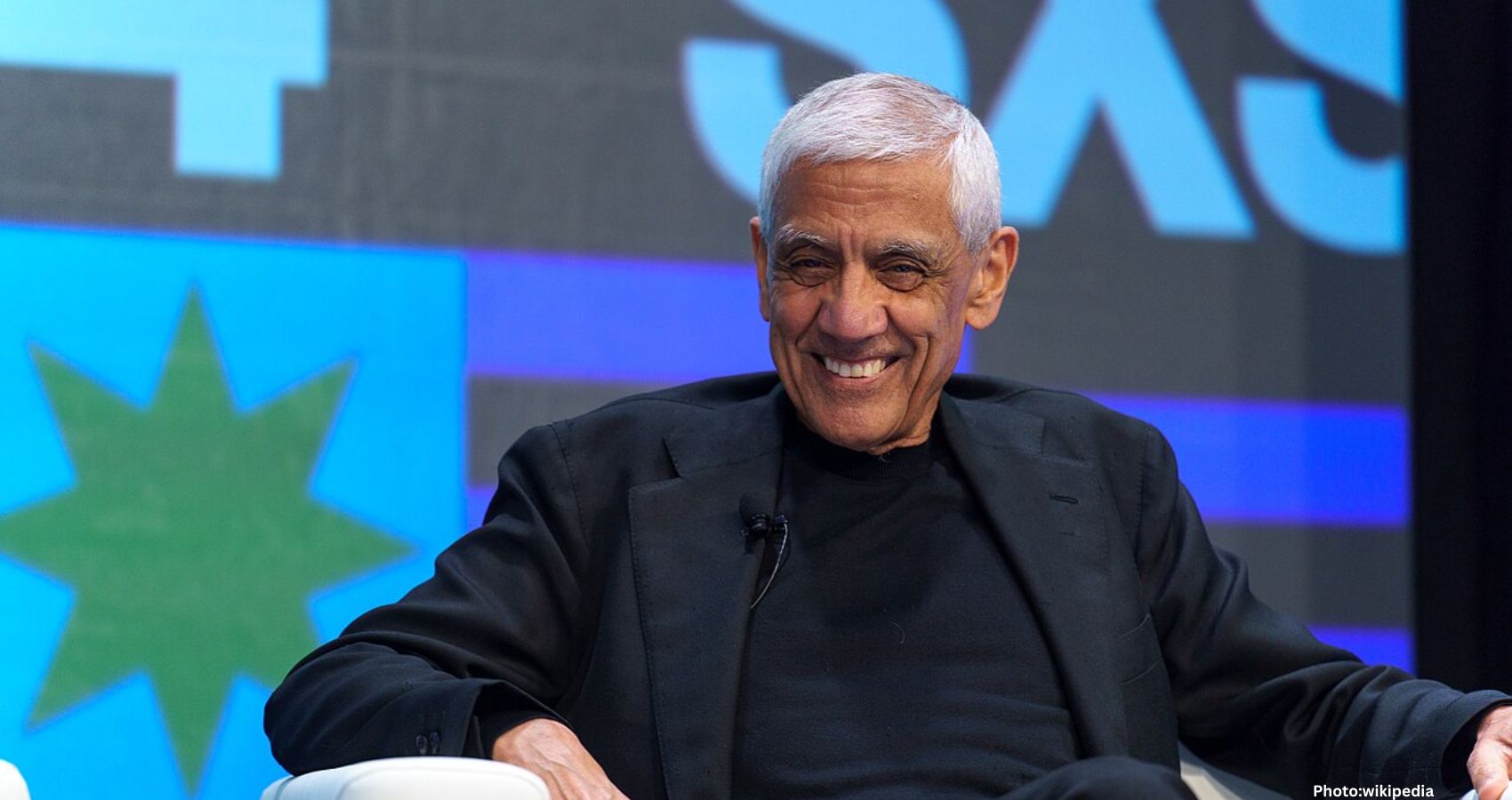
Indian American billionaire Vinod Khosla criticized U.S. lawmakers Ro Khanna and Bernie Sanders for their warnings about artificial intelligence in a recent post on social media platform X.
Indian American billionaire Vinod Khosla has publicly expressed his discontent with U.S. lawmakers Ro Khanna and Bernie Sanders. In a recent post on X, Khosla launched a scathing critique of their warnings regarding the potential negative consequences of artificial intelligence (AI).
In his post, Khosla stated, “Bernie Sanders, Ro Khanna warn of AI’s potential negative consequences. Morons like Ro Khanna and Bernie Sanders will stop all the good AI can do to protect their religion. Good intentions but bad outcomes is ok for these socialists/commie.”
Vinod Khosla is a well-known Indian-American entrepreneur, venture capitalist, and technology investor. Born in 1955 in India, Khosla began his academic journey as an electrical engineer at the Indian Institute of Technology (IIT) Delhi, later earning a Master’s degree in Biomedical Engineering from Carnegie Mellon University. His career took off at Sun Microsystems, where he was part of the founding team that contributed to the company’s early success.
Khosla gained significant recognition as a co-founder of Kleiner Perkins Caufield & Byers, one of Silicon Valley’s most influential venture capital firms, focusing primarily on technology investments. In 2004, he established Khosla Ventures, which invests in clean technology, biotechnology, and disruptive startups. Known for his bold investment strategies and advocacy for technological innovation, Khosla has played a pivotal role in shaping the investment landscape of Silicon Valley, often taking high-risk bets that challenge conventional approaches.
The recent exchange between Khosla and the lawmakers followed a town hall meeting at Stanford University on February 20, 2026. During this event, Sanders articulated concerns that artificial intelligence is advancing at a pace that existing economic and political systems cannot adequately manage. He further questioned Silicon Valley’s assertions that AI will inherently deliver broad public benefits, recalling similar claims made during previous technological advancements that ultimately resulted in increased wealth and power concentration.
This clash between Khosla and U.S. lawmakers underscores a broader tension at the intersection of technology, policy, and societal oversight. It reflects the ongoing debate about how rapidly emerging technologies, particularly artificial intelligence, should be guided, regulated, and integrated into public life. Advocates like Khosla emphasize the transformative potential of AI in addressing complex global challenges, from healthcare innovations to energy efficiency. They argue that excessive regulation could stifle progress and limit the benefits that AI could provide.
On the other hand, critics such as Sanders and Khanna highlight the necessity for caution, stressing that technological advancements often outpace the social, economic, and ethical frameworks required for responsible management. Their concerns are rooted in historical patterns where technological optimism has sometimes led to concentrated wealth and power, along with unforeseen societal consequences.
The ongoing dialogue between Khosla and lawmakers illustrates the complexities surrounding the development and implementation of artificial intelligence, a technology that promises significant advancements but also raises critical ethical and regulatory questions.
According to The American Bazaar, this exchange is part of a larger conversation about the future of AI and its impact on society.