
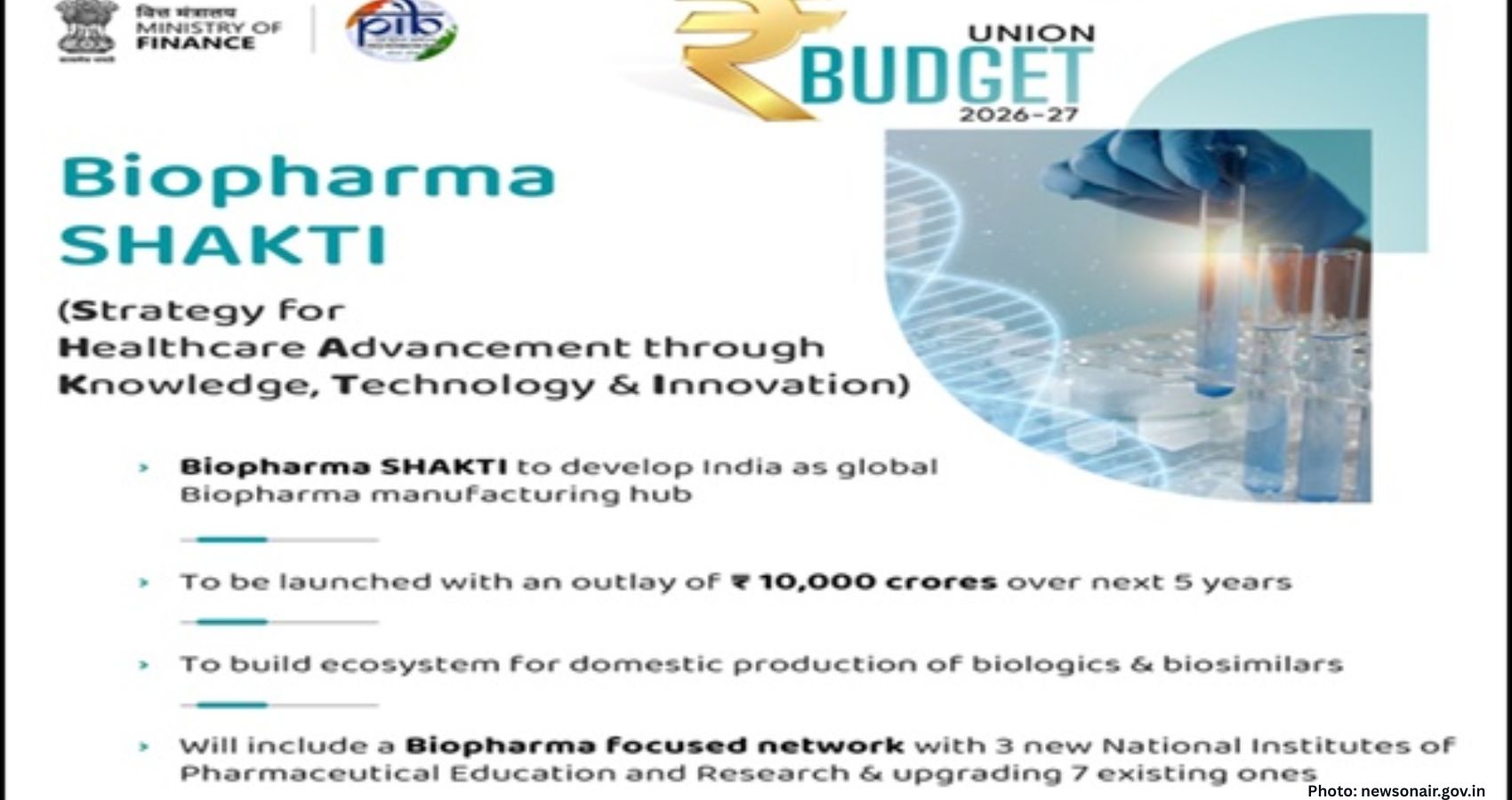
The Indian government has launched the Biopharma SHAKTI initiative, committing ten thousand crore rupees to enhance domestic biotechnology manufacturing and position India as a global biopharma hub.
The Indian government has officially unveiled the Biopharma SHAKTI initiative as part of the 2026-27 Union Budget. This initiative allocates ten thousand crore rupees over the next five years, aiming to transform India into a global biopharma manufacturing hub.
This significant financial commitment comes at a critical time for the domestic healthcare sector, which is facing a dramatic shift in public health challenges. Government data indicates that non-communicable lifestyle diseases, including diabetes, various forms of cancer, and chronic heart conditions, now account for nearly two-thirds of all deaths in the country. This marks a staggering increase from 1990, when such diseases were responsible for just over a third of the national mortality rate.
To address this growing crisis, the medical community has increasingly relied on advanced biologic drugs, which are complex medicines derived from living organisms. However, the vast majority of these treatments are currently imported from international pharmaceutical companies, resulting in prohibitively high costs for a significant portion of the Indian population.
The introduction of Biopharma SHAKTI is designed to bridge the gap between India’s established expertise in chemical generics and the emerging field of biologics. Industry analysts suggest that the timing is strategically aligned with a major shift in the global pharmaceutical landscape. Several blockbuster biologic drugs, some generating annual revenues exceeding ten billion dollars each, are set to lose their patent protections in the coming years. India has long held a dominant position as a world leader in producing affordable near-copy versions of traditional medicines once their patents expire. By focusing on biopharma manufacturing, the government aims to replicate this success in the realm of biosimilars, potentially capturing a significant share of the international market while simultaneously lowering treatment costs for domestic patients.
Despite the substantial financial commitment, the current structure of the Biopharma SHAKTI program has sparked intense debate within the scientific and entrepreneurial communities regarding resource allocation. The designated funds are primarily directed toward large-scale infrastructure projects, including the establishment of new research institutes, the modernization of existing laboratories, and the creation of a thousand new clinical trial sites. Additionally, a portion of the budget is intended to expand the workforce at the national drug regulatory body, providing more specialists to manage the increasing volume of applications.
While these investments are welcomed by established manufacturing giants that already operate at a factory scale, critics argue that the funding model overlooks the most vulnerable segment of the ecosystem: innovative startups. The central challenge facing Indian biotechnology is often described as a “valley of death” that exists between laboratory discovery and the final delivery of a treatment to patients. In the current landscape, a scientist may discover a promising new molecule or therapeutic approach and form a startup to bring that vision to life. However, once the initial research phase is complete, the enterprise frequently encounters formidable obstacles.
There is currently a severe shortage of specialized pilot facilities where these startups can test whether their discoveries can be manufactured effectively at a larger scale. Without access to such mid-sized production environments, many promising innovations remain trapped in a theoretical state, unable to demonstrate their commercial or clinical viability to potential investors.
Moreover, the regulatory environment presents a secondary hurdle that often proves insurmountable for true innovators. Many of these new products involve cutting-edge science that frequently falls outside the traditional categories used by regulators. This lack of a clear approval pathway creates a state of bureaucratic limbo where regulators are uncertain how to classify or evaluate the safety and efficacy of a novel biologic. This uncertainty, combined with the exorbitant costs associated with conducting independent clinical trials, creates a high-pressure environment for small firms. Consequently, many Indian startups are faced with a difficult choice: they must either sell their intellectual property to a larger corporation for a fraction of its potential value or shut down operations entirely, wasting years of research and development.
The fundamental issue is that the current funding strategy under Biopharma SHAKTI appears to strengthen the two ends of the development spectrum while leaving the center neglected. By reinforcing the research side and the mass-manufacturing side, the government is providing support to those who have already achieved success or those who are in the earliest stages of academic inquiry. However, the bridge across the valley remains unbuilt.
For a startup with a genuinely original drug candidate, the need is not for more basic research labs or larger factories, but for the specialized intermediate infrastructure that allows a concept to transition into a product. This includes affordable access to specialized manufacturing equipment and a regulatory framework that is agile enough to handle unprecedented biotechnological advancements.
If the goal of the initiative is to move India beyond being a mere pharmacy of the world that copies existing formulas and toward becoming a global leader in original drug discovery, many experts believe the funding priorities must be re-evaluated. The current focus on infrastructure for existing large-scale manufacturers primarily benefits the production of biosimilars. While this is a lucrative business opportunity, it does not necessarily foster an environment where homegrown Indian innovations can thrive.
To truly capitalize on the intellectual capital of Indian scientists, the ecosystem requires dedicated support for the translation of research. This means creating government-backed pilot plants that startups can rent, establishing fast-track regulatory sandboxes for novel therapies, and providing targeted subsidies for clinical trials focused on original Indian intellectual property.
The economic implications of successfully bridging this gap are substantial. Beyond the immediate health benefits of making advanced biologics more accessible to the Indian public, a thriving domestic biotech innovation sector would create high-value jobs and retain scientific talent that often migrates to more supportive environments in the West.
As it stands, the Biopharma SHAKTI initiative represents a historic investment in the future of Indian healthcare, but its ultimate success will depend on whether the government can address the structural deficiencies that currently stifle innovation. Without a focused effort to support the transition from the lab to the market, the valley of death will continue to claim promising Indian ideas, regardless of how much capital is poured into the surrounding landscape.
As the program rolls out over the next five years, the pharmaceutical industry will be watching closely to see if any adjustments are made to support small-scale innovators. The global demand for biologics is only expected to grow as the world grapples with an aging population and the continued rise of chronic diseases. For India, the opportunity is not just to manufacture the world’s medicine, but to invent it. Accomplishing this will require more than just funding; it will necessitate a strategic vision that recognizes that a discovery only becomes a treatment when there is a clear and supported path for it to travel. The current budget marks a bold first step, but the construction of the bridge that will carry Indian biotech from the laboratory to the patient remains the most critical task ahead for policymakers and industry leaders alike, according to GlobalNetNews.