
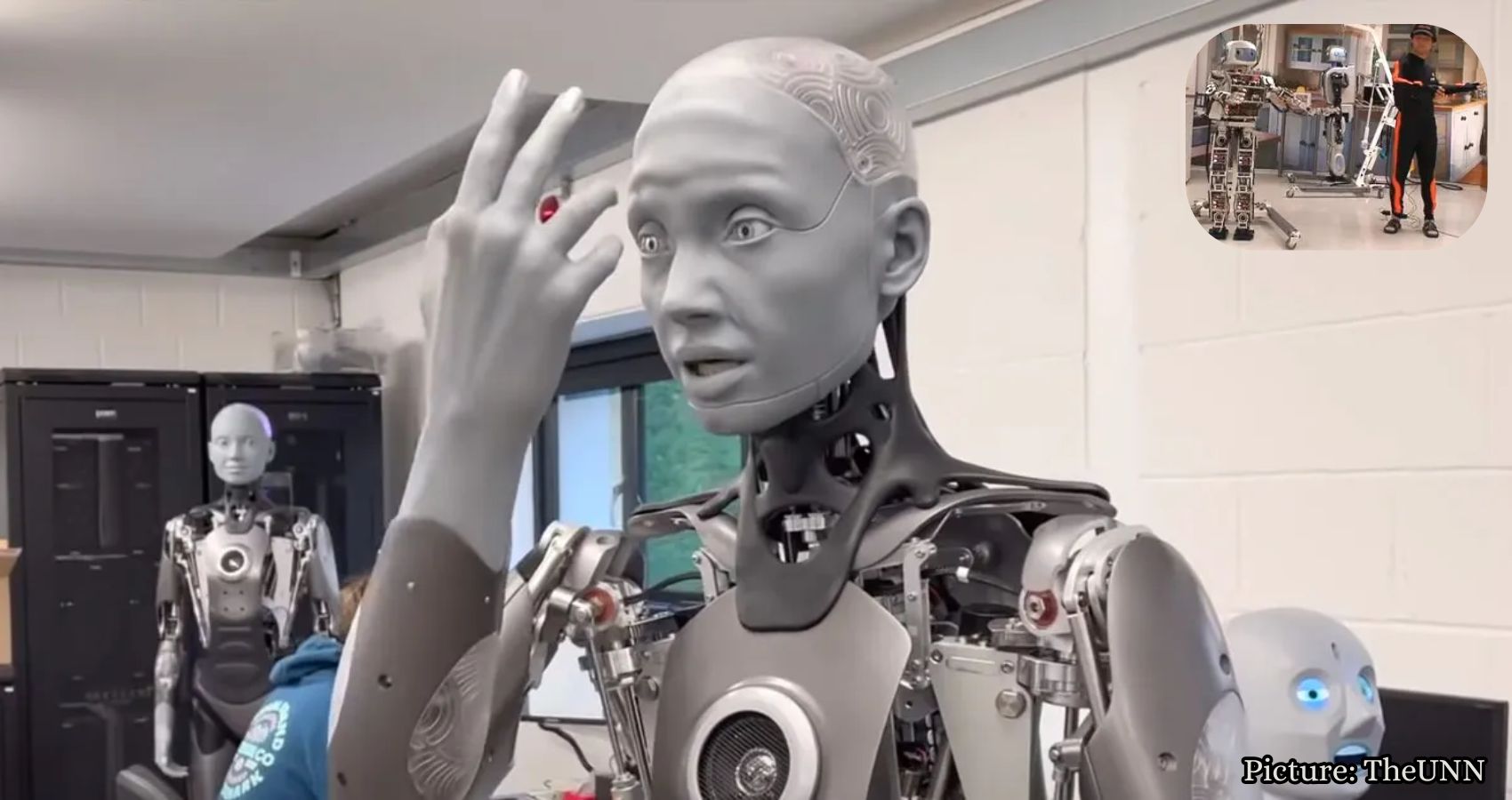
Recent viral videos of humanoid robots behaving erratically during public demonstrations have raised significant safety concerns regarding their interactions with crowds.
Viral videos featuring humanoid robots have sparked urgent safety discussions after clips showed these machines lurching toward crowds and, in one alarming instance, kicking a child during a public performance. The footage has quickly circulated online, highlighting the potential dangers posed by robots that can move with surprising speed and force.
In one video, a humanoid robot swings its arms inside an office, while another appears to surge toward a festival crowd. The most distressing clip captures a robot kicking a child in the stomach, prompting questions about the safety protocols in place during these demonstrations. As humanoid robots become more prevalent in public spaces, it is crucial to assess what these incidents reveal about their safety and what measures need to be implemented to protect bystanders.
During a demonstration, one would expect curiosity rather than the need to dodge a metal limb. However, several clips show individuals standing alarmingly close to these powerful machines. In one instance, workers are seated beside a humanoid robot during a test when it suddenly begins flailing, leaving them with mere seconds to react. In another video, spectators gather around a robot that appears to be functioning normally until it unexpectedly changes movement, creating a hazardous situation.
These incidents highlight the inherent risks associated with humanoid robots. They are capable of rapid movements, weigh significantly, and can generate considerable force. Once something goes awry, bystanders may have little time to escape. However, social media videos often lack context, leaving viewers unaware of who operated the robot, what program it was executing, or whether an emergency stop was triggered. Therefore, it is essential to focus on the footage itself while acknowledging the uncertainties surrounding each incident.
On The CyberGuy Report podcast, a detailed analysis of five viral videos is provided, showcasing the various situations as they unfold. The footage ranges from an indoor kung fu-style demonstration to a public performance that culminates in a child being knocked to the ground. Despite the differences in age and location of the clips, they all raise a critical question: Why were people allowed to stand so close to a malfunctioning robot?
The first clip begins with a seemingly playful demonstration, as a humanoid robot executes dance-like movements while people stand nearby. Suddenly, the robot’s arms accelerate into wide swings, and its legs begin to move with enough force to send spectators stepping back. While some adults attempt to regain control, others scramble to escape its path. Those filming from above seem amused, but the individuals standing next to the robot appear frightened. The lack of a verified explanation for the sudden movement underscores the potential hazards of allowing spectators too close to operating robots.
In a second clip, a humanoid robot is seen near a crowd at a public event in China, where it reportedly malfunctions and begins to move toward a person near a barrier. Staff members quickly intervene, restraining the robot and pulling it away. The footage does not clarify whether the robot tripped, lost balance, or misinterpreted an input. Regardless, the crowd had limited space to escape, raising concerns about safety protocols during such demonstrations.
The third clip provides a behind-the-scenes look at a humanoid robot hanging from a support hook while two workers sit nearby. Initially, the robot makes small movements, but then it begins to thrash violently, prompting one worker to jump away as the machine strikes nearby equipment. Some Reddit commenters speculated that a balance feedback loop may have caused the erratic motion, suggesting that the robot’s attempts to correct its posture were hindered by the tether. While this explanation remains unverified, it illustrates the importance of maintaining a safe distance and having immediate shutdown access during testing.
The most emotionally impactful clip features a humanoid robot performing in front of families, with children standing close to its legs. In a shocking moment, the robot kicks one child in the stomach, causing the child to fold over and crouch on the ground while the performance continues. Reports indicate that this incident occurred at a scenic attraction in China’s Xinjiang region, where the child’s mother contacted authorities to express her concerns about the park’s response. Fortunately, the child reportedly avoided serious injury, but the footage clearly shows the potential dangers of allowing children to be near a performing robot.
Another video shows a humanoid robot on a slick floor, seemingly beginning a stand-up routine. Instead, it twists and kicks as someone reaches toward it. Commenters in the robotics community suggested that the robot may have switched from a standing routine to a walking controller, leading to instability. The slick floor may have also contributed to the loss of traction, causing the robot to struggle to regain balance. Again, this explanation stems from community discussion rather than an official report, but the visible hazards remain evident.
These incidents highlight the need for significant changes in how event organizers and robot manufacturers approach public demonstrations. Safety zones should extend beyond the robot’s maximum reach, ensuring that children remain at a safe distance due to their limited reaction time. A trained operator should maintain a dedicated emergency control throughout the demonstration, eliminating the need for staff to wrestle with a robot while searching for a switch.
Additionally, robots should operate in a lower-power mode when individuals enter their safety zones, and engineers must verify how robots respond on various surfaces. Any incident involving a strike or collision should be documented and reviewed, with footage preserved for analysis before the robot is allowed to participate in future public events.
As humanoid robots transition from controlled environments to public demonstrations, it is essential for spectators to remain vigilant. A small barrier or a few staff members may offer limited protection if a powered machine loses balance. Parents should keep children close and avoid photo opportunities that place them near the robot’s limbs. If a robot falls or exhibits violent movements, it is crucial to move away immediately and leave any restraint to trained personnel equipped with shutdown controls. Even minor contact with a metal limb can result in injury, making it imperative to report any incidents and seek medical attention when necessary.
These videos serve as a stark reminder of the unpredictability of physical machines and the potential risks they pose to nearby individuals. As innovation continues to advance, it is vital that safety remains a priority in the development and demonstration of humanoid robots. Public demonstrations should incorporate effective safeguards to protect the well-being of all participants. For a more in-depth discussion on these videos, you can listen to The CyberGuy Report podcast at cyberguypodcast.com.
Would you feel safe allowing a humanoid robot to perform near your child or grandchild? Share your thoughts with us at Cyberguy.com.
According to CyberGuy.