
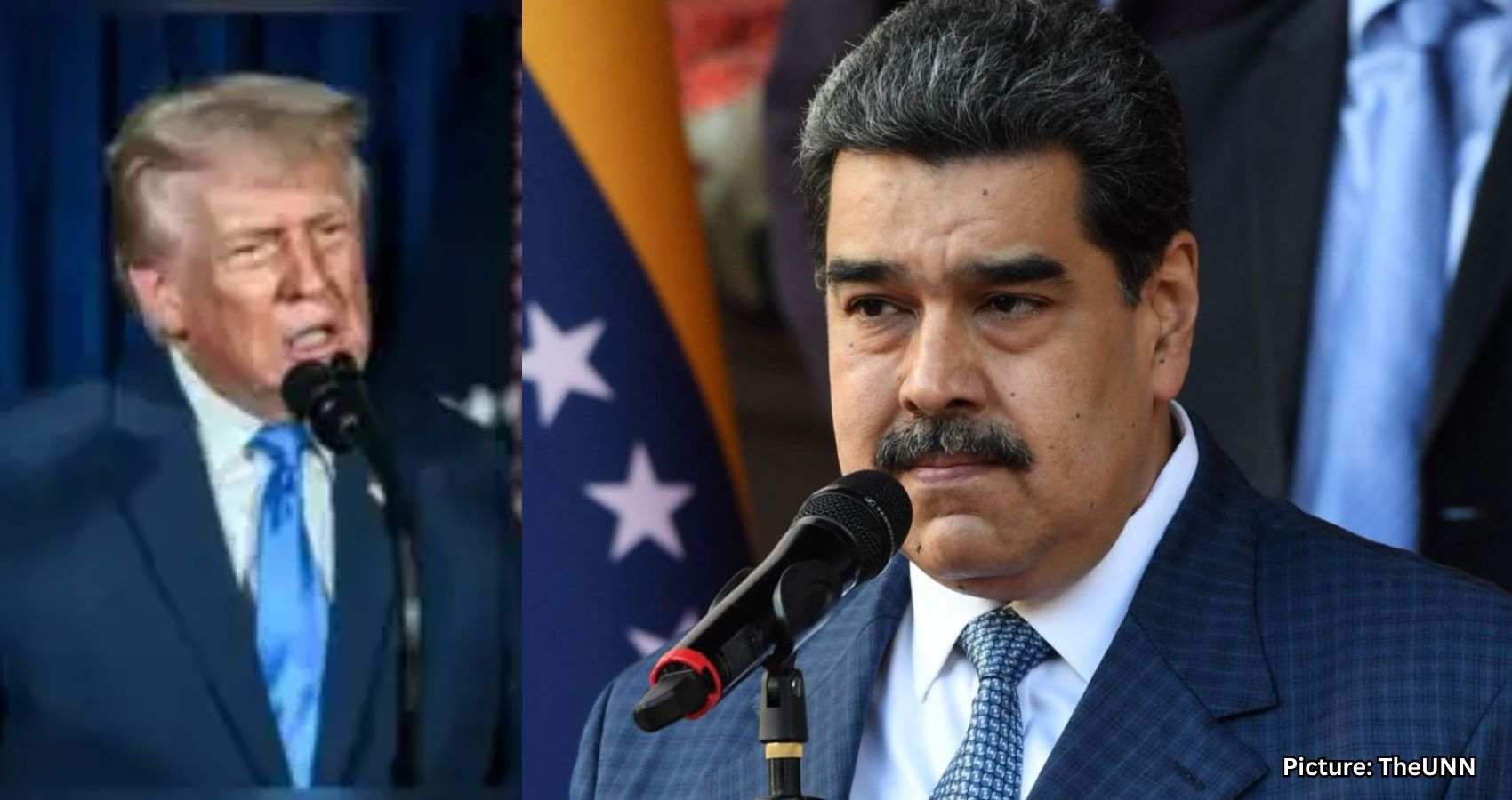
International condemnation is mounting following a U.S. military operation in Venezuela that reportedly led to the capture of President Nicolás Maduro and his wife, Cilia Flores.
International condemnation intensified on Saturday after the Trump administration confirmed a dramatic military operation in Venezuela. This operation allegedly resulted in the capture of President Nicolás Maduro and his wife, Cilia Flores, who were reportedly removed from the country by U.S. forces. Governments across Latin America, Europe, and Asia denounced the action as a serious violation of international law and Venezuelan sovereignty, warning that it could destabilize an already fragile region.
The operation followed months of escalating pressure from Washington, including a $50 million bounty on Maduro for alleged narco-terrorism, seizures of Venezuelan oil shipments, and U.S. strikes on suspected drug-smuggling vessels in the Caribbean. The overnight action in Caracas reportedly involved airstrikes near military installations and coincided with explosions that residents described as the most intense violence the capital had seen in years.
Brazilian President Luiz Inácio Lula da Silva emerged as one of the most vocal critics, condemning both the bombings and the detention of Venezuela’s head of state. “Bombings on Venezuelan territory and the capture of its president cross an unacceptable line,” Lula wrote on X. “These acts represent a most serious affront to Venezuela’s sovereignty and yet another extremely dangerous precedent for the entire international community.”
Lula warned that such actions undermine the global rules-based order, adding that “attacking countries, in flagrant violation of international law, is the first step toward a world of violence, chaos, and instability, where the law of the strongest prevails over multilateralism.”
Mexico echoed these concerns, with its Ministry of Foreign Affairs emphasizing that the region has long upheld a principle of non-intervention. “Latin America and the Caribbean is a zone of peace, built on the basis of mutual respect, the peaceful settlement of disputes and the prohibition of the use and threat of force,” the ministry stated. It warned that any military action of this scale “seriously jeopardizes regional stability.”
Colombian President Gustavo Petro expressed “deep concern” over reports of explosions in Caracas. In a post on X, Petro reiterated Colombia’s commitment to peace, stating that respect for international law and the protection of life and human dignity must prevail over any form of armed confrontation.
Outside the region, major global powers also condemned the U.S. move. Russia’s foreign minister accused Washington of committing “an act of armed aggression against Venezuela,” while Iran described the operation as a “flagrant violation” of sovereignty and international norms.
China’s Foreign Ministry expressed being “deeply shocked” by the events. In a statement posted on X, Beijing called the intervention “a blatant use of force” that “seriously violates international law and Venezuela’s sovereignty, and threatens peace and security in Latin America and the Caribbean region.”
France joined the criticism, with Foreign Minister Jean-Noël Barrot stating that “no lasting political solution can be imposed from the outside,” emphasizing the need for diplomacy over coercion.
European reactions were more mixed. European Union foreign policy chief Kaja Kallas acknowledged that Maduro “lacks democratic legitimacy” but stressed that “the UN Charter must be respected,” indicating discomfort with both the Venezuelan government and the U.S. method of intervention.
Spanish Prime Minister Pedro Sánchez, who has previously criticized U.S. actions in Venezuela, called for “de-escalation” and urged all sides to avoid further military confrontation.
In contrast, Argentina’s President Javier Milei welcomed the news, posting his signature slogan, “LONG LIVE FREEDOM!” on X, aligning himself firmly with Washington’s stance.
Analysts suggest that the operation could mark a turning point in U.S.–Latin American relations, reviving memories of Cold War-era interventions and raising questions about the limits of executive power and international enforcement.
While the Trump administration has framed the action as a law-enforcement operation tied to U.S. indictments against Maduro, critics argue that forcibly removing a sitting president without international authorization sets a troubling precedent.
With Venezuela declaring a state of emergency and mobilizing its armed forces, fears are growing that the situation could spiral beyond a single operation. As diplomatic fallout spreads and global reactions harden, this episode underscores the deep divisions over how — and whether — regime change can be pursued without undermining international law itself.
For now, the world is watching closely as tensions rise and the consequences of the U.S. intervention continue to unfold, according to Source Name.