
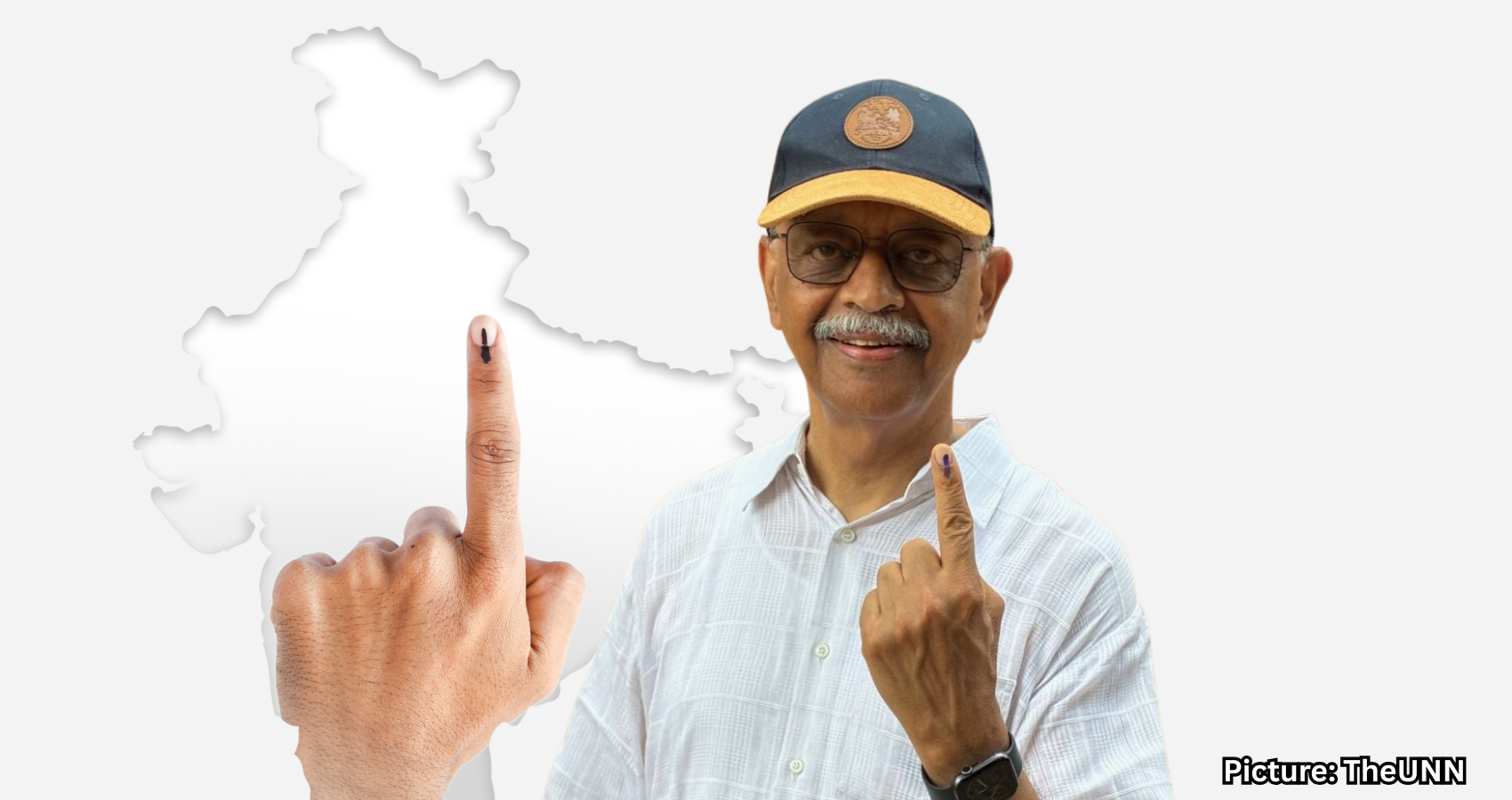
George Abraham, a veteran political activist, returned to Kerala to vote in the Assembly elections, highlighting the importance of democratic engagement and his enduring connection to India.
George Abraham, a veteran political activist and expatriate, has made a significant return to Kerala to exercise his voting rights in the Assembly elections for his home constituency of Changannur. For Abraham, this journey transcends a mere civic obligation; it embodies a profound personal commitment to his homeland, a sentiment he has maintained throughout his nearly six decades of life abroad.
Reflecting on his motivations for returning to India to vote, Abraham expressed a deep emotional connection to his roots: “It is a sentiment for my motherland and a passion for the very idea of India.” His introspection reveals a sense of nostalgia, as he pondered, “I often wonder why people like me had to leave this incredible land, so rich in natural beauty and heritage, to build lives elsewhere.” After casting his vote, he remarked, “I have exercised my democratic right, and I hope this small act contributes to keeping the spirit of democracy alive.”
For nearly 58 years, Abraham has resided abroad, primarily in the United States, where he has had a distinguished career in international service. He spent 36 years working at the United Nations, retiring as Chief Technology Officer of the United Nations Pension Fund. Despite his extensive professional accolades and experiences on the global stage, his dedication to India’s political and democratic processes has remained steadfast.
Abraham’s political engagement is deeply rooted in his past, reflecting a lifelong passion for civic participation. In 1998, motivated by a desire to organize and mobilize the Indian diaspora, he co-founded the Indian Overseas Congress (IOC) alongside veteran Congress worker John Philipose Thengumcherry. This initiative emerged at a time when there was no comparable platform for Congress supporters living outside India. The organization’s formal launch gained momentum during a visit from the late Oommen Chandy, then Chief Minister of Kerala, which provided a significant platform for its promotion.
Since its inception, the IOC has experienced substantial growth, receiving official recognition in 2001 during a significant event in New York that featured prominent national leaders, including Sonia Gandhi, Manmohan Singh, Natwar Singh, and Murli Deora. Today, the IOC operates as a well-established global network that spans over 30 countries, advocating for the interests of the Indian diaspora and fostering a connection to India’s political landscape.
Currently, Sam Pitroda serves as Chairman of the IOC, while Abraham holds the position of Vice-Chairman of IOC USA and Global Coordinator for its IT and Social Media initiatives. In recognition of his decades of service to the Indian community abroad, he was awarded a Lifetime Achievement Award by Rahul Gandhi during the latter’s visit to New York in 2023.
Abraham’s commitment to political activism began in his youth. As a teenager, he was actively involved with the All Kerala Balajana Sakhyam, a youth organization under the aegis of Malayala Manorama, where he served as State Treasurer in 1967. He credits the late Pala K.M. Mathew, a prominent journalist and social reformer, as a mentor who significantly shaped his early political and social consciousness.
In his reflections, Abraham emphasizes the crucial role that the Indian diaspora plays in safeguarding the democratic and secular values of India. He stated, “It is essential that we uphold the democratic and secular fabric of India. Without that, the nearly 35 million Indians living abroad would have little moral standing when advocating for justice, equality, and religious freedom globally.” This perspective highlights the responsibility of expatriates to engage with and support the democratic processes of their home country.
For Abraham, returning to India to vote is not merely an act of participation; it is a reaffirmation of his identity, responsibility, and belief in the enduring promise of India’s democracy. His actions underscore the importance of active engagement in political processes, not only for those residing in India but also for the global Indian community.
As the Assembly elections unfold, the participation of expatriates like Abraham signifies a broader commitment to the democratic process, illustrating how individuals can maintain their ties to their homeland while contributing to its political landscape from afar. In doing so, they uphold the values of democracy, a fundamental principle that resonates deeply within both the Indian diaspora and the global community, according to Source Name.