
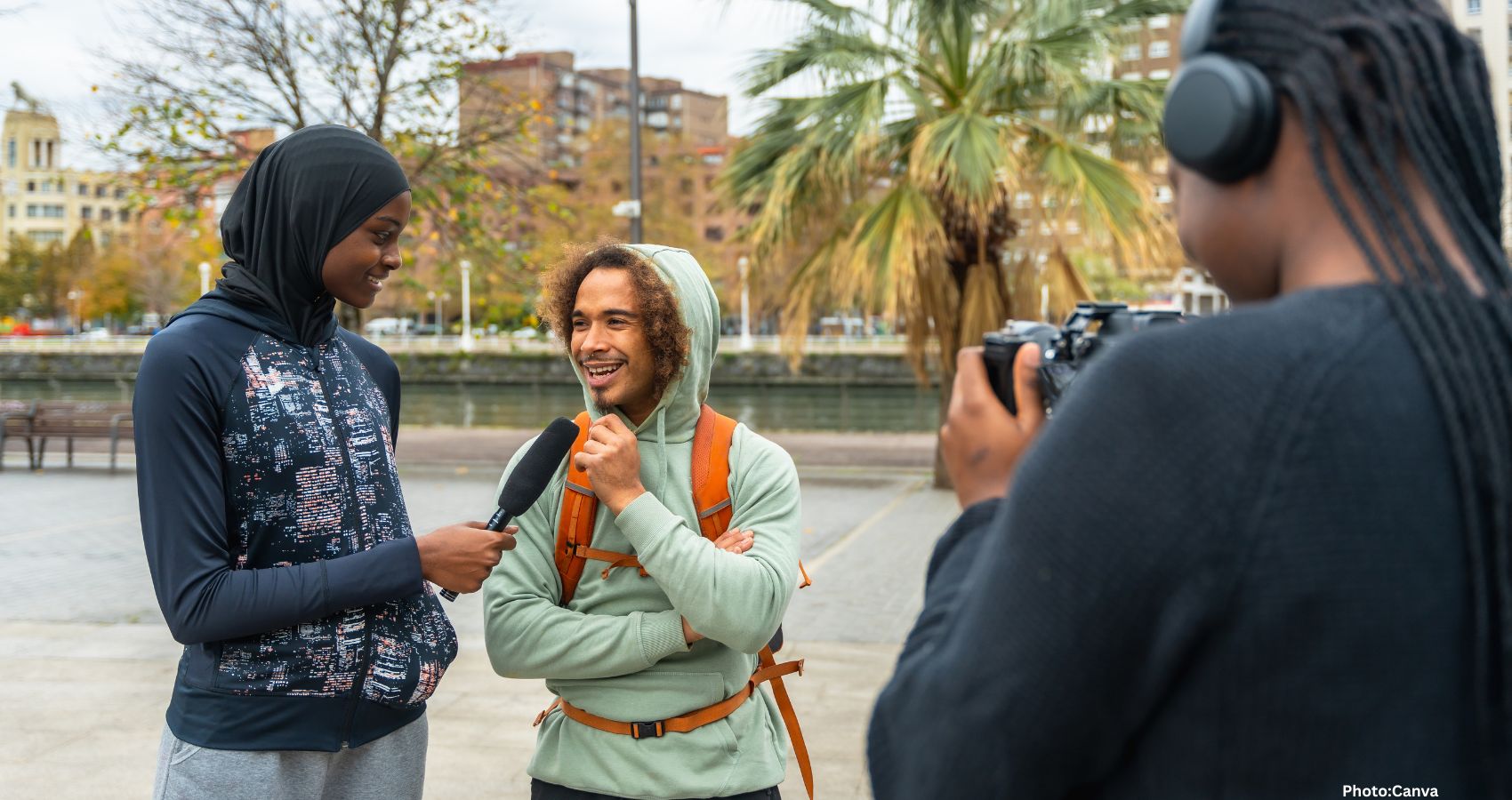
As America approaches its 250th anniversary, ethnic media plays a crucial role in reclaiming community narratives from historical revisions that seek to erase or distort the truth.
As the United States nears its 250th anniversary, a significant struggle over historical memory is unfolding. This conflict is underscored by recent actions taken by the Trump administration, which has sought to reshape the narrative of American history. Two months into his second term, President Trump signed an executive order aimed at restoring “truth and sanity to American history.”
Critics, including historians and activists, have pointed to various instances where non-white narratives have been marginalized or erased. For example, the stories of Navajo Code Talkers during World War II have been removed from government websites, and the Black Lives Matter mural in Washington D.C. was painted over. Additionally, the Department of Defense has eliminated images and articles related to diversity, equity, and inclusion (DEI).
David Blight, a historian from Yale University, described the executive order as “a declaration of political war on historians,” likening it to tactics used by the Nazis. While such comparisons may seem extreme, many scholars argue that the administration’s efforts reflect a broader attempt to erase the contributions of non-white individuals from American history.
As the nation prepares to celebrate the signing of the Declaration of Independence, the narrative surrounding this milestone is being contested. Sandy Close, Executive Director of American Community Media (ACoM), noted that the current administration is attempting to portray American history as a “white-only drama,” excluding significant contributions from non-white communities. In this context, ethnic media must take the lead in documenting and preserving community stories that might otherwise be overlooked or misrepresented.
Alan Spears, senior director at the National Parks Conservation Association, emphasized the importance of storytelling in preserving history. He remarked, “The quickest way that you can disappear people is to disappear their story or to soften it.” This sentiment echoes the actions of the National Park Service, which has removed references to slavery and LGBTQ+ history from its webpages. In New York City, signage at Jamaica Bay Wildlife Refuge referencing slavery and the incarceration of Japanese Americans has also been taken down.
During a recent hearing, U.S. Representative Jared Huffman expressed concern that the administration is using the upcoming anniversary to promote an alternate version of reality. He warned that “when you begin picking at words to soften and sanitize, to erase history, that is a dangerous precipice to be on.”
In addition to historical revisions, immigrant communities across the United States are grappling with the impact of recent immigration crackdowns. Raids conducted by Immigration and Customs Enforcement (ICE) and Customs and Border Protection (CBP) have left many communities in fear. Although cities like Los Angeles, Chicago, and Minneapolis have filed lawsuits against these actions, the Department of Homeland Security (DHS) has continued its enforcement efforts, at times disregarding judicial orders.
In this climate of tension, advocates argue that the government is victimizing immigrant communities, making it increasingly vital for these groups to assert their rights and speak out against injustices. Ethnic media has become increasingly important in this context, as many believe mainstream media has been reluctant to fully report on these issues.
National television networks and major newspapers have faced lawsuits and threats of retaliation, which have stifled their ability to pursue critical stories about the administration’s actions or to document the experiences of communities of color. Ann Burrough, President and CEO of the Japanese American National Museum (JANM), stressed the need for minority communities to see themselves represented with dignity and accuracy in the media. She warned that authoritarian regimes often begin by attacking culture and history, which can lead to the suppression of free speech and the alteration of historical narratives.
Burrough drew parallels between recent immigration enforcement and the forced incarceration of 125,000 Japanese Americans during World War II, highlighting the importance of museums like JANM in documenting “inconvenient truths” about exclusion, resistance, survival, and struggle.
Margaret Huang, Senior Fellow at The Leadership Conference on Civil Rights and Human Rights, pointed out that the systematic erasure of Black history offers critical lessons for the present. She noted that efforts to obscure the history of the Reconstruction era and the civil rights movement have persisted, reflecting a struggle to control the historical narrative in favor of white supremacy. Despite the Civil War being fought primarily in the South and East Coast, memorials to Confederate leaders remain prevalent, reinforcing a narrative that Huang describes as a “narrative of white supremacy.”
Ray Suarez, a veteran journalist, argued that America is witnessing “the last kick of a dying mule,” as white grievance seeks to impose a “fantasy narrative” during the nation’s 250th anniversary. He emphasized that whiteness is a contrived historical construct and reminded audiences that America has always been a multicultural nation.
Anneshia Hardy, Executive Director at Alabama Values, introduced the term “narrative governance” to describe the administration’s attempt to present a white-centered version of American history. She stated that the current administration aims to use the 250th anniversary to promote a narrow historical account.
Hardy’s organization is leading long-term narrative initiatives that involve historians, political scientists, community storytellers, journalists, and cultural workers to create a more comprehensive account of American history that includes diverse perspectives.
The relevance of these discussions extends to the Desi community, which has experienced significant changes in recent decades. The first wave of Indian immigrants arrived in the United States after the Immigration and Nationality Act of 1965, with many seeking opportunities in various industries. However, recent immigration crackdowns have disproportionately affected the Indian-origin community, which is now the third-largest group of undocumented immigrants in the U.S.
Official figures indicate that over 3,800 Indians were deported in 2025, and the presence of ICE and CBP agents has created a climate of fear within these communities. Businesses have shut down, families are avoiding public spaces, and many individuals are experiencing emotional trauma and economic distress. The distressing image of Aliya Rahman, a disabled Bangladeshi-American, being forcibly removed from her car by armed agents has further heightened these fears.
As America commemorates its 250 years of independence, the struggle over how its history is told has gained renewed urgency. Historians, civil rights leaders, journalists, museums, and ethnic media are actively resisting efforts to sanitize or narrow the national narrative. For immigrant and minority communities, including the Desi community, the stakes are deeply personal. Preserving historical truth is not just about the past; it shapes belonging, dignity, and citizenship in the present. The fight for inclusive and accurate storytelling is central to achieving equality and ensuring that the American narrative reflects the contributions of all who have shaped it, according to India Currents.