
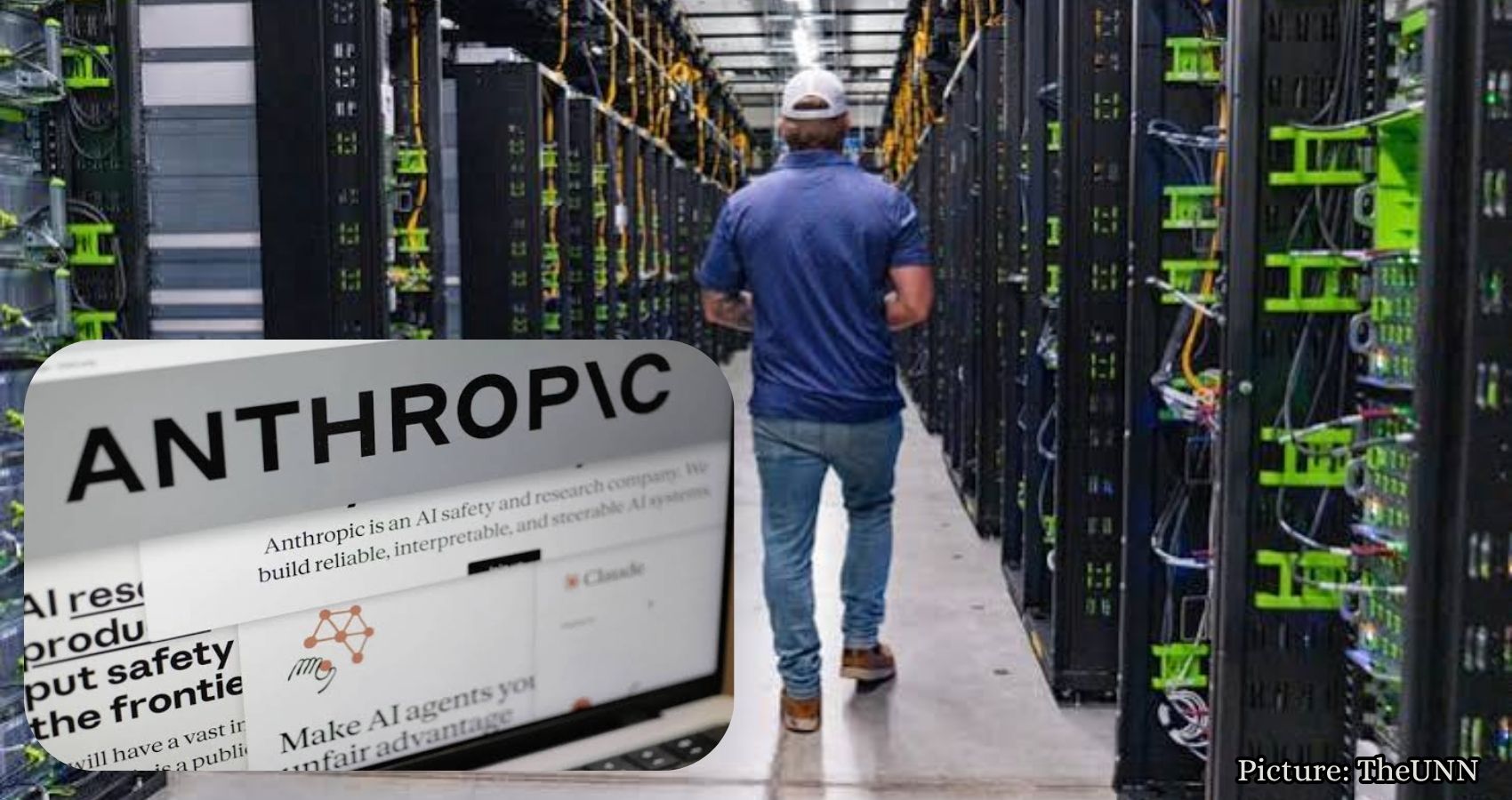
Data center moratoriums in the U.S. could lead to American companies processing sensitive information overseas, raising significant national security concerns, warns data privacy advocate Brittany Kaiser.
As states and local governments consider new restrictions on the burgeoning data center industry, concerns are growing over the implications for national security and data privacy. Brittany Kaiser, CEO of Alpha Compute, has issued a stark warning: if construction of artificial intelligence (AI) data centers slows in the United States, American companies may be forced to process sensitive information overseas.
Kaiser, a prominent data privacy advocate, expressed her concerns amid increasing scrutiny of the data center sector, which is facing challenges related to electricity costs, grid reliability, and the environmental impact on surrounding communities. She emphasized that state moratoriums and restrictions could push American firms to seek computing capacity abroad, particularly as demand for AI technologies continues to surge.
“One of my top concerns as a data protection and privacy advocate is that with data center moratoriums being passed in the United States, it will force Americans and American companies to send our data to be processed abroad,” Kaiser told Fox News Digital. “American companies are going to still run their AI. They’re still going to be purchasing data center space in other countries, and it means our sensitive information will be sent abroad and shared with companies and organizations that might not have America’s best interests at heart.”
Data centers are essential facilities that house servers and computing equipment, processing, storing, and transmitting information that underpins many aspects of modern life, from email and social media to online banking and streaming services. As the demand for AI grows, companies are investing in increasingly powerful data centers that require significant amounts of electricity, advanced chips, and high-speed network connections.
Kaiser noted that these facilities have become critical infrastructure for the digital economy, making decisions about their location and data control increasingly important for both economic and national security. The rapid expansion of AI has intensified the need for computing power, prompting a surge in data center construction across the country.
However, this growth has not come without controversy. Some communities have raised concerns about the implications of data centers on electricity costs, water consumption, noise, and environmental sustainability. Kaiser acknowledged these issues, advocating for “common sense regulation” that protects local communities while allowing for responsible development.
“Not all companies are doing it [building data centers] in the same way,” she said. “Some are more responsible than others.” Kaiser pointed out that responsible data center developments can utilize closed-loop water cooling systems and generate their own power, thereby reducing their impact on local electrical grids.
Alpha Compute is pursuing projects designed to operate “off-grid, behind the meter,” which means these facilities would generate their own power rather than relying on the local electrical supply. This approach aims to prevent the substantial energy demands of data centers from straining existing infrastructure or driving up electricity costs for nearby residents.
In Pennsylvania, where Governor Josh Shapiro has recently imposed new requirements on large data center developments, Kaiser indicated that Alpha Compute plans to comply with the regulations and supports provisions that promote cleaner energy. Pennsylvania is not alone in addressing the rapid expansion of data centers; Texas Governor Greg Abbott has also urged data centers to provide more of their own power and bear infrastructure costs as development accelerates in the state.
Other states have taken more drastic measures. New York Governor Kathy Hochul, for instance, has enacted a one-year moratorium on new hyperscale data centers as concerns over electricity costs and grid reliability mount.
Kaiser cautioned that overly restrictive policies on domestic data center development could have far-reaching consequences for the United States’ position in the global AI landscape. “Compute power has now become nearly a utility,” she remarked, likening the need for domestic computing infrastructure to the quest for energy independence.
“We want to have the right to compute,” she stated. “We want to be able to process data within our own borders as a national security priority, but also for our own intellectual property to ensure we’re not sending our data abroad.”
To address these challenges, Kaiser has launched a campaign called “Right to Compute,” advocating for the development of domestic data centers alongside sustainability standards and regulations. “We should have the right to both energy independence as well as compute power,” she asserted, “so that Americans and American companies can process all of our sensitive data within our own borders.”
As the debate over data center development continues, the balance between local concerns and national security priorities remains a critical issue for policymakers and industry leaders alike, according to Fox News.